

What environmental compliance considerations are involved in powder coating removal processes?
Environmental compliance during powder coating removal involves controlling dust, fumes and chemical releases, while identifying, segregating and documenting the resulting waste correctly. UK businesses should use suitable containment, prevent contamination of drains or soil, and transfer hazardous residues and spent stripping materials through appropriately authorised waste arrangements.
Environmental compliance in powder coating removal means selecting a controlled removal process, determining the environmental hazards of the coating and stripping materials, and demonstrating that waste, wastewater and emissions have been managed lawfully. The correct approach depends on the removal method, the coating’s composition, the metal substrate and whether the work is carried out on-site or by a specialist treatment provider.
Identify the coating before work begins. Existing coatings should be assessed using available specifications, safety data and, where necessary, representative testing. Older or specialist coatings may contain substances that require additional controls, and visual appearance alone cannot establish whether residue is hazardous. The assessment should cover the coating, primers, sealants, contamination from service use and any chemicals selected for stripping.
This information supports the correct classification of the waste. It also helps determine whether mechanical abrasion, thermal treatment, chemical stripping or a combination of methods is suitable. A documented assessment is preferable to treating every removed coating as ordinary waste or assuming that all powder coating residues have the same environmental characteristics.
Control the removal method at source. Mechanical processes should use suitable extraction and filtration equipment so that fine particulate is not allowed to migrate into adjacent work areas or outdoor air. Filters, collection bags and contaminated consumables then need to be managed as part of the waste stream rather than discarded without assessment.
Thermal methods require attention to the gases and particulates generated by heating the coating. Equipment may need engineered ventilation, filtration or other emission controls, depending on the process and the substances involved. An environmental permit or other regulatory authorisation may be relevant where a process amounts to industrial treatment or generates controlled emissions; this should be confirmed against the site, equipment and scale of operation rather than assumed.
Chemical stripping creates a different compliance profile. The stripping agent, dissolved coating and rinse water may each require separate assessment. Chemicals should be stored in compatible, labelled containers with secondary containment, and used in a way that prevents accidental release. Spent solution must not be diluted or discharged simply to avoid a hazardous classification. Any discharge to a foul sewer requires the appropriate consent from the relevant water company, while discharge to surface water or land is generally subject to stricter environmental controls and may be prohibited without specific authorisation.
Apply the waste hierarchy and duty of care. Where practical, the process should minimise the amount of material removed and avoid mixing incompatible or differently classified wastes. Separate containers may be needed for:
- removed coating and abrasive media;
- spent chemical stripper and contaminated rinse liquid;
- used filters, absorbents, protective materials and disposable equipment; and
- metal fines or other residues that may be suitable for recovery after contamination has been assessed.
Each waste stream should have an appropriate description and classification before it is transferred. Businesses retaining waste on their premises should use sound storage arrangements, including secure containers, clear labelling, protection from weather and inspection for leaks. Waste should be passed only to an appropriately authorised carrier and receiving facility. Waste transfer documentation, and hazardous waste consignment documentation where applicable, should be retained in line with the requirements applying in the relevant UK nation.
Keep environmental and workplace controls aligned. COSHH assessments, safety data and method statements primarily address risks to people, but they also help identify substances that could contaminate air, water or soil. Staff should understand the segregation rules, spill response procedure and escalation route for damaged containers, abnormal emissions or accidental discharges. A spill kit is useful only when it is suitable for the chemicals involved and the resulting absorbents are then managed as the correct waste type.
Records should show what coating was assessed, which removal method was selected, what controls were used, how waste was classified, and where it was transferred. For repeat production work, reviewing these records can reveal whether a less hazardous process, improved capture equipment or more effective waste segregation would reduce environmental impact. Contractors should be able to provide evidence of their waste arrangements and relevant authorisations, rather than relying on a general statement that materials are disposed of responsibly.
Before work starts, the responsible business should therefore confirm the applicable rules for its UK location, the status of the treatment equipment, any sewer or emissions requirements, the classification of every significant waste stream and the competence of the parties handling it. Where the coating history is unknown or the process involves substantial chemical, thermal or emission risks, advice from an environmental consultant or the relevant regulator can prevent an incorrect classification or unauthorised discharge.
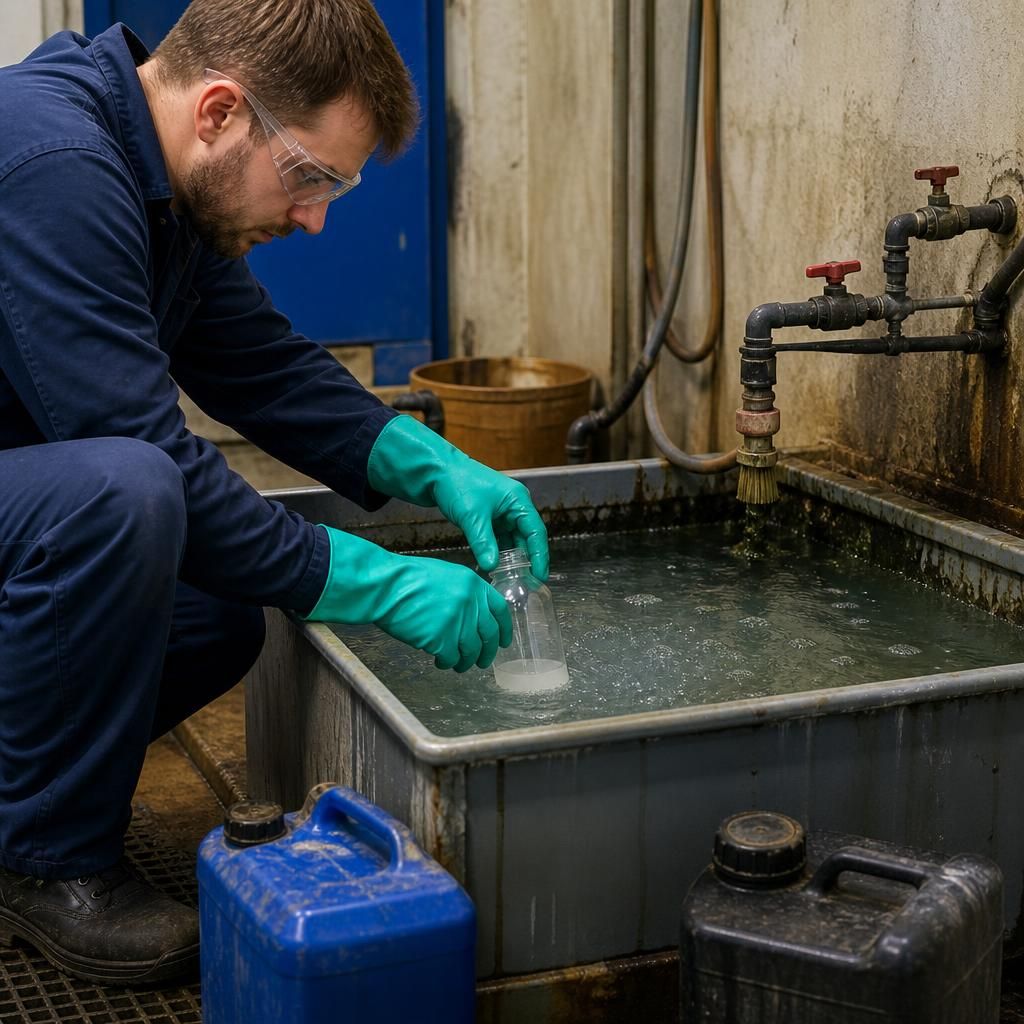
Rinse water from powder coating removal must be assessed by its contents, not by its appearance. Water that looks clear may still contain dissolved stripping chemicals, fine coating residues, oils or metals released from the component. Treating it as ordinary wastewater without checking its composition can create a pollution risk and breach discharge conditions.
Before any rinse water is released, the business should establish where it will go and what controls apply. Depending on the process and receiving system, this may involve collection for specialist disposal, pre-treatment, sampling or a trade effluent agreement with the water company. Drainage routes should be identified in advance so that contaminated water cannot enter surface-water systems, soil or unapproved drains.
- Keep rinse water separate from unrelated liquids where its composition may differ.
- Record the chemicals used and the materials removed during the process.
- Obtain written confirmation of any required discharge conditions before work begins.
- Manage collected water as a waste stream if it cannot lawfully be discharged.