

How can I ensure the selected protective primer is compatible with RAL 7047 powder coat?
Confirm compatibility by checking the primer and RAL 7047 powder coat technical data sheets for resin-system compatibility, curing requirements, recoating guidance and suitability for the substrate. Apply the proposed primer and powder coat to a test area or sample, then assess adhesion, surface appearance and any colour or gloss change before carrying out the repair.
The selected protective primer is compatible with RAL 7047 powder coat only when it suits the complete repair system: the exposed substrate, the remaining powder coating, the service environment and the required appearance. RAL 7047 identifies the colour, but it does not identify the powder coat’s resin chemistry, gloss level or chemical resistance. Compatibility therefore cannot be confirmed from the colour reference alone.
Begin by establishing what will remain in the repaired area. A repair may involve bare steel, galvanised steel, aluminium, previously coated metal and intact RAL 7047 powder coat within the same component. These surfaces can require different pretreatment and primer characteristics. A primer suitable for prepared steel may not be appropriate over zinc, aluminium or an existing coating, particularly if the repair crosses several substrates.
Check the condition of the surrounding powder coat before selecting the primer. Powder coating that is firmly bonded, clean and free from corrosion can usually remain in place around a local repair, but lifting edges, under-film corrosion, chalking, contamination or damaged areas can undermine the new system. The primer should not be used to encapsulate unstable material. Remove loose coating and corrosion back to a sound edge, and ensure that the transition between the exposed metal and the retained RAL 7047 finish is suitable for blending.
Surface preparation is also part of compatibility. Oils, silicone, salts, dust, abrasive residue and cleaning chemicals can interfere with the primer even where the primer itself is technically suitable. The preparation method must leave a surface profile and cleanliness appropriate to the substrate without damaging the adjacent powder coat. On galvanised or zinc-coated components, excessive abrasion can expose steel, while unsuitable chemical treatment can leave residues that affect the repair.
Consider the primer’s film-forming behaviour in relation to the existing coating. A primer that remains soft, shrinks, or builds a pronounced edge can create a visible defect beneath the RAL 7047 topcoat. Excessive film thickness may produce sagging, solvent retention or a raised repair boundary. Conversely, insufficient coverage may leave the substrate inadequately protected or allow the original surface to show through. Follow the specified application range and feather the repair edge where the system permits it.
For a light colour such as RAL 7047, the primer’s colour and opacity deserve particular attention. A dark, strongly tinted or uneven primer can affect the apparent shade of the repaired area, especially where the topcoat is applied thinly. A contrasting primer may also make pinholes, missed areas and differences in coverage easier to see. The chosen primer should therefore provide a suitable visual base without relying on extra topcoat thickness to hide it.
Assess whether the primer could cause defects in the powder coat during application or service. Important points include:
- Surface wetting: the primer should spread evenly over the prepared area rather than retracting into craters or leaving fish-eye defects.
- Solvent interaction: its solvents and additives should not soften, wrinkle, swell or stain the retained powder coating at the repair boundary.
- Intercoat stability: the primer should remain stable beneath the selected powder coat and should not release material that causes pinholing, bubbling or loss of finish.
- Edge behaviour: the repair should not leave a brittle or easily chipped margin where the primer meets the original coating.
- Appearance retention: the primer and topcoat combination should be suitable for the required gloss and visual uniformity, rather than merely matching the nominal colour.
The operating environment can change the correct choice. Parts exposed to condensation, road salt, industrial chemicals, abrasion or outdoor weathering need a primer that supports the required protective system without creating a weak layer. For components exposed to heat, check that the primer remains suitable at the actual operating temperature. If the repaired part will contact oils, fuels, cleaning agents or process chemicals, evaluate resistance to those substances rather than selecting a primer solely for general corrosion protection.
Also check practical details that are often overlooked: the allowable interval between primer application and powder coating, storage and handling conditions, minimum and maximum application temperatures, and whether the primer is intended for local repair or complete-system application. These points affect how the repair can be incorporated into production and whether the primer remains in the condition required for the next coating stage.
Where the original powder coating specification is available, use it to identify the resin family, gloss and service limitations of the RAL 7047 finish. If that information is unavailable, treat the coating as unidentified rather than assuming that every RAL 7047 product behaves in the same way. A coating specialist can then select a primer based on the actual substrate and repair conditions, not on the colour reference alone.
Record the chosen primer, preparation method, application conditions and final finish for repeat work. This creates a controlled repair specification and helps prevent a visually similar but chemically unsuitable primer being used on later components. For production batches or safety-critical parts, approval of the complete repair method by the coating manufacturer or responsible technical authority is advisable before wider application.
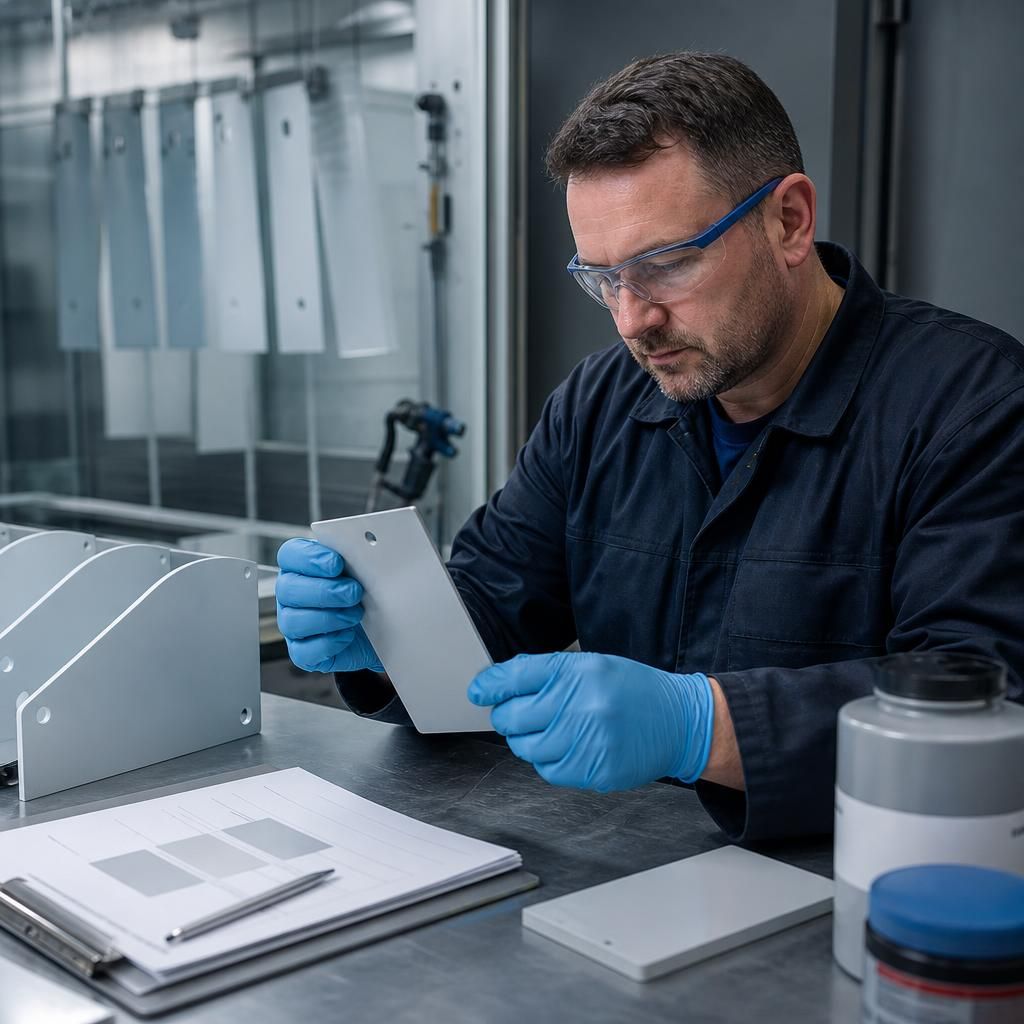
Compatibility should be confirmed from the primer’s technical data sheet, not inferred from a general label such as “anti-corrosive” or “suitable for metal”. The documentation should specifically support use beneath the selected powder coating and identify any restrictions relating to the substrate, film build, overcoating process and curing conditions.
Compare the primer and powder coat instructions line by line. If they give different limits for application, overcoating or curing, do not assume that the more convenient instruction is acceptable. Ask the relevant coating supplier or technical authority to confirm the complete system in writing, particularly where the repair combines bare metal with retained RAL 7047 coating. Keep that confirmation with the repair specification so the same compatible materials and process are used for future work.
Discuss protective primer compatibility for RAL 7047 repairs
Discuss the proposed RAL 7047 repair with a powder-coating specialist, supplying the substrate details, existing coating specification and intended service conditions. This allows the complete primer and powder-coat system to be assessed before application.