

What role does regular equipment maintenance play in preventing powder coating failures?
Regular equipment maintenance helps prevent powder coating failures by keeping spray guns, hoses, filters, ovens and monitoring controls operating consistently. Cleaning, inspecting and calibrating these components reduces risks such as contamination, uneven coverage, poor powder transfer and inconsistent curing.
Regular equipment maintenance prevents powder coating failures by controlling process variation before it appears on finished parts. A maintained line applies powder consistently, supports a stable electrical charge and airflow, and exposes components to a predictable curing cycle. Without a planned maintenance system, gradual wear or contamination can produce defects that may be mistaken for problems with the powder, substrate or pretreatment.
Maintenance is a control process, not just cleaning. Effective maintenance combines routine servicing, condition checks, calibration, planned replacement and documented corrective action. The aim is to identify deterioration while the equipment is still producing acceptable work, rather than waiting for visible defects or a failed inspection.
- Routine checks identify contamination, damage, loose connections, blocked passages and abnormal wear before production starts.
- Scheduled servicing addresses items that deteriorate gradually, such as seals, hoses, filters, gun components and moving parts.
- Calibration and verification confirm that instruments and controls are showing or delivering the required conditions.
- Records and trend analysis help link a recurring defect to a change in equipment condition, rather than relying on assumptions.
Spray equipment requires particular attention. Powder residue can accumulate around injectors, nozzles, electrodes and gun assemblies. Deposits may alter the powder flow or interfere with the charging system, leading to variations in film build, coverage and transfer. Worn or damaged gun components can also change the shape of the spray pattern. This may create thin areas on edges, recesses or complex profiles while apparently acceptable powder is being used.
Maintenance should therefore include inspection of wear parts against the equipment manufacturer’s service criteria, removal of incompatible residue between coating changes, and checks that powder delivery is stable. Hoses should be examined for internal build-up, kinks, soft spots and connection problems. Where reclaim powder is used, the collection and return path should also be checked so that contamination or uncontrolled changes in the powder stream do not enter the application process.
Booth and airflow maintenance affects application consistency. A booth that is not maintained can develop deposits on surfaces, obstruct extraction points or allow previously applied powder to contaminate a different coating. Changes in airflow can affect powder containment and the way powder reaches the workpiece. A maintenance plan should cover booth surfaces, extraction paths, collection equipment and accessible ducting, with cleaning methods selected to avoid damaging surfaces or dispersing powder into other parts of the line.
Earthing and electrical checks are essential. Electrostatic application depends on a suitable electrical path between the charged powder and the workpiece. Paint build-up on hooks, racks, contact points or hangers can reduce that path. The result may be weak transfer, uneven deposition or difficulty coating areas that previously performed well. Contact points should be kept free of excessive coating, checked for secure contact and replaced or restored when their condition prevents reliable earthing. These checks are particularly important where racks are reused repeatedly.
Curing equipment needs evidence-based verification. The temperature shown on an oven controller is not necessarily the temperature reached by the metal component. Sensors can drift, air circulation can change and heaters or control devices can deteriorate. A maintenance programme should verify the oven’s control and sensing systems, inspect circulation and extraction arrangements, and assess the temperature profile using a suitable measurement method for the parts being processed.
This distinction matters because powder cures according to the time and temperature experienced by the substrate. An under-cured film may have inadequate hardness or chemical resistance, while excessive heat or an unsuitable cycle can cause colour change, loss of appearance or other coating damage. If a failure occurs, maintenance records and temperature-profile results can help establish whether the problem originated in the curing stage.
Compressed air and filtration systems should not be overlooked. Moisture, oil or particles entering the powder delivery system can affect application and finish quality. Drains, separators, filters, regulators and air lines should be checked according to a defined schedule. Any unusual pressure fluctuation, moisture at a point of use or evidence of oil contamination should be investigated before affected components continue through production.
A practical maintenance programme should include:
- A written schedule separating checks carried out before use, during production, at changeover and at longer service intervals.
- Clear acceptance criteria for gun components, earthing points, air quality, booth condition, oven controls and measurement devices.
- Identification of equipment whose condition could affect a particular coating, substrate, part geometry or colour change.
- Isolation and inspection of suspect equipment when a defect is found, rather than repeatedly adjusting application settings without finding the cause.
- Recorded details of cleaning, component replacement, calibration, faults, corrective action and the work produced after maintenance.
Maintenance findings should be connected to quality checks. For example, repeated thin coverage in the same area may justify inspecting the spray pattern, gun position, earthing and airflow; a recurring curing defect may require verification of sensors, circulation and the actual part temperature. This approach prevents operators from treating each failed batch as an isolated event.
Responsibility should also be defined. Operators can carry out visual checks and approved cleaning tasks, while competent maintenance personnel should handle electrical inspection, calibration, pressure systems and oven servicing where specialist knowledge is required. After intervention, the equipment should be checked before releasing it for normal production, and any affected work should be assessed against the relevant coating requirements.
In short, regular maintenance reduces powder coating failures by keeping the application, electrical, air-handling and curing stages within known operating conditions. A documented preventive programme gives manufacturers and fabricators a repeatable way to detect equipment drift, investigate defects and protect finish quality across batches.
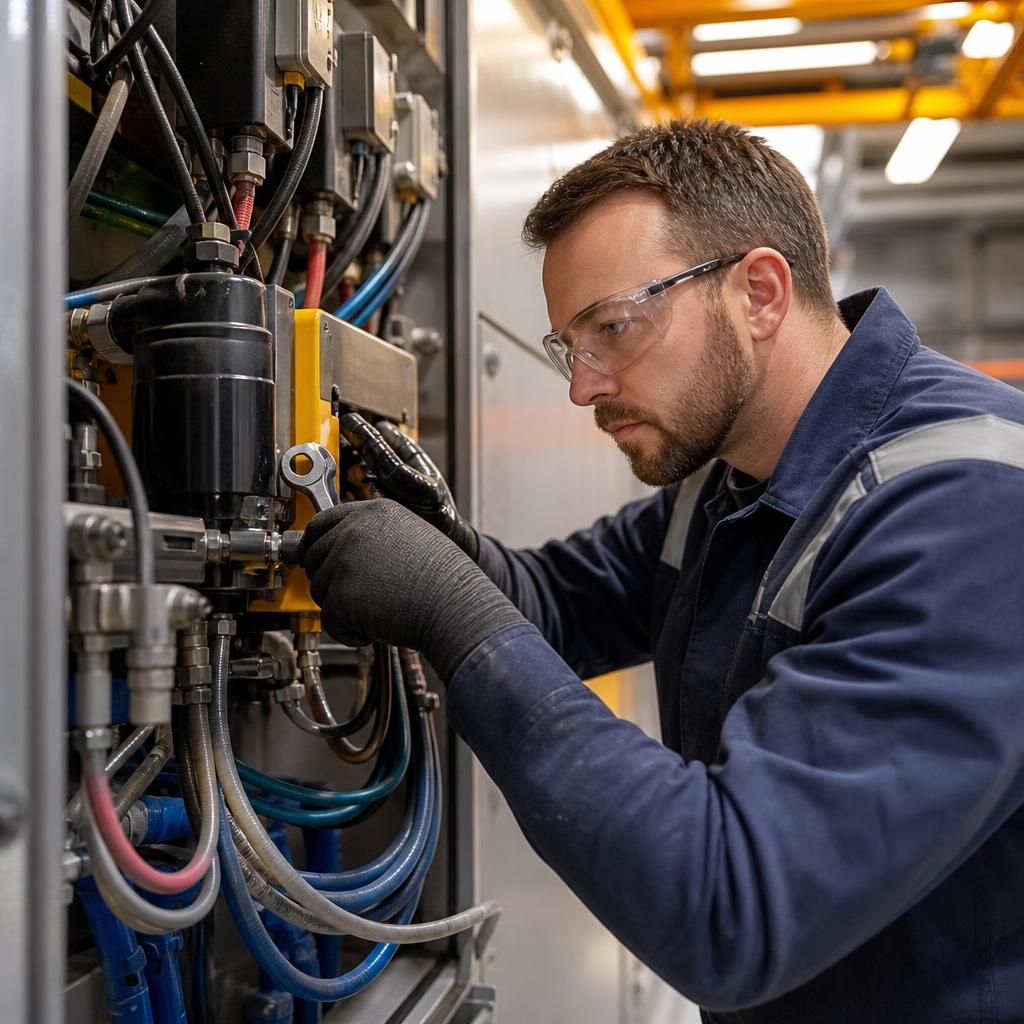
Maintenance intervals should reflect how the coating line is used, rather than relying on calendar dates alone. High production volumes, frequent colour changes, extensive reclaim use and complex components can increase powder build-up and wear on application equipment. Abrasive or specialist coating materials may also require closer inspection of wear parts and powder-contact surfaces.
A risk-based schedule links each check to the failure it is intended to prevent. For example, spray components may need inspection when transfer or coverage begins to vary, while booth cleaning requirements may be determined by colour changes and contamination risk. Reviewing maintenance findings alongside coating defects allows the schedule to be adjusted before equipment deterioration affects further batches.