

How can temperature and humidity affect powder coating results?
Temperature affects powder flow, melting and curing, while humidity can introduce moisture or condensation that contributes to defects, poor adhesion and inconsistent finish quality. Controlling the coating environment, substrate condition and cure schedule helps produce a more uniform and durable result.
Temperature and humidity affect powder coating results by changing the condition of the metal, the behaviour of the powder and the repeatability of the application process. The most important controls are keeping the substrate free from condensation, storing powder in a stable environment, measuring conditions rather than relying on comfort levels, and confirming that the curing cycle suits the actual part temperature.
Substrate temperature and condensation
Condensation can form when a metal component is colder than the surrounding air, even if the workshop itself feels dry. The relevant comparison is the metal temperature against the air’s dew point. If the substrate is at or below the dew point, a thin film of moisture may develop on the surface. This can interfere with electrostatic deposition, promote defects beneath the film and weaken the bond between the coating and the prepared metal.
Ambient air temperature alone is therefore an inadequate check. Operators should measure air temperature, relative humidity and the temperature of representative components, particularly after metal has been stored in an unheated area or brought in from outside. Parts should be allowed to reach a suitable, stable temperature before coating, and any visible or suspected moisture should be addressed before the application stage. Simply wiping a damp surface is not always sufficient if condensation continues to form.
Humidity during application
Relative humidity can affect the transfer of powder from the spray equipment to the workpiece. Moisture in compressed air may contaminate the powder path or affect its electrical behaviour, while damp powder can become difficult to fluidise and may feed unevenly. These conditions can produce variation in film build, areas of poor coverage or an inconsistent appearance between batches.
Compressed-air systems should be fitted with suitable filtration and moisture removal, with drains and separators maintained as part of the equipment routine. Powder should remain in its original sealed packaging until required, and opened material should be protected from humid air and contamination. Powder that has absorbed moisture may show signs such as clumping, poor fluidisation or unstable feeding; it should not be introduced into production without assessment.
Very dry conditions can also create process issues because static charge may dissipate differently and dust can become more readily attracted to surfaces. The objective is not to create the lowest possible humidity, but to maintain stable, controlled conditions within the limits specified for the powder, equipment and process. Recording environmental readings alongside batch and inspection information makes it easier to identify whether a defect is linked to the surroundings.
Temperature control through curing
The oven should be assessed by the temperature reached by the component, not solely by the temperature shown on the oven controller. Heavy sections, enclosed fabrications and densely loaded racks can heat at different rates from thin or lightly loaded parts. If the component does not receive the required thermal exposure, the coating may remain under-cured and have reduced resistance to handling, chemicals or service conditions. Excessive exposure can alter colour, gloss or other appearance characteristics.
Temperature profiling on representative loads helps establish how quickly parts heat and whether the required cure window is being achieved across the load. Profiles should be repeated when part thickness, geometry, loading pattern or production conditions change. Oven doors, seals, burners, heating elements, fans and conveyor movement should also be checked because poor heat distribution can create local variation that is wrongly attributed to the powder itself.
Practical controls for consistent results
- Measure air temperature and relative humidity in the application area rather than estimating conditions.
- Check the temperature of metal components, especially after cold storage or transport.
- Compare component temperature with dew point before coating.
- Keep powder sealed, dry and protected from rapid environmental changes.
- Maintain compressed-air filtration and moisture separation.
- Avoid changing environmental conditions, powder condition and application settings at the same time, as this makes faults harder to trace.
- Use temperature profiling to verify the cure experienced by the part.
- Record readings, defects, powder batch details and load configuration so recurring patterns can be investigated.
Diagnosing temperature- and humidity-related defects
Defects appearing mainly on cold-start batches or on parts stored in colder areas may indicate condensation or insufficient substrate stabilisation. Powder feed problems that vary with weather conditions can point towards moisture in the powder or compressed-air system. Defects concentrated at particular positions in the oven may indicate heat distribution or loading issues rather than a general environmental problem.
These symptoms are not conclusive on their own. Surface preparation, contamination, film thickness, earthing, powder condition and oven performance must also be checked. A controlled investigation changes one factor at a time and compares results against recorded environmental and cure data. This approach separates a genuine temperature or humidity issue from failures that happen to appear under the same conditions.
For manufacturers and fabricators, documenting these controls as part of the coating specification is particularly useful for repeat work. Where components are collected for powder coating, information about storage conditions, material thickness, assembly design and required service performance helps the coating process be assessed against the real production requirements.
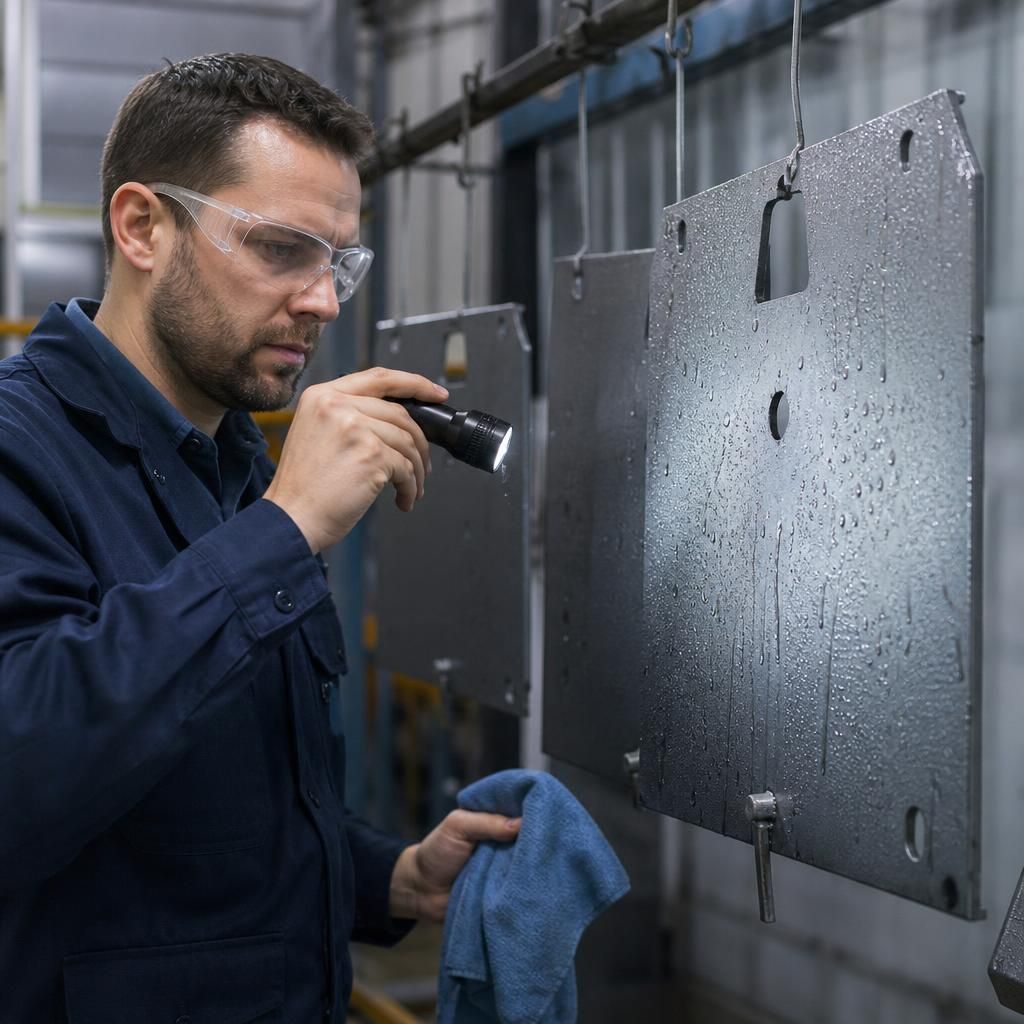
Temperature and humidity can continue to affect the finish after curing. A hot component moved into a cooler or more humid area may develop condensation as its surface temperature falls below the surrounding air’s dew point. Moisture trapped during cooling or packing can lead to water marks, surface contamination or corrosion at exposed edges and defects.
Allow coated parts to cool in a clean, controlled area before inspection, stacking or packaging. Avoid placing warm components directly onto damp surfaces or enclosing them while condensation is possible. Including the cooling and handling stages in the process check helps distinguish defects caused after curing from problems created during application or oven curing.