

How can I repair a powder-coated surface with defects like orange peel or pinholes?
Repair a powder-coated surface by identifying the defect, removing or abrading the affected coating as necessary, thoroughly preparing the metal, and applying a compatible replacement powder coat. Orange peel may require levelling and recoating, while pinholes need the underlying cause addressed before refinishing to prevent them recurring.
A powder-coated surface with orange peel or pinholes should be treated according to the defect’s depth, extent and cause. Orange peel is an uneven, rippled appearance in the cured film, while pinholes are small voids or openings that may expose the coating beneath or the metal substrate. A sound repair depends on establishing whether the problem is confined to the finish or indicates contamination, trapped gas, corrosion, poor preparation or incorrect curing.
Begin with a structured inspection. Clean the component sufficiently to distinguish coating damage from dirt, oil or handling marks. Examine it under consistent lighting and record the location, concentration and pattern of the defects. A uniform texture across a whole part may indicate application or curing conditions, whereas isolated pinholes around welds, edges, castings or recessed areas can point to substrate outgassing, residues or trapped moisture. If corrosion is visible beneath a blister or opening, a cosmetic touch-up is unlikely to provide a durable result.
Assess whether a local or complete repair is appropriate. A small, isolated imperfection on a non-critical area may be repaired locally, provided the surrounding coating is firmly bonded and the colour, gloss and texture can be matched. Local work can leave a visible transition, particularly on textured, metallic or high-gloss finishes. Where defects are widespread, repeated across a batch, or located on a prominent face, removing or abrading the affected finish and recoating the whole component generally gives more consistent coverage than treating individual marks.
Orange peel requires attention to film texture. Light orange peel may be reduced by carefully levelling the high spots without cutting through sound coating. The surface must then be cleaned and keyed evenly so that the replacement layer bonds consistently. Heavy orange peel, poor flow or significant variation in gloss usually indicates that the affected coating should not simply be painted over. A replacement powder system needs suitable melt flow, film build and cure characteristics for the component and the existing finish. A sample or test area is useful where appearance is important, because a visually similar colour can still differ in texture or reflectivity.
Pinholes need investigation beneath the visible opening. Do not assume that filling the hole alone removes the cause. Possible contributors include gas released from porous castings or welds, moisture in surface contamination, residues left in seams or cavities, excessive coating thickness and an unsuitable cure profile. Openings should be examined for loose material, contamination and corrosion. Components with porous substrates may require a controlled preparation and preheating approach, while welded fabrications may need particular attention to weld spatter, seams, joints and enclosed sections. The correct treatment depends on the construction and the powder system being used.
Preparation controls the quality of the repair.
- Remove loose, poorly bonded or visibly contaminated coating around the damaged area rather than sealing over it.
- Feather sharp boundaries so the repaired zone does not create a pronounced edge in the new finish.
- Eliminate oil, grease, dust, blasting residue and moisture before powder application.
- Check edges, holes, folds, welds and recesses, as these areas can retain contamination or receive an uneven film.
- Use a preparation method that creates a clean, suitably keyed surface without damaging dimensions, threads or critical faces.
Any bare metal exposed during preparation should be checked for corrosion and treated as part of the repair specification. On components exposed to moisture, chemicals or outdoor conditions, the coating system may need additional protection rather than a purely cosmetic top layer. Primer selection, intercoat compatibility and the required final film build should be agreed before work begins.
Curing and inspection are part of the repair. The replacement powder must be cured according to the powder manufacturer’s metal-temperature requirements, not simply by relying on oven air temperature or elapsed time. Components with different thicknesses can heat at different rates, and under-cure can affect adhesion and durability while over-cure can alter colour or gloss. After curing, inspect the finish for remaining pinholes, repeat orange peel, edge coverage, colour variation and signs of poor adhesion. Depending on the component’s use, checks may also include coating thickness, adhesion and continuity around welds and recesses.
For production parts, record the defect type, affected location, preparation method, powder identification and curing conditions. This helps distinguish a one-off handling problem from a recurring process issue and prevents the same defective batch from being repaired without addressing the underlying condition. Components with extensive failure, corrosion, uncertain coating history or demanding service conditions are better assessed by a powder coating specialist before a repair route is selected.
Powder-coatings.co.uk provides industrial powder coating support for manufacturers, fabricators, construction companies and automotive businesses across the Midlands and surrounding areas, with collection and delivery options for suitable components. A clear description of the substrate, dimensions, previous coating, defect pattern and intended service environment helps determine whether a local correction, full recoating or more extensive restoration is appropriate.
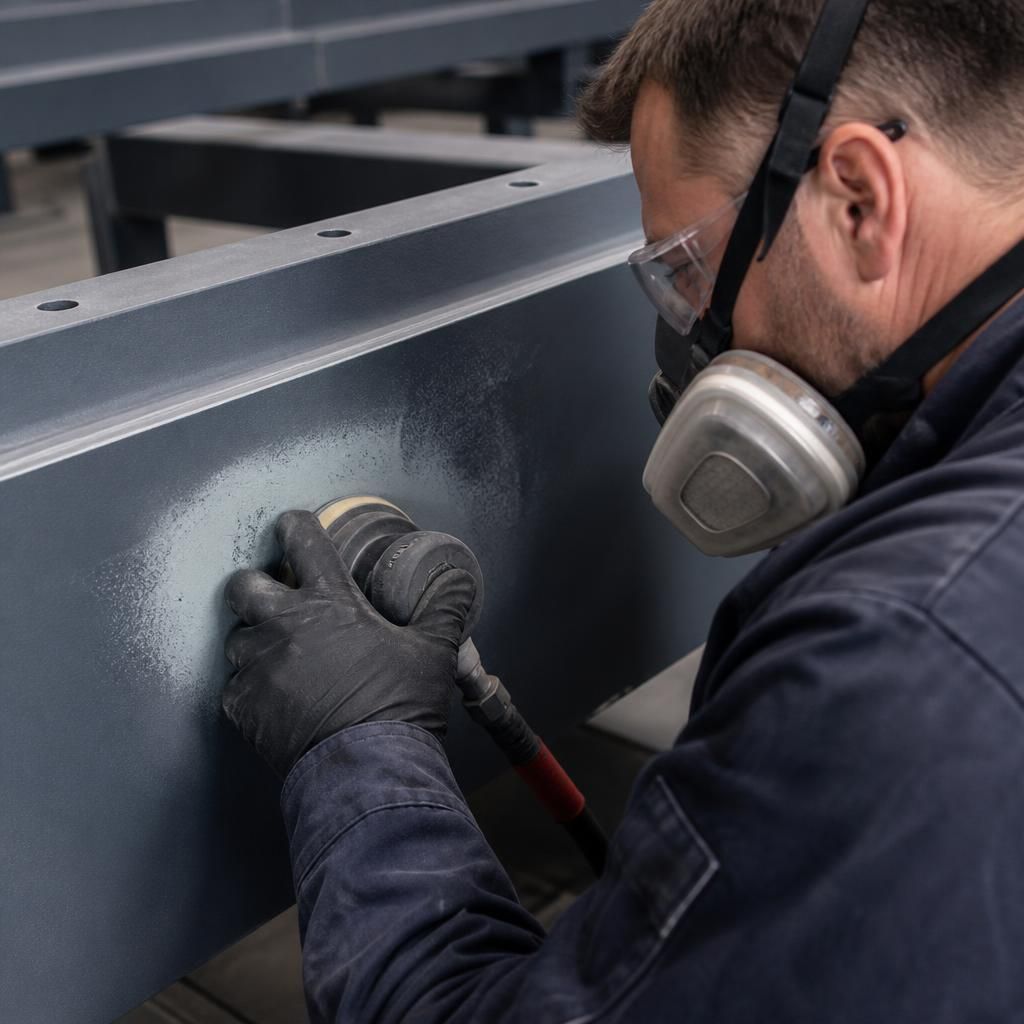
Repairing a powder-coated surface is different from filling a conventional paint defect because cured powder coating does not simply melt back into a seamless finish when heated locally. A durable correction usually requires the defective coating to be removed or reduced, the exposed area prepared, and a compatible replacement coating applied and cured under controlled conditions.
Small cosmetic marks may sometimes be treated locally, but the repair material and application method must be compatible with the existing finish. Otherwise, the patch may differ in colour, gloss, texture or edge definition, even if the original defect is no longer visible. Local repairs are therefore best suited to minor, isolated damage where appearance and service demands allow some variation.
For a visible component or a part exposed to moisture, chemicals or abrasion, a broader recoat is often more appropriate than repeatedly touching individual pinholes or textured areas. The repair specification should state the required finish and acceptable appearance before work begins, using a representative sample where colour, gloss or surface texture is critical.
Discuss repairing your powder-coated surface
Provide details of the component, substrate, defect pattern and intended service conditions so the repair can be assessed and the appropriate recoating route identified. Powder-coatings.co.uk can advise on whether the part requires local correction, complete recoating or further restoration.