

What maintenance is required after the electrostatic recoating of metal parts?
After electrostatic recoating, maintenance typically involves regular cleaning, visual inspections and prompt repair of chips, scratches or areas where corrosion may begin. Use non-abrasive cleaning methods and follow the coating system’s care guidance to avoid damaging the finish.
After electrostatic recoating, maintenance is primarily about limiting mechanical, chemical and environmental stresses that can weaken the new finish. The required regime depends on the component’s use, exposure conditions, coating specification and the consequences of coating failure, so heavily handled or externally installed parts generally need more frequent attention than protected indoor components.
Allow the coating to reach service condition: A recoated part should not be installed, stacked, packed or put into production until the coating process has been completed and the finish has cooled and hardened sufficiently for its intended use. Premature handling can create pressure marks, imprints or damage around contact points. Use suitable separators when components are stored together, and avoid dragging coated surfaces across benches, pallets or racking.
Control mechanical loading: Powder coating provides a protective barrier, but it is not intended to compensate for repeated impact, sharp-edge contact or excessive abrasion. Review points where clamps, fixtures, hinges, lifting equipment or adjacent parts contact the finish. Where damage is caused by the design or method of handling, correcting that cause is preferable to repeatedly touching up the coating.
Manage exposure to chemicals: Record any oils, solvents, detergents, process fluids or de-icing materials that may contact the component. The coating’s resistance depends on its formulation and cure, and a product that is suitable for one industrial chemical may not be suitable for another. Spillages should be dealt with using a method compatible with the coating specification, without allowing aggressive substances to remain in contact with the surface.
Check installation conditions: Water traps, poorly drained joints and areas where dirt or chemicals accumulate can place prolonged stress on a coating. During installation or modification, preserve drainage paths and avoid creating unsealed interfaces that allow moisture to reach the substrate. Pay particular attention to cut edges, drilled holes, threaded areas and interfaces with other materials, as these may require separate protection or sealing.
Protect the finish during subsequent work: Welding, drilling, grinding and cutting carried out after recoating can expose bare metal and deposit hot particles on nearby areas. Mask or shield finished surfaces before such work begins, then deal with newly exposed edges using a compatible repair system. Do not assume that applying powder coating over a contaminated or poorly prepared spot will provide a durable repair.
Use controlled repairs: Minor coating damage should be assessed according to its depth, size, location and exposure. A repair may involve removing loose material, preparing the affected area, treating exposed metal where appropriate and applying a compatible touch-up product. The colour, gloss and texture of a local repair may differ from the original powder finish, so larger or strategically important areas may need professional assessment rather than an improvised repair.
Maintain records: For production and asset-management purposes, retain the coating specification, application date, component identification, exposure conditions and any repairs carried out. This creates a useful history for identifying recurring failure at a particular joint, handling point or operating location. It also helps determine whether a future recoating should use the same system or a specification better suited to the service environment.
There is no single maintenance interval that suits every recoated metal part. Set the frequency by considering outdoor exposure, humidity, salt or chemical contact, temperature variation, handling frequency, safety importance and the cost of taking the part out of service. A written maintenance plan should define who is responsible, what conditions require escalation and when a component should be assessed for full preparation and recoating rather than local repair.
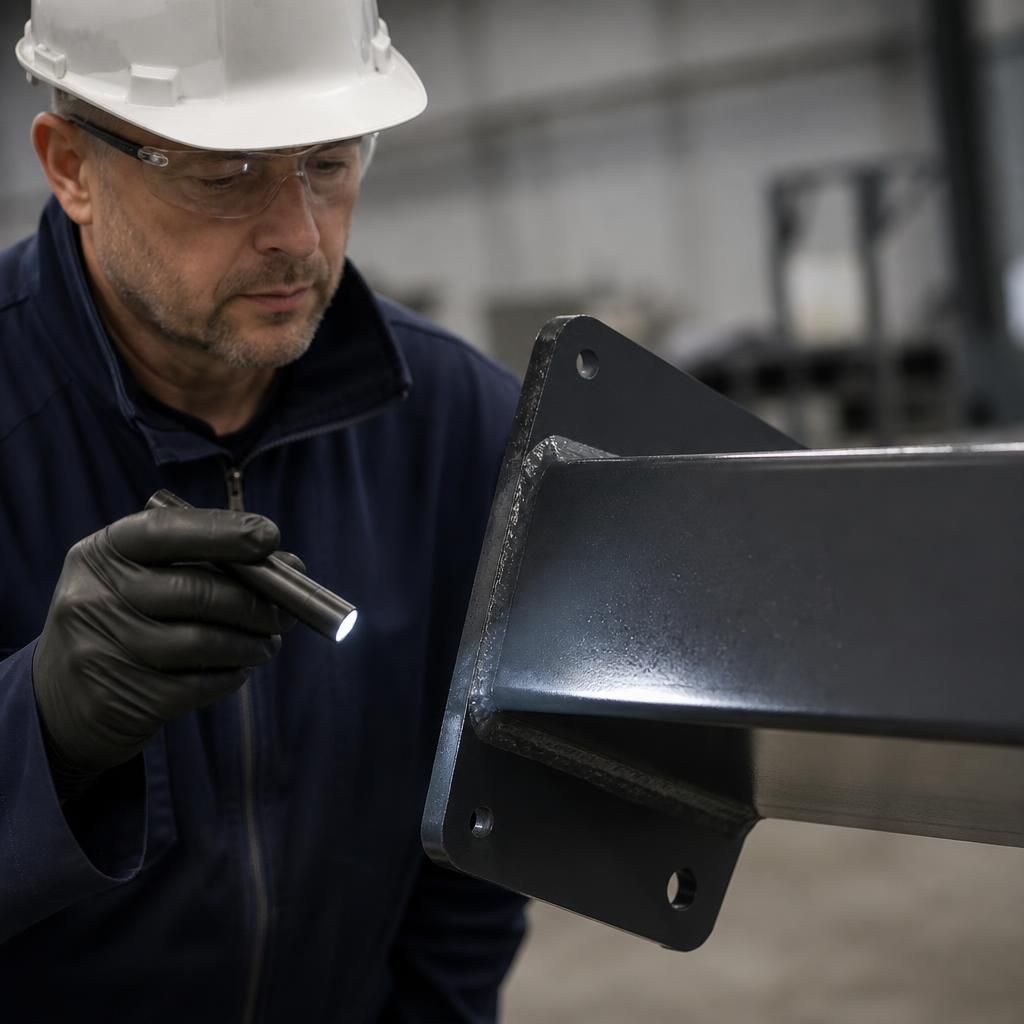
Post-recoating inspections should assess more than visible scratches. Blistering, bubbling, lifting edges or rust staining can indicate that moisture has reached the substrate or that adhesion has been compromised. Chalking, fading or a marked loss of gloss may point to ultraviolet exposure or chemical attack, even when the coating remains intact.
Record the location and extent of these changes and compare them with surrounding areas. Isolated cosmetic variation may require monitoring, whereas spreading corrosion, delamination or repeated blistering warrants technical assessment before the damage reaches the underlying metal. This helps distinguish normal service wear from a developing coating failure that needs more than surface cleaning.
Discuss maintenance for electrostatically recoated metal parts
If a recoated metal part is showing recurring damage, corrosion or adhesion problems, discuss its condition and service environment with a powder-coating specialist. They can help determine whether a local repair or full recoating is the more suitable next step.