

What are the steps involved in preparing a metal component for electrostatic powder coating?
Preparing a metal component for electrostatic powder coating involves inspecting and repairing the surface, removing existing coatings, rust, oil and contaminants, then applying the correct pre-treatment. The component is dried, masked where required, checked for a suitable earth connection and positioned for consistent powder application and curing.
Preparing a metal component for electrostatic powder coating is a controlled process that makes the substrate chemically compatible with the coating, suitable for electrostatic application and capable of meeting the required dimensional and finish specifications. In addition to general surface preparation, the work should account for the component’s material, geometry, previous use, service environment and curing requirements.
- Review the component specification
Before processing begins, confirm the required colour, gloss level, coating type, film build, masking limits and finished dimensions. This is particularly important for components that fit with other parts, contain threaded holes, use close-tolerance interfaces or require a specialist coating such as nylon. Powder adds a measurable layer to the surface, so coating allowances may need to be considered around bores, slots, mating faces and threaded areas. - Identify the substrate and its condition
Steel, aluminium, galvanised metal and cast components can require different preparation routes. The condition of the existing surface also affects the process. Previously coated parts may contain several coating layers, while used industrial components can have embedded residues, corrosion products or heat-affected areas that are not obvious from a visual check alone. A suitable preparation method is selected only after the substrate and its condition have been established. - Deal with geometry that could affect the finish
Corners, recesses, narrow channels, perforations and overlapping sections influence both powder deposition and oven heating. Sharp external edges can receive a thinner coating than broad faces, while deep recesses may be more difficult to coat evenly. Welds should be checked for porosity, trapped residues and protrusions. Where a component has enclosed sections, drainage and venting arrangements should be considered so that treatment fluids do not become trapped and gases do not escape during curing. - Consider outgassing risks
Porous castings, galvanised surfaces and components containing trapped air or processing residues can release gas when heated. This may produce pinholes, blisters or small surface defects in the cured coating. The preparation plan may therefore include additional heating, suitable venting, a compatible powder system or a specified outgassing treatment. The correct approach depends on the metal, component design and required appearance. - Select a compatible chemical pre-treatment route
The pre-treatment must suit the substrate and the intended level of corrosion protection. Its purpose is not simply to create a visibly clean surface; it also establishes a chemically suitable base for adhesion and helps protect the metal beneath the powder film. The process may include a conversion layer or another substrate-specific treatment. Residues from one stage must not interfere with the next, so concentration, contact time, rinsing and water quality require control. - Manage edges, joints and interfaces
Preparation should identify areas where the coating needs to transition cleanly, including folded edges, welded joints and contact surfaces. Burrs, weld spatter and sharp projections can affect coating continuity and handling. At the same time, excessive rounding or alteration may change the component’s fit or function. Any edge treatment should therefore be proportionate to the design and the coating specification rather than applied indiscriminately. - Plan how the part will be supported
The loading arrangement affects access for spraying, the visibility of critical faces and the number of contact marks left after processing. Supports should be placed on suitable non-critical areas and should allow the powder to reach the required surfaces. Large or awkward components may need a defined handling sequence so that operators can maintain a consistent gun-to-part relationship without touching prepared areas. - Define masking and protection requirements precisely
Masking is determined by function, not appearance alone. Threads, bearing seats, electrical contact points, machined faces, drain holes and identification surfaces may need to remain free of powder. The masking material must tolerate the curing cycle and remain stable during application. Its placement should also prevent powder build-up at boundaries, which can affect assembly or create a visible ridge. - Confirm the intended curing cycle
The curing requirement relates to the metal temperature reached by the component, not merely the temperature displayed by the oven. Thickness, mass and shape influence how quickly a part reaches the required condition. A heavy bracket and a thin panel may require different loading arrangements or dwell considerations even when they receive the same powder. The selected powder manufacturer’s technical data should be used to establish the appropriate cure schedule. - Carry out a final pre-application check
Immediately before coating, the component should be checked for handling marks, residual moisture, loose preparation media, damaged masking and any new contamination introduced during transfer. The inspection should also confirm that the coating specification, orientation and processing route match the job requirements. Only then is the component ready for electrostatic powder application and controlled oven curing.
For batch work, documenting these preparation decisions helps maintain consistency between components. It is useful to record the substrate, preparation route, masking arrangement, powder specification and curing requirements, particularly where the same part is processed repeatedly or where different metals are included in one project.
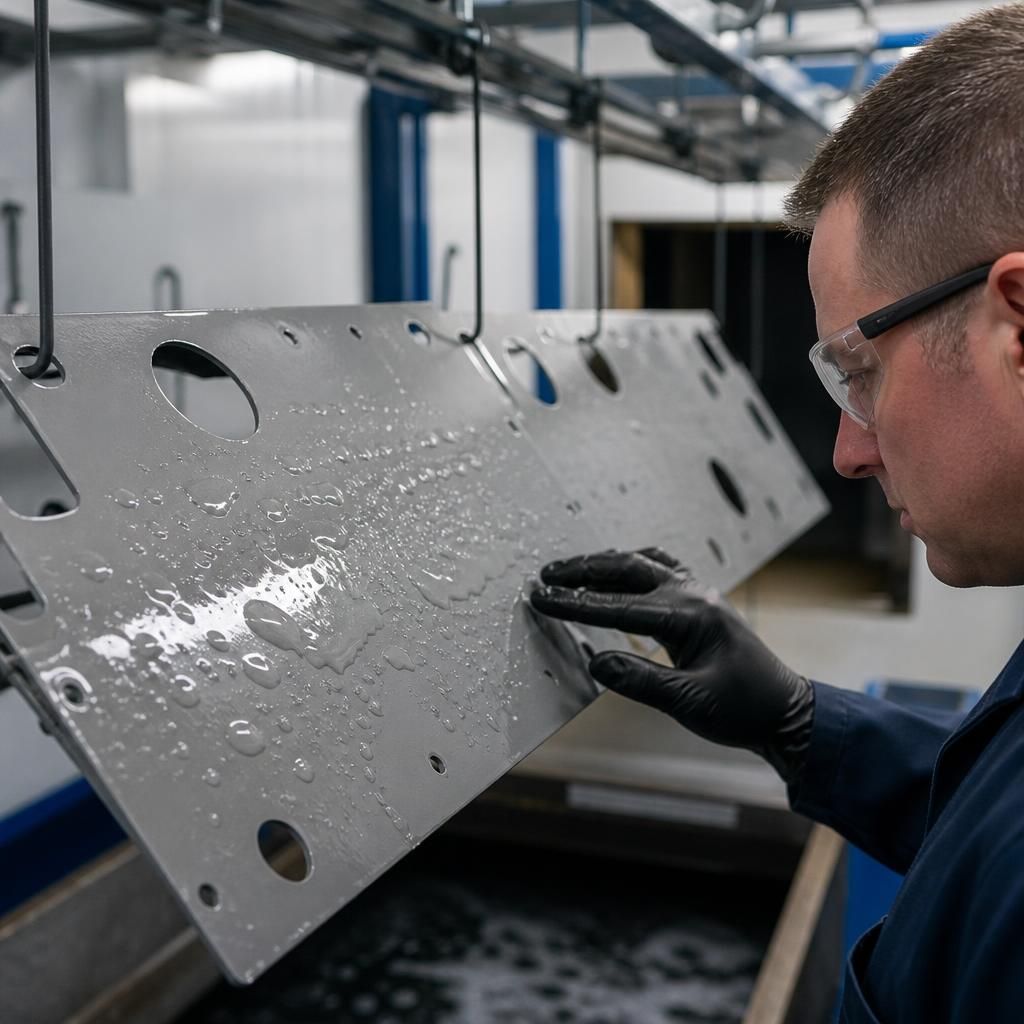
A clean surface should be verified rather than judged by appearance alone. After rinsing, a water-break check can help identify residual oil or other contamination: water should form a continuous film instead of separating into beads or isolated patches. This check is an indicator of surface cleanliness, not a substitute for the specified pre-treatment controls.
Any contamination identified at this stage must be removed before the component is handled for coating. Rechecking after preparation helps prevent adhesion defects caused by fingerprints, workshop residues or incomplete degreasing.
Discuss Your Metal Component Preparation Requirements
Discuss your metal component preparation requirements with Powder-coatings.co.uk to identify a suitable preparation and coating route for your parts. Providing the substrate, component details and finish requirements will help ensure the process is assessed accurately.