

What specific advantages does the 2-coat powder coating repair process offer over traditional coating methods?
A 2-coat powder coating repair process combines a protective primer with a durable topcoat, giving repaired metal stronger adhesion, improved corrosion resistance and a more consistent finish than a single-stage or conventional coating approach. It also allows the repair to address localised surface damage while rebuilding the protective coating system rather than relying on one coat to provide every function.
The main advantage of a 2-coat powder coating repair process is that it separates the protective and finishing functions into two controlled stages. A suitable primer is applied to the prepared metal before the topcoat, allowing the repair system to be selected for the component’s exposure, service conditions and required appearance rather than asking one coating to perform every role.
More effective use of each coating layer
In a conventional single-coat repair, the coating must provide surface coverage, hold to the substrate, resist the surrounding environment and deliver the required appearance at the same time. A 2-coat system allows the primer to concentrate on preparing and protecting the metal, while the topcoat provides the visible finish and additional resistance to handling, chemicals, abrasion or weathering where appropriate. This division of functions gives the applicator greater control over the finished coating system.
Better integration with an existing finish
Repairs are often made to components that already contain sound coating around the affected area. The two-stage approach helps the repair transition into the surrounding finish when the damaged section has been correctly cleaned, abraded and profiled. It can therefore provide a more controlled repair boundary than applying a general-purpose paint directly over exposed metal or relying on a single powder layer to bridge different surface conditions.
Greater resistance to service-related damage
The primer and topcoat can be chosen with the component’s working environment in mind. This is particularly relevant where metal parts face moisture, industrial contamination, repeated handling, impact or contact with other materials. A correctly specified system gives the topcoat a prepared base and adds a further barrier between the metal and the environment. The result is a repair designed around the likely causes of coating failure, rather than a purely cosmetic covering.
A more repeatable industrial process
Powder coating is applied as a dry film and cured under controlled conditions. Using defined preparation, primer application, topcoat application and curing stages makes it easier to inspect the work at each point. The applicator can check the prepared surface before coating, confirm that the primer is suitable, and assess the final finish after curing. This staged approach is useful for batch work because the same specification can be applied across multiple components.
By contrast, traditional wet-paint repairs can be more sensitive to solvent evaporation, application conditions, runs, sags and uneven film build. These issues depend on the product and method used, but a powder-based two-coat process can reduce some of the variability associated with liquid application when the equipment, coating materials and curing cycle are properly matched.
Improved appearance after repair
The topcoat provides the final colour, texture and sheen, subject to the chosen powder and the condition of the underlying surface. Because it is applied over a designated primer rather than directly over inconsistent exposed areas, the finish can be more uniform in appearance. This is important for visible panels, fabricated assemblies and components that must present a consistent finish after repair.
Reduced dependence on repeated touch-in work
A properly specified two-coat repair can make the affected area less dependent on frequent superficial touch-ups. It addresses the coating system beneath the visible surface instead of masking damage with a thin decorative layer. This does not remove the need for inspection or maintenance: severe impact, unsuitable preparation, incorrect curing or incompatible materials can still cause failure. The advantage is that the repair is constructed to deal with the cause and location of the coating defect more thoroughly.
Potential environmental and handling benefits
Powder coating generally avoids the solvent content associated with many conventional liquid paints, although the environmental profile depends on the products and process used. Dry powder also does not require the same drying period caused by liquid solvent or water evaporation. Overspray management, cleaning methods and energy used for curing still need to be considered when comparing systems, so these benefits should be assessed as part of the complete process rather than assumed automatically.
A 2-coat repair is not superior simply because it contains two layers. Its performance depends on removing contamination, preparing the damaged area, selecting compatible primer and topcoat materials, applying them at suitable film thicknesses and completing the required cure. Where those controls are followed, the process offers a more engineered and repairable alternative to a single-stage coating or a basic cosmetic touch-up.
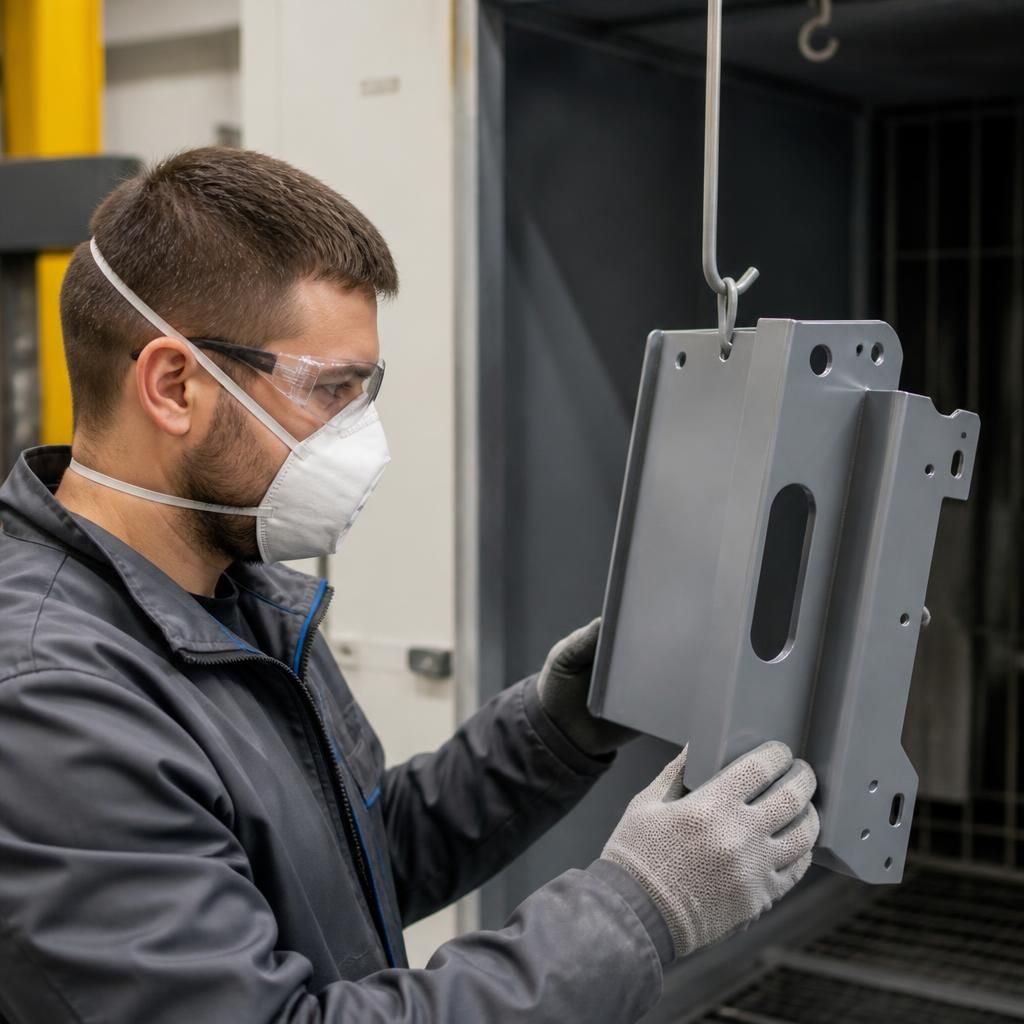
A further advantage of a 2-coat powder coating repair process is greater control over the coating build on components with dimensional or assembly requirements. The primer and topcoat can be specified and checked as separate layers, helping the applicator account for mating faces, apertures, edges and other areas where excessive or uneven coating could affect fit.
This is particularly relevant to fabricated assemblies, brackets, covers and machinery parts that must continue to align with adjacent components. Traditional brush-applied touch-ins can leave ridges, runs or inconsistent thickness around the repair. A properly prepared and cured powder repair provides a more deliberate coating profile, provided the component, materials and curing requirements are suitable for the process.
Discuss your 2-coat powder coating repair requirements
Discuss your 2-coat powder coating repair requirements with the team, including the component’s condition, operating environment and existing finish. This will help establish whether a two-stage repair system is suitable for the metalwork and the protection required.