

What factors should be considered when selecting a protective primer for the 2-coat powder coating process to ensure compatibility and effectiveness?
Select a protective primer by assessing its compatibility with the metal substrate, surface preparation system and powder topcoat, including the specified curing conditions. Its corrosion resistance, adhesion, film thickness and suitability for the component’s operating environment should also be verified so the two-coat system performs as a compatible, durable finish.
A suitable protective primer for a two-coat powder coating system should be selected as part of the complete coating specification, rather than as a standalone corrosion-resistant product. The decision should account for the primer’s chemical type, intended protective mechanism, application method, recoat requirements, testing evidence, safety documentation and the practical demands of the component and production process.
Define the primer’s role in the system. Primers can provide different functions. Some form a barrier that limits the movement of moisture and contaminants, while others provide additional corrosion protection through active pigments or sacrificial action. A primer may also be chosen to improve coverage on difficult geometries, support a particular topcoat finish or provide an additional layer of protection where the component is exposed to abrasion, chemicals or damp conditions. The required function should be recorded in the specification so that product selection is based on a measurable purpose rather than a general claim of protection.
Consider the primer chemistry. Epoxy-based powder primers are commonly selected where barrier protection and chemical resistance are important, although their suitability depends on the complete system and the intended exposure. Zinc-rich formulations can offer a different form of corrosion protection but may require tighter control of application and overcoating. Other specialist formulations may be appropriate for particular industrial duties. The key issue is not the name of the resin alone, but whether the cured primer delivers the required properties without creating problems for the subsequent powder layer.
Check the application process and component design. The primer must be capable of being applied consistently using the available powder application equipment. Component size, recesses, corners, welds, perforations and assembled areas can all affect powder deposition. A product that performs well on a simple test panel may be less suitable for a complex fabricated part if it is difficult to apply evenly or inspect. The specification should therefore consider access, masking, grounding, overspray control and the ability to maintain a repeatable process across batches.
Review the overcoating window. Technical information should state how soon the topcoat can be applied, whether the primer may be stored between coats and what action is needed if the recommended interval is exceeded. A primer surface can attract dust, moisture or handling contamination while awaiting the second coat. Some systems may require controlled rework before overcoating if the surface has aged or been damaged. These requirements are particularly important when components move between preparation, coating and assembly areas.
Assess the finish and appearance requirements. The primer should not adversely affect the colour, gloss, texture or visual uniformity required from the topcoat. This matters especially with light colours, low-gloss finishes and smooth architectural or visible components, where uneven coverage or surface defects can be more apparent. The specification should also address how the system deals with minor surface marks, inclusions and local repairs without creating visible differences after final coating.
Use performance evidence relevant to the service. Laboratory results should be interpreted in relation to the actual duty rather than treated as universal predictions. Useful evidence may include:
- cross-cut or pull-off adhesion testing for the cured coating system;
- neutral salt spray or cyclic corrosion testing for corrosion performance;
- humidity and condensation exposure for damp service conditions;
- impact, flexibility and abrasion testing where components face handling or mechanical wear;
- chemical immersion or spot testing where oils, cleaning agents, fuels or process chemicals are present; and
- visual assessment of colour, gloss and surface defects after exposure.
Test methods and acceptance criteria should be agreed before production. A primer that performs well in one test may not be the best choice for every environment, and accelerated testing should be used as comparative evidence rather than as a direct guarantee of service life.
Check documentation and traceability. The product data sheet should provide application guidance, storage requirements, recoat information, testing data and any limitations. The safety data sheet is also needed for handling, storage and waste-control procedures. Batch identification allows the coating material used on a component to be traced if an investigation or quality review is required. Clear records of the primer, topcoat, preparation route and inspection results help prevent substitutions that have not been technically assessed.
Confirm practical and regulatory suitability. Consider powder recovery, waste disposal, worker protection, cleaning requirements and any restrictions associated with the primer’s pigments or additives. A product that is technically effective but difficult to handle, segregate or dispose of may be unsuitable for the intended production process. Supplier technical support can help interpret test results and establish a controlled trial on representative components before the system is approved for batch work.
In practice, final approval should follow a documented trial using the actual component geometry and proposed production route. The selected primer should then be controlled through an agreed specification covering product identity, application method, inspection, testing and records. This approach reduces the risk of selecting a primer that appears suitable in isolation but does not perform reliably as part of the complete two-coat powder coating system.
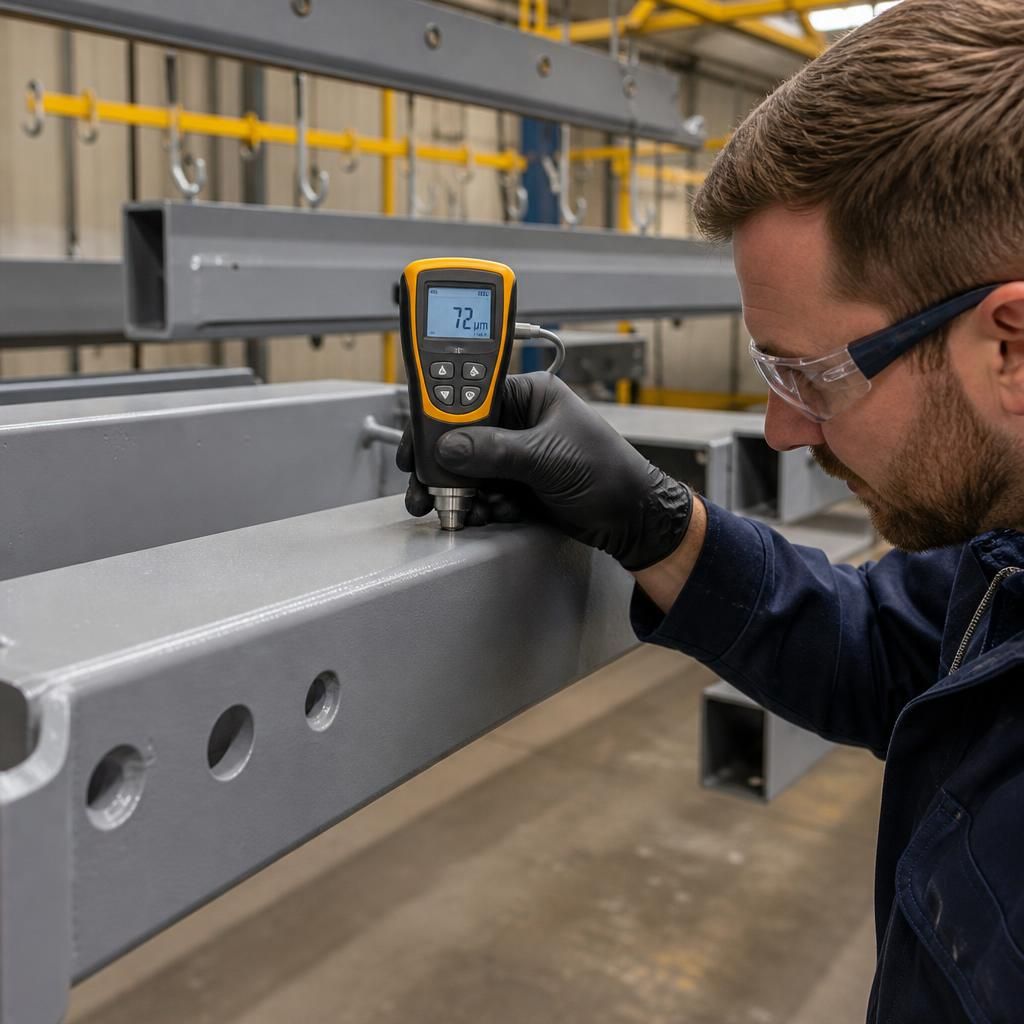
Film build is an important compatibility factor in a two-coat powder coating system. The primer must provide continuous coverage without creating an excessively thick layer beneath the topcoat. Insufficient build can leave vulnerable areas, while excessive build may affect curing, appearance, edge definition and adhesion between the two coats.
Specify a measurable primer thickness range and check it across flat surfaces, edges, corners and recessed areas rather than relying only on a visual assessment. The target should reflect the substrate profile, the topcoat specification and the exposure conditions. Any variation should be investigated before the component proceeds to final coating, particularly where local accumulation occurs around welds, joints or difficult-to-coat sections.
Discuss Your Protective Primer Requirements
Discuss your protective primer requirements with our powder coating team, providing details of the substrate, component geometry, exposure conditions and proposed topcoat. This allows the two-coat system to be reviewed against the practical demands of your application.