

What benefits does using a 2-coat powder coating repair process provide for industrial applications?
A 2-coat powder coating repair process combines a protective primer with a durable topcoat, helping repaired metal components achieve better adhesion, corrosion resistance and wear protection than a single repair layer. For industrial applications, this creates a more robust finish that can withstand handling, environmental exposure and routine operational demands while restoring the coated surface.
A 2-coat powder coating repair process provides industrial components with a controlled, layered finish: the primer supports the repaired area and the topcoat completes the surface specification. Its main benefits are improved coating continuity, more consistent finish quality, better suitability for demanding service conditions and a repair that can be assessed against defined requirements.
Improved compatibility with the existing coating system
Repairs must work with both the exposed metal and the surrounding original finish. Using a dedicated primer and a compatible topcoat gives the applicator greater control over this transition. The primer can be selected for the substrate and repair conditions, while the topcoat can be matched to the required colour, texture, gloss level and service environment. This helps reduce visible variation between the repaired area and the undamaged coating, provided the existing finish is correctly identified and the surfaces are properly prepared.
More consistent coverage on complex components
Industrial parts often include edges, recesses, brackets, welds and areas that are difficult to coat uniformly. A two-stage system allows the repaired surface to be checked after the primer stage before the final coat is applied. Any remaining defects, contamination or incomplete coverage can then be addressed rather than concealed beneath the finished layer. This staged approach is particularly useful where the component geometry makes visual inspection or access more difficult.
Better control of repair quality
Separating the repair into primer and topcoat stages creates clear points for quality assessment. Checks can include surface cleanliness, primer coverage, curing conditions, film appearance and the continuity of the finished coating. For manufacturers, fabricators and maintenance teams, this makes the repair process easier to document and repeat across batches of components or different repair areas.
Protection of the repaired substrate
Where damage has exposed bare metal, the primer helps establish the first protective layer before the topcoat is applied. This is important on components exposed to moisture, industrial contaminants, handling or chemical contact. The correct primer must be compatible with the metal, the existing coating and the intended topcoat; an unsuitable combination can cause poor intercoat bonding, defects or premature failure. The benefit therefore depends on specification as well as application.
Preservation of component appearance and identification
A repair is not only a functional treatment. Industrial equipment may use colour, gloss and texture to support product presentation, component identification or visual inspection. A separately specified topcoat allows these characteristics to be controlled without relying on the primer to provide the final appearance. A uniform finish can also make repaired areas easier to inspect during subsequent maintenance checks.
Practical benefits for industrial repair programmes
- It provides a defined sequence for treating exposed or damaged areas.
- It allows the primer and topcoat to be selected for different technical roles.
- It supports inspection between coating stages.
- It can produce a more uniform appearance across repaired components.
- It is suitable for planned batch work where repeatability matters.
- It helps protect the value of components that may be repairable rather than requiring immediate replacement.
These benefits are not automatic. The result depends on identifying the original coating, removing loose or contaminated material, preparing the substrate correctly, selecting compatible powders and applying each coat under suitable curing conditions. Component size, geometry, operating environment and the required finish should all be considered before the repair method is chosen. For industrial parts requiring specialist treatment, a coating provider should confirm that the proposed two-coat system is appropriate for the metal and the intended use.
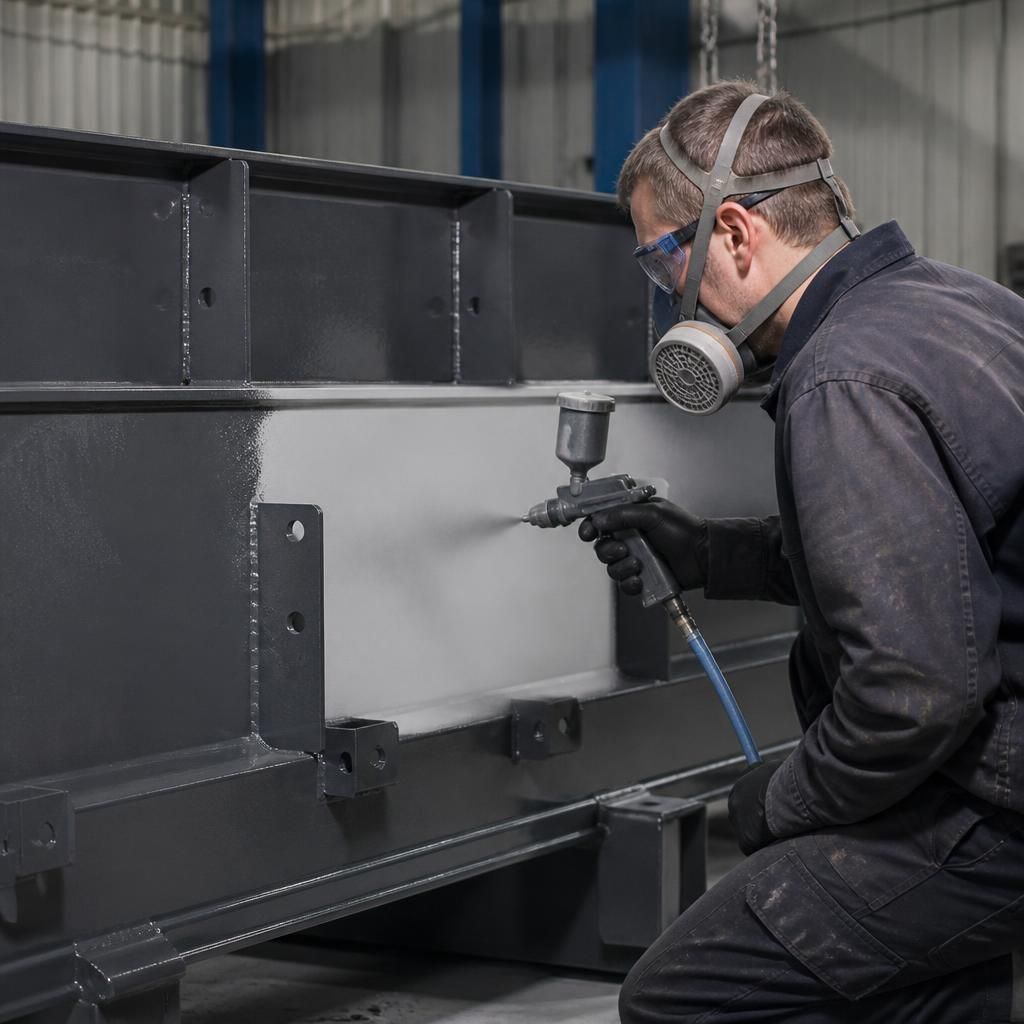
A 2-coat powder coating repair can limit intervention to the damaged area while retaining sound coating elsewhere on the component. This is useful where the original finish remains serviceable outside a local defect, as it avoids treating unaffected areas unnecessarily and helps preserve the component’s existing protective system.
The approach also supports a more proportionate repair decision. Rather than treating every damaged component as requiring complete recoating or replacement, the condition of the substrate and surrounding finish can be assessed before selecting a local two-coat repair. This is particularly relevant for industrial parts that are difficult to remove, handle or replace, provided the remaining coating is firmly bonded and the repair boundary can be prepared effectively.
Discuss your 2-coat powder coating repair requirements
Discuss your 2-coat powder coating repair requirements with the team, including the metal type, extent of damage, existing finish and operating environment. This information will help determine whether a compatible repair system is suitable for your industrial components.