

What role does powder coating application technique play in achieving a high-quality finish?
Powder coating application technique directly affects film thickness, coverage, appearance and adhesion. Consistent surface preparation, grounding, electrostatic spraying and oven curing help produce an even, durable finish across the component.
Powder coating application technique is the controlled combination of powder delivery, gun movement, component positioning and process settings used to create a uniform coating. Its role is to place the correct amount of powder on every surface, including edges, recesses, corners and difficult-to-reach areas, while limiting defects caused by excessive or inconsistent deposition.
The spray gun must be set up to suit the powder, component geometry and required finish. Powder flow, air volume, electrostatic settings and gun distance all influence how the particles travel and deposit. Excessive powder flow can overload local areas, while insufficient flow may leave thin or patchy coverage. Settings that are suitable for a flat steel panel may not be appropriate for a fabricated frame, perforated component or assembly with deep recesses.
Gun movement is equally important. A steady pass at a consistent distance helps maintain an even film, whereas stopping over one area or changing speed between passes can create visible variation. The gun is normally kept at a suitable angle to the surface, with controlled overlap between passes. Edges and corners often require deliberate attention because they can receive a different powder load from broad, flat faces. Inconsistent movement may produce heavy edges, light areas, striping or differences in texture across the same component.
Component geometry creates particular application challenges. Recesses, internal corners, narrow channels and enclosed sections can produce a Faraday cage effect, in which the electrostatic field makes it more difficult for powder to reach the deepest areas. Skilled application may involve adjusting voltage, powder flow, gun angle and spray distance, or approaching the area from more than one direction. The aim is to improve access without applying excessive powder to the surrounding faces.
Racking and component orientation also affect the result. Parts need to be supported so that the spray can reach the required faces and so that contact points are kept to areas where they will not compromise the finished appearance. Poor positioning can leave shadowed surfaces or make it difficult to coat internal features. For batch work, using repeatable rack arrangements and consistent handling helps reduce variation from one component to the next.
Film build must be managed rather than treated as a result of simply applying more powder. Insufficient deposition can leave inadequate coverage or make the substrate visually apparent. Excessive deposition may contribute to an uneven texture, loss of detail, runs or other surface irregularities. The appropriate build depends on the powder system, component design, required appearance and service conditions. Thickness checks on representative areas can help identify variation that is not obvious by visual inspection alone.
Application technique also influences common finish defects:
- Orange peel or uneven texture: may be associated with inconsistent deposition, excessive build or unsuitable process settings.
- Thin edges or missed recesses: can result from difficult geometry, poor gun positioning or inadequate access during spraying.
- Patchy colour or gloss: may indicate variation in powder application, component orientation or process control between parts.
- Back-ionisation and surface marks: can occur when electrostatic conditions and powder loading are not balanced, particularly in heavily coated areas.
- Contamination-related imperfections: may appear as craters, pinholes or isolated marks where foreign material interferes with the coating.
Repeatability is especially important for manufactured batches. Recording the equipment settings, powder specification, rack arrangement and application sequence provides a reference for subsequent components. Trial pieces or test panels can be used to assess coverage, colour, texture and thickness before a full batch is processed. Inspection should consider both visible surfaces and less accessible areas, since a component can look consistent externally while still having weak or incomplete coverage in recesses.
The most suitable technique therefore depends on the part rather than on the spray equipment alone. A flat, open component may require a different approach from a tubular frame, folded enclosure, cast part or assembly with tight internal corners. When requesting a coating specification, manufacturers and fabricators should provide component drawings or samples, identify critical cosmetic faces, state any areas that must remain uncoated and clarify the required finish. This information allows the application method to be matched to the component and reduces avoidable variation in the completed coating.
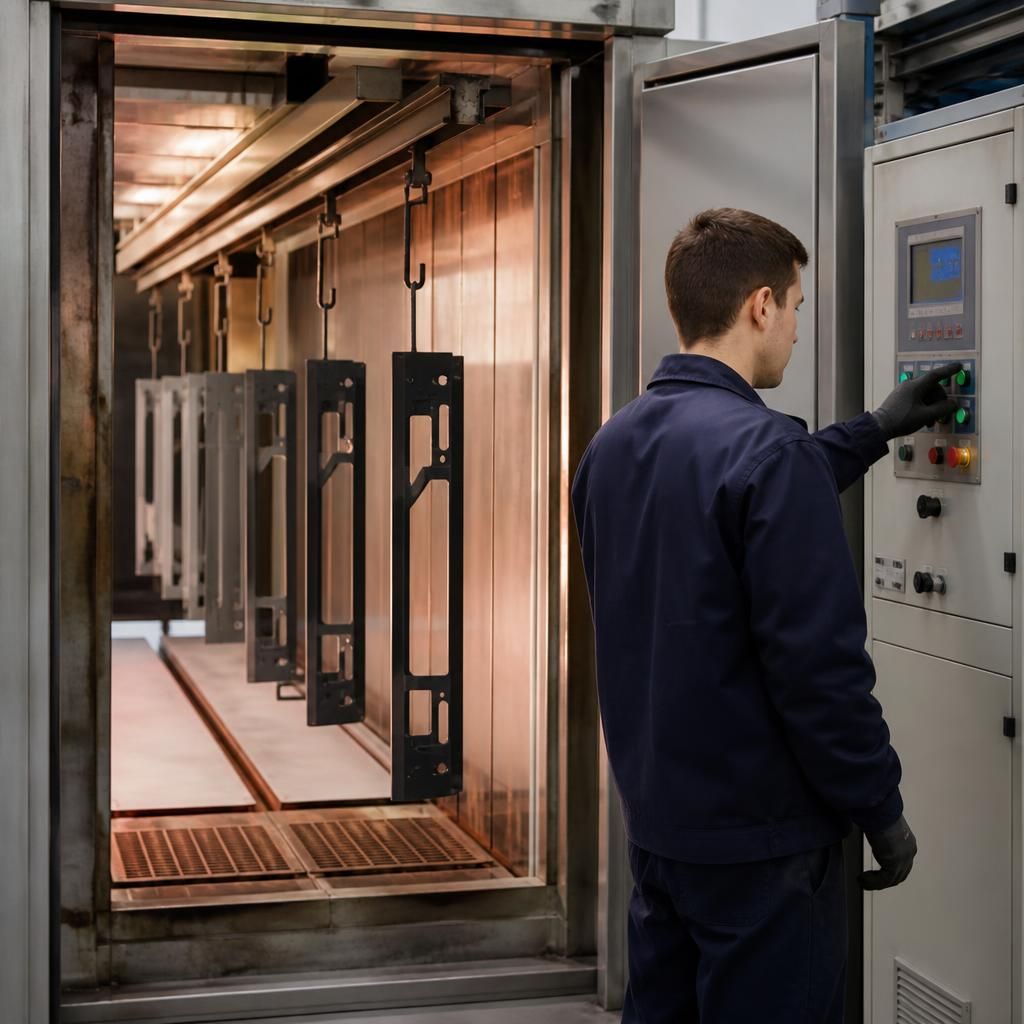
Curing is the stage that converts deposited powder into a continuous, bonded coating, so the oven cycle is a critical part of application technique. The required cure depends on the powder system and must be assessed by the temperature reached by the component, rather than by oven air temperature alone.
Part thickness, material and loading pattern affect how quickly metal heats through. If a component is not sufficiently cured, the finish may have reduced adhesion, hardness or durability. Excessive heat or an unsuitable cycle can alter colour, gloss or texture. Monitoring representative components and confirming the cure requirement for the specified powder helps ensure that the finish developed in the oven matches the intended appearance and performance.