

What are the environmentally friendly options available in powder coating?
Environmentally friendly powder coating options include low- or zero-VOC formulations, lower-cure powders that can reduce oven energy use, and thermoplastic coatings that may allow powder recovery in suitable processes. The most appropriate choice depends on the metal component, required durability, operating conditions and the applicator’s ability to control overspray and reclaim unused powder.
The most environmentally responsible powder coating choice is the one that provides the required service life with minimal material waste, efficient application and appropriate curing. This usually involves selecting a coating for the component’s actual exposure conditions, applying only the necessary film thickness, controlling overspray and preparing the metal correctly so that premature stripping or recoating is avoided.
Consider the whole lifecycle, not just the coating formulation. A finish that lasts well in its intended environment can reduce the need for replacement, refurbishment and repeat coating. For example, an exterior component needs resistance to weathering and corrosion, while an indoor component may not require the same specification. Selecting an unnecessarily high-performance system can use more resources than needed, whereas selecting an unsuitable system may lead to early failure.
- Exterior polyester systems: These are commonly considered where resistance to sunlight and weathering is important. Their environmental value comes primarily from providing a durable finish that can protect the underlying metal over an extended service period.
- Interior epoxy systems: These can be suitable for components that are not exposed to prolonged ultraviolet radiation. Using an indoor-specific coating rather than an exterior specification can avoid over-engineering the finish.
- Thermoplastic systems: These may be appropriate where impact resistance, flexibility or a thicker protective layer is required. Their processing characteristics can support material recovery in suitable controlled operations, but the practical environmental benefit depends on how the powder is collected, separated and reused.
- Low-temperature curing systems: Where the component, coating and oven process are compatible, a lower curing requirement may reduce energy demand. This must be assessed against the manufacturer’s specified cure schedule and the applicator’s ability to confirm that the coating has fully cured.
Material recovery is an important process issue. Unused powder from an application booth may sometimes be reclaimed, but it cannot automatically be mixed back into every job. Colour, chemistry, contamination, particle size and customer specification all affect whether reuse is suitable. Powder that cannot be reclaimed should be segregated and managed through appropriate waste procedures rather than treated as usable material.
Application control reduces unnecessary consumption. Correct gun settings, earthing, spray distance, component positioning and booth extraction help transfer powder to the part instead of allowing excessive overspray. Consistent racking and masking also reduce defects, rework and rejected components. Applying a coating thicker than the specification requires adds material without necessarily improving performance and can affect appearance, curing and dimensional tolerances.
Surface preparation also affects sustainability. Cleaning, pretreatment and suitable preparation help the powder bond to the metal and resist corrosion. The most appropriate preparation depends on the substrate, the operating environment and the required durability. Poor preparation can cause adhesion failure, corrosion beneath the coating and additional processing, so environmental assessment should include the pretreatment stage as well as the powder itself.
Metal selection and end-of-life recovery should be considered together. Powder coating does not prevent the metal component from being recycled, although the coating and any other attached materials may need to be removed or managed during recycling. A design that allows parts to be separated, repaired or recoated can support a longer product life than a design intended only for disposal. Where a component is likely to be refurbished, the proposed coating should be assessed for how readily it can be stripped or overcoated.
When comparing environmentally friendly options, ask the coater to assess the substrate, indoor or outdoor exposure, corrosion risk, required finish, film thickness, curing schedule and likely service life. It is also useful to confirm how overspray is controlled, whether suitable unused powder can be reclaimed, how rejected or contaminated powder is handled, and whether the specification allows the least resource-intensive coating that will still meet the component’s performance requirements.
For manufacturers and fabricators, the strongest environmental approach is normally a controlled specification rather than choosing a formulation by name alone. A correctly matched finish, efficient application and durable protection can reduce waste throughout the component’s life while maintaining the quality required for industrial use.
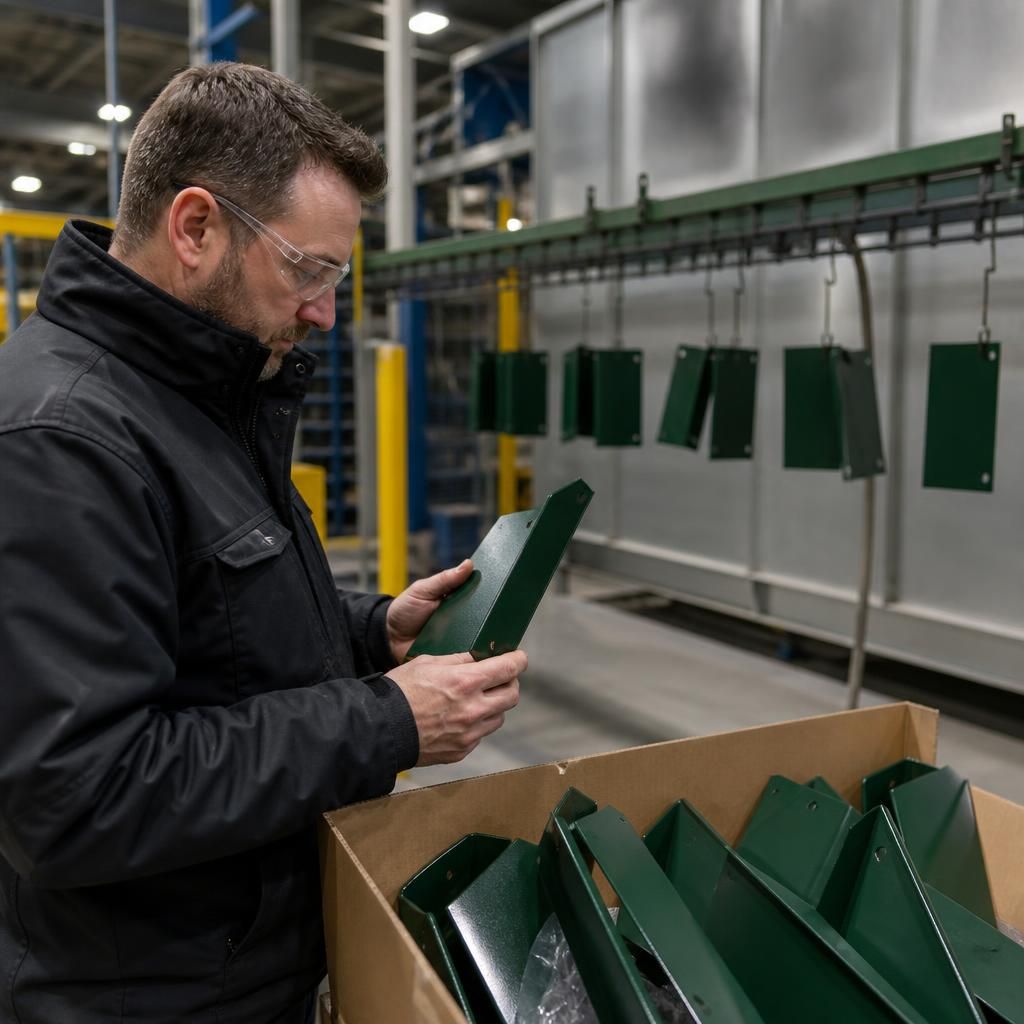
An environmentally friendly powder coating should be assessed using documented performance and process information rather than the word “eco” alone. Ask for the product’s technical data sheet, recommended cure schedule, film-thickness range and VOC information, then compare these requirements with the component and application process. This helps distinguish a formulation with a lower environmental burden from one that simply carries a broad sustainability claim.
Where available, environmental product declarations or lifecycle information can provide a more useful comparison between coating systems. These documents may cover raw materials, manufacturing, application and end-of-life considerations. They should be read alongside the required service life: a coating with suitable documented performance for its intended use may be a more responsible choice than a product with stronger environmental wording but inadequate protection for the component.