

What industries benefit most from using thermoset powder coatings?
Thermoset powder coatings benefit industries that need durable, protective finishes for metal components, particularly manufacturing, metal fabrication, construction and automotive businesses. They are suited to components exposed to regular handling, weathering, corrosion or demanding service conditions, provided the coating chemistry matches the application.
Thermoset powder coatings benefit most industries that manufacture or use metal components requiring a hard, consistent and chemically cross-linked finish. They are particularly valuable where parts must withstand abrasion, moisture, oils, cleaning agents, outdoor exposure or repeated handling without relying on a wet-paint film.
Manufacturing and engineering. Industrial manufacturers use thermoset powder coatings for machine frames, brackets, housings, panels, guards, enclosures and fabricated assemblies. The coating can provide both surface protection and a uniform appearance across repeat production runs. This is useful where components are handled during assembly, exposed to workshop conditions or required to maintain a defined finish as part of the finished product.
Metal fabrication. Fabricators benefit when steel or aluminium parts need a durable finish before delivery to a customer or incorporation into a larger installation. Typical examples include frames, railings, cabinets, supports, fabricated panels and bespoke metalwork. Powder coating is well suited to batch processing, although the design of the component must allow the powder to reach the required surfaces and the complete part must be suitable for oven curing.
Construction and building products. Construction-related businesses use coated metal in architectural, structural and service applications. Thermoset coatings can be appropriate for items such as metal screens, access panels, supports, brackets, fencing components, doors, ductwork and other fabricated products. The correct formulation and pretreatment are important where the coating will face rain, condensation, road salt, pollutants or frequent contact. Indoor and outdoor components may require different levels of corrosion resistance and weathering performance.
Automotive and transport. Automotive manufacturers, component suppliers and transport-related fabricators may use thermoset powder coatings on brackets, chassis-related parts, protective guards, housings, wheels and other non-body components. These parts can encounter vibration, stone impact, lubricants, road contamination and changes in temperature. Coating selection should therefore consider flexibility, impact resistance, chemical exposure and the temperatures reached during service, rather than appearance alone.
Electrical and electronic equipment. Thermoset powder coatings are also relevant to electrical cabinets, switchgear enclosures, control panels, equipment housings and cable-management components. In these applications, the coating can help protect the metal enclosure from corrosion and handling damage while providing an even, cleanable surface. The specification must account for masking, earthing points, tolerances and any areas that must remain conductive or free from coating.
Agricultural, plant and industrial equipment. Equipment used in farming, processing, warehousing and general industry often combines large metal assemblies with exposure to dirt, moisture, oils, fertilisers, detergents or mechanical wear. Thermoset powder coatings can suit these parts when the selected chemistry matches the environment. Components may include guards, frames, covers, housings, handles and support structures. Particularly aggressive chemicals, continuous immersion or severe abrasion may require a specialist coating system rather than a standard decorative grade.
Heating, ventilation and process equipment. Manufacturers of ventilation units, heaters, cooling equipment and process machinery may specify powder coating for panels, casings, frames and access covers. The key consideration is the operating temperature: a coating must remain stable at the temperatures encountered in service, while the part must also tolerate the curing process. A thermoset coating is not automatically suitable for every high-temperature application, so the expected temperature range and chemical exposure should be confirmed before specification.
Across these industries, the strongest case for thermoset powder coating usually combines several requirements: repeatable coverage on metal parts, resistance to a defined service environment, an acceptable decorative finish and production in batches or larger volumes. The coating is less suitable where the substrate cannot tolerate curing temperatures, where the component is too large for the available process equipment, or where the finished part will need to be reshaped after coating because thermoset films cannot simply be remelted and reformed.
Industry alone does not determine the correct coating. The specification should also consider the base metal, part geometry, pretreatment, film thickness, cure schedule, colour and gloss, masking requirements, expected exposure and any need for nylon or other specialist protective systems. Manufacturers and fabricators should provide representative drawings or samples where possible, particularly for assemblies with recesses, threaded areas, tight tolerances or different metal types.
For businesses in the Midlands and surrounding areas, an industrial powder coating specialist can assess whether the component, production volume and service environment are compatible with thermoset processing, with collection and delivery options available for business requirements.
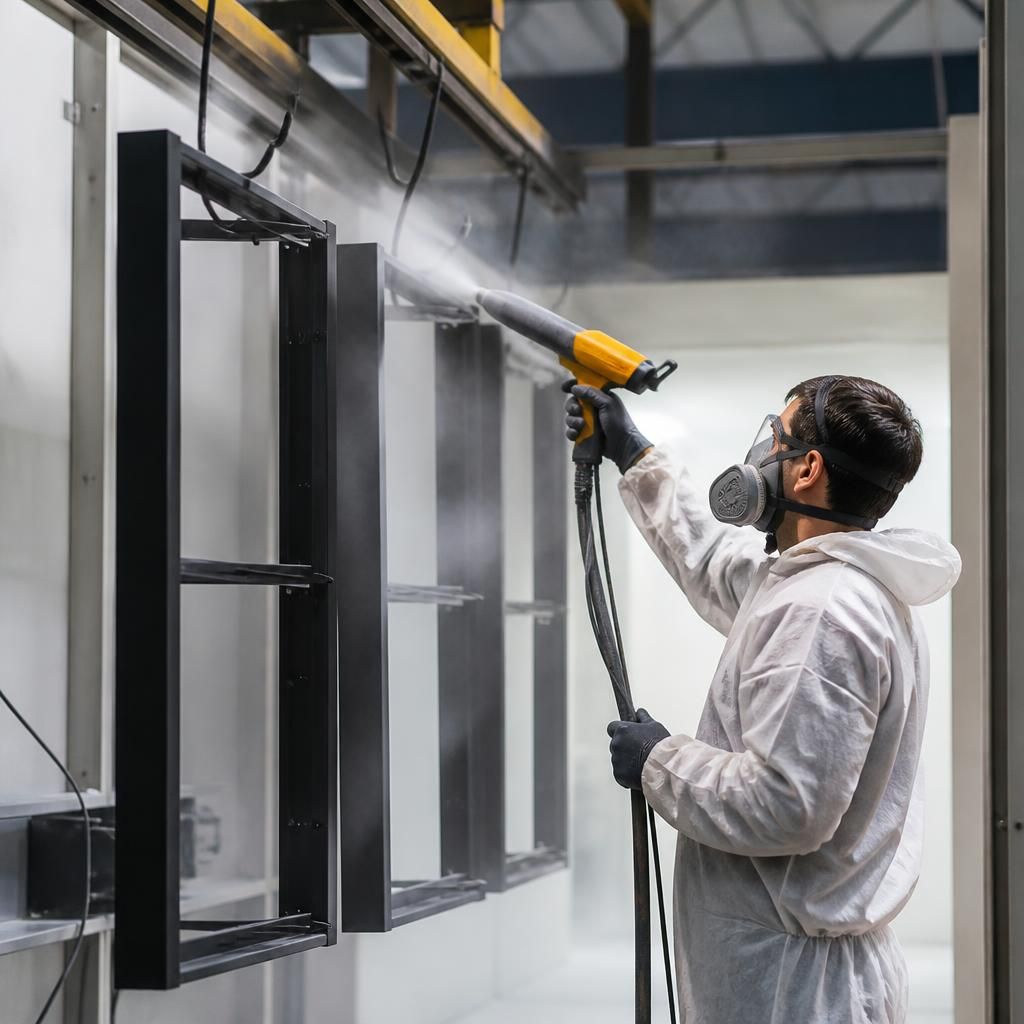
Thermoset powder coatings are most beneficial when metal components are coated after fabrication and then used as finished parts. The permanently cross-linked film is well suited to products that must retain their final shape during service, such as enclosures, guards, frames and equipment panels. It is not the preferred choice for parts that will later be cut, welded, drilled or reshaped, because the coating cannot be melted and reformed after curing.
This makes production planning an important part of industry suitability. Businesses can gain the most from thermoset coating when part drawings define the required finish, masking points, tolerances and curing constraints before manufacture begins. That approach helps avoid coating areas that must remain conductive, preserve mating surfaces and ensure the finished component can be handled and installed without compromising its protective film.