

What are the specific benefits of using polyurethane, PVDF, and Rilsan in industrial applications?
Polyurethane coatings provide flexibility, abrasion resistance and weather durability; PVDF offers strong resistance to ultraviolet exposure, chemicals and atmospheric weathering; and Rilsan polyamide coatings combine impact resistance, flexibility and protection against corrosion and chemicals. The most suitable option depends on the substrate, operating environment, temperature range, chemical exposure and required finish.
Polyurethane, PVDF and Rilsan coatings offer different forms of protection, so their benefits depend on the component’s substrate, service conditions and required finish. Polyurethane is often selected for a smooth, tough coating with good resistance to wear; PVDF is suited to applications where colour, gloss and surface stability must be retained during prolonged outdoor exposure; and Rilsan, a polyamide 11 coating, is useful where a resilient, chemically resistant and electrically insulating finish is required.
Polyurethane coatings
Polyurethane powder coatings are valued for producing an even, attractive surface with a balance of hardness and resilience. They can be suitable for components that are handled regularly or exposed to rubbing, because the cured film can tolerate surface wear without becoming excessively brittle. This makes polyurethane useful for fabricated metalwork, machinery components, housings, fixtures and equipment where appearance and practical durability are both important.
- A smooth finish can reduce the retention of dust and light surface contamination.
- The coating can provide a consistent appearance across batches when the preparation, application and curing conditions are controlled.
- Its combination of surface hardness and resilience can help resist marking during normal handling and service.
- Polyurethane formulations can be selected where a particular level of gloss, texture or colour is required.
Polyurethane powder coatings are commonly thermosetting rather than thermoplastic. Once cured, they form a cross-linked film that cannot simply be melted and reshaped. The exact performance therefore depends on the resin system, curing schedule, film thickness and preparation of the metal. The operating temperature and exposure to solvents should be checked before specifying the coating, particularly for components used near heat sources or in processes involving aggressive cleaning chemicals.
PVDF coatings
PVDF, or polyvinylidene fluoride, is a fluoropolymer chosen for its stable surface properties and resistance to long-term atmospheric exposure. Its main industrial benefit is retention of the coating’s appearance and protective function in environments where sunlight, moisture and airborne pollutants would otherwise accelerate surface deterioration. It can be appropriate for external metalwork, architectural components, infrastructure items and equipment exposed to changing weather conditions.
- It can help maintain colour and gloss over extended outdoor service.
- Its fluoropolymer chemistry provides strong resistance to many atmospheric contaminants and chemicals.
- The relatively low surface energy of the coating can reduce adhesion of some dirt and residues, supporting easier cleaning.
- It offers a stable finish where appearance is part of the specification as well as corrosion protection.
PVDF should not be treated as universally resistant to every chemical or process condition. Concentration, temperature, exposure time and the presence of abrasive particles can change the result. A specification should also define the acceptable appearance, including gloss level, colour variation and surface texture, because these affect how the finished component is assessed in service.
Rilsan coatings
Rilsan is a polyamide 11 thermoplastic coating. It is applied where a relatively thick, continuous polymer layer can provide both surface protection and functional insulation. In addition to protecting metal from corrosive contact, it can help components withstand repeated handling, vibration and incidental impact without the coating readily chipping away.
- It provides a tough barrier between the metal substrate and moisture, salts, oils and many industrial chemicals.
- The coating’s resilience can be useful on parts exposed to knocks, flexing or movement.
- Its electrical insulating properties can support applications involving electrical separation or protection of conductive metal surfaces.
- The relatively smooth polymer surface can reduce friction in some component designs and can be useful where sliding contact is involved.
- Because it is thermoplastic, local damage may be repairable using a compatible process, subject to the coating specification and the condition of the substrate.
Rilsan is not automatically the best choice for every high-temperature application. Polyamide performance can be affected by operating temperature, moisture absorption, chemical concentration and continuous exposure time. The coating thickness, edge coverage and adhesion must also be considered, especially on parts with sharp corners, threaded sections or close dimensional tolerances.
How the benefits affect material selection
The most useful comparison is not simply which coating has the longest list of properties. It is whether the coating retains the required performance under the actual combination of mechanical, chemical, environmental and dimensional demands. A practical assessment should consider:
- Substrate and preparation: the metal must be clean and suitably prepared so that the coating can form a reliable bond. Oils, rust, mill scale and residues can undermine even a chemically resistant coating.
- Exposure profile: identify whether the part will face sunlight, rain, salt, solvents, detergents, oils, abrasion, impact or repeated handling. The dominant exposure usually determines which benefit matters most.
- Temperature: distinguish between short-term peaks and continuous operating temperature. The coating must remain stable throughout manufacture, service and cleaning.
- Component geometry: holes, edges, recesses, welds and tight tolerances influence coverage and the acceptable film thickness.
- Appearance: define colour, gloss, texture and permissible variation before production. This is particularly important for PVDF-coated external components and visible polyurethane finishes.
- Repair and maintenance: consider how damage will be identified and repaired, whether the component can be recoated, and whether the coating must tolerate regular washing or chemical cleaning.
In practical terms, polyurethane is generally considered when a refined finish and resistance to routine wear are priorities. PVDF is more strongly associated with retention of appearance and surface stability during demanding atmospheric exposure. Rilsan is often considered for components requiring a substantial, resilient polymer barrier with chemical resistance, insulation or reduced friction. Where requirements overlap, the final decision should be based on the full operating specification and confirmed with coating-system data rather than on the generic material name alone.
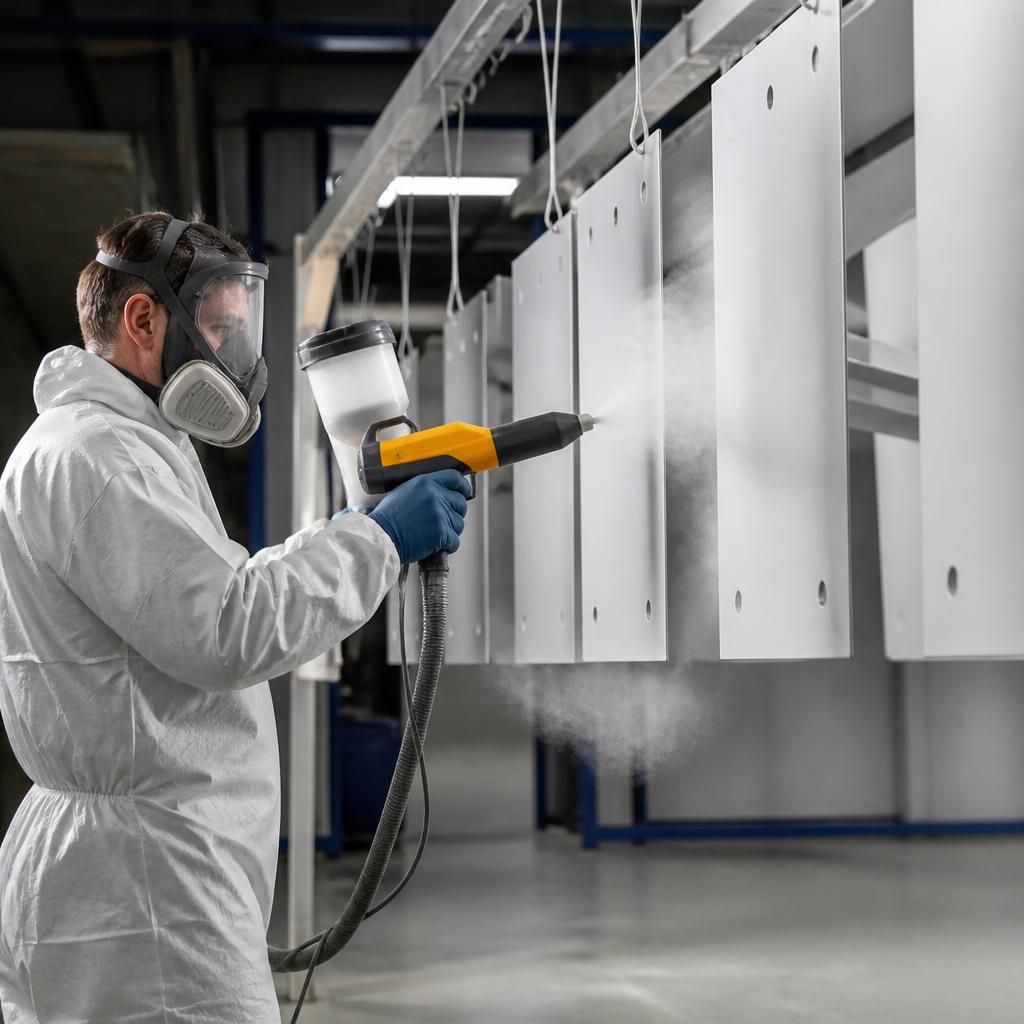
Specify performance criteria, not just the coating name. Polyurethane, PVDF and Rilsan are broad material categories, and the final result also depends on the formulation, substrate preparation, film build and application method. A robust industrial specification should therefore state the required finish, coating continuity, adhesion, dimensional tolerance and resistance to the relevant service conditions. This gives the applicator clear acceptance criteria and makes it easier to compare technical data for the precise coating system being considered.