

What are the key considerations when evaluating the longevity and maintenance needs of thermoplastic powder coatings in harsh environments?
Evaluating the longevity of thermoplastic powder coatings in harsh environments requires assessing chemical exposure, moisture, UV radiation, temperature variation, abrasion and impact, alongside the substrate and surface preparation. Maintenance needs are generally determined by the coating system’s resistance to those conditions, the quality and consistency of application, regular cleaning, and prompt repair of damage before corrosion can develop.
Longevity in a harsh environment depends on the complete coating system, not simply on the thermoplastic material. Evaluation should therefore consider the substrate, pre-treatment, coating thickness and adhesion, the actual exposure profile, component design, and the inspection and cleaning regime that will be used throughout service. A thermoplastic coating can remain serviceable for many years when these factors are matched correctly, but even a chemically resistant material may fail prematurely if moisture reaches poorly prepared steel, edges are left inadequately covered, or damage is not dealt with.
Assess the exposure in terms of severity and duration. A component exposed occasionally to a contaminant may have different requirements from one in continuous contact with it. Identify whether the surface will encounter immersion, splash, condensation, salt deposits, cleaning chemicals, process fluids, oils, fuels, acids, alkalis or solvents. Consider concentration, temperature and contact time as well as the chemical name. Compatibility information should be checked against the intended service conditions rather than relying on a general statement that a coating is chemically resistant.
Harsh service may also involve combined stresses. For example, moisture and salt can accelerate corrosion at a scratch, while heat can increase the rate at which a chemical attacks the coating. Repeated washing, pressure cleaning and contact with abrasive particles can gradually reduce the protective film even where there is no obvious single incident of damage. A useful assessment records the most demanding combination of conditions, not just each exposure in isolation.
Examine the coating system as a whole. The substrate and its condition have a direct effect on service life. Rust, mill scale, grease, moisture and embedded contaminants can prevent proper adhesion or leave active corrosion beneath the coating. Pre-treatment must be suitable for the metal and the environment, with particular attention to welds, joints, recesses and areas where contamination is likely to collect. Edges and corners deserve specific review because they are more difficult to cover consistently and may be exposed to impact or handling damage.
Application quality should be verified rather than assumed. Relevant checks may include surface cleanliness, profile or preparation condition, coating coverage, film build, adhesion and visual uniformity. Excessive build can be as undesirable as insufficient coverage: it may affect appearance, flexibility or the fit of assembled parts. Where components have close tolerances, coating thickness should be considered during design and inspection so that the finished item can be assembled without scraping or compressing the coating.
Consider how the coating will fail. Thermoplastic coatings can offer useful flexibility and impact tolerance, but performance still depends on the particular formulation and application. A coating may show local gouging, softening, blistering, peeling, cracking or loss of adhesion. These symptoms have different causes. Blistering may indicate trapped moisture, contamination or pressure beneath the film; peeling may point to inadequate preparation or a compatibility problem; and local wear may result from repeated contact rather than a general loss of chemical resistance.
Failure analysis should begin with the location and pattern of the defect. Isolated damage at an exposed corner suggests a different corrective action from widespread lifting over a damp area. Photographs, inspection records and details of the operating conditions help distinguish an application problem from an unusually severe service condition. This matters because simply recoating a failed area without removing the underlying cause can result in a repeated failure.
Maintenance should be planned as a controlled routine. Regular visual inspection can identify staining, chalking, abrasion, cuts, exposed substrate, lifting at edges and changes around fixings or joints. The inspection interval should reflect the consequence of failure and the severity of exposure. Critical items may require documented inspections, while less exposed components may be managed through planned condition checks. Records should note the location, size and progression of defects, along with the likely source of damage.
Cleaning is normally intended to remove deposits before they become a source of attack. Use a method compatible with the coating and the contaminant, starting with the least aggressive practical approach. Abrasive pads, harsh solvents, unsuitable detergents and excessive pressure can damage the surface or drive water into defects. Cleaning should not be treated as a substitute for chemical compatibility testing: a detergent used repeatedly may have a different effect from a brief accidental splash.
After washing, the surface should be rinsed where necessary and allowed to dry, particularly around joints, overlaps, drain points and enclosed sections. Poor drainage can create persistent wet areas that shorten the life of the substrate even when the visible coating remains intact. Component design should therefore support drainage, avoid unnecessary dirt traps and allow inspection of vulnerable areas.
Repair damage before corrosion spreads. Small cuts, chips or worn areas should be assessed promptly. The repair process generally involves removing loose material, cleaning and preparing the exposed area, ensuring it is dry, and applying a compatible repair system appropriate to the service conditions. A local repair may restore protection for minor damage, but it is not automatically equivalent to the original factory-applied finish. Larger areas of delamination, repeated blistering or corrosion beneath the coating usually require a more extensive assessment and may justify stripping and recoating.
Repairs should also account for the coating edge. A sharp, poorly bonded boundary can lift during subsequent cleaning or impact, allowing moisture to travel beneath sound-looking material. The repair specification should define preparation, compatibility, curing or cooling requirements where relevant, and the inspection checks needed before the component returns to service.
Use testing and evidence appropriate to the risk. Laboratory data can help compare candidate coatings, but test results must be interpreted in relation to the real component. Useful evidence may include chemical immersion or spot testing, adhesion testing, impact and flexibility assessment, abrasion evaluation, accelerated weathering, and exposure testing using representative substrates and preparation methods. No accelerated test reproduces every field condition, so results should support engineering judgement rather than replace it.
For a procurement or specification decision, ask for information on the intended exposure range, substrate preparation, application limits, inspection requirements and known restrictions. The coating should be selected by considering the full service duty, including cleaning chemicals, handling, repair access and the cost of taking the item out of service. A material with excellent resistance to one hazard may be a poor choice if the component is regularly subjected to another stress that controls its actual life.
In practice, the most reliable maintenance plan combines correct initial preparation, suitable application controls, exposure-specific cleaning, documented inspections and an agreed repair method. This approach evaluates longevity as a lifecycle requirement rather than as a property of the powder alone, and provides a practical basis for deciding whether a coating remains fit for service or needs remedial work.
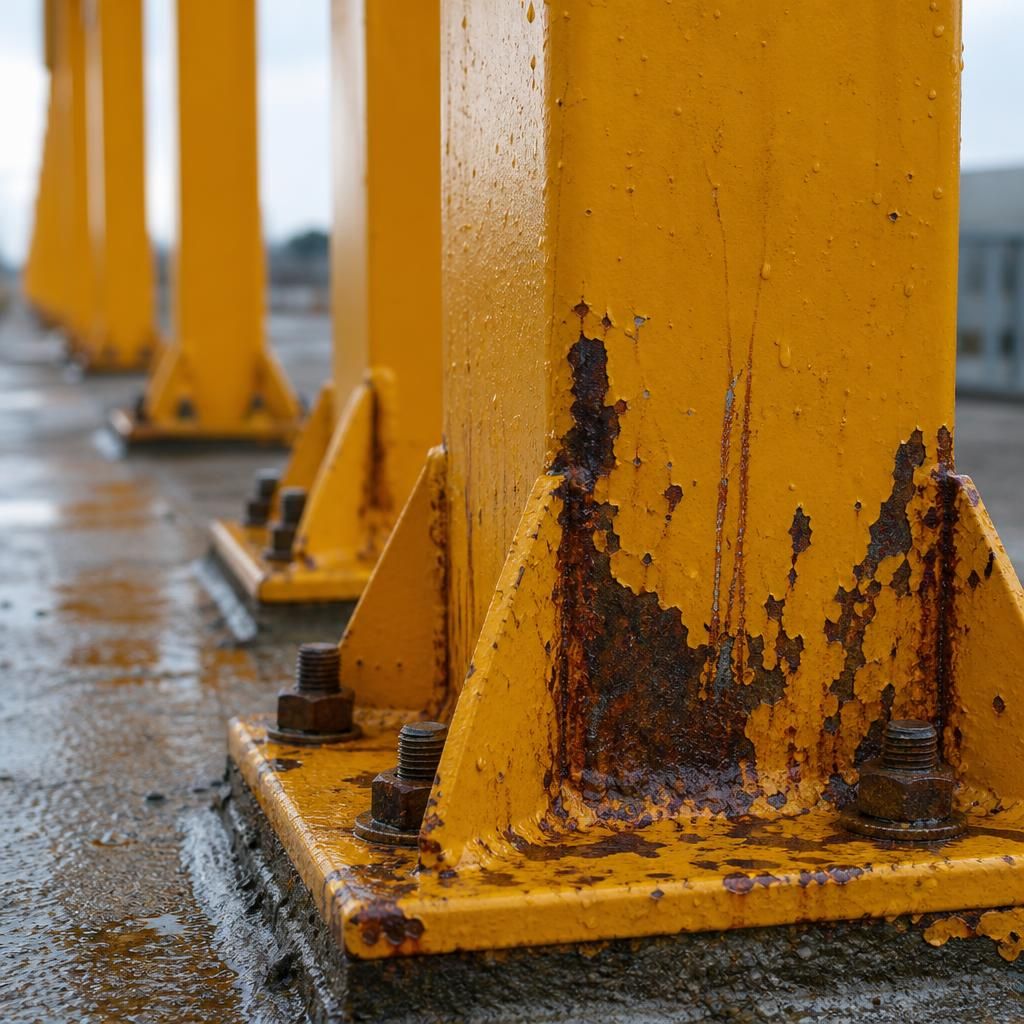
When assessing longevity in an exposed location, distinguish cosmetic ageing from loss of protective performance. Changes in colour, gloss or surface appearance may affect whether a component remains acceptable visually, but they do not by themselves prove that the substrate is no longer protected. Cracking, delamination, exposed metal and corrosion are more significant signs of functional failure.
Specify appearance requirements separately from corrosion and adhesion requirements. The assessment should consider the coating formulation, colour, UV exposure and the importance of retaining a consistent finish across replacement or adjacent components. Where appearance is critical, retain an approved reference sample or baseline photographs so that gradual weathering can be judged consistently rather than relying on memory.