

Are textured matte black powder coats suitable for all types of metal surfaces?
Textured matte black powder coats are suitable for many metal surfaces, including steel, aluminium and galvanised components, but not automatically for every substrate or condition. Suitability depends on the metal’s preparation, surface condition, coating system and ability to withstand the curing process.
No. Textured matte black powder coating is compatible with many commonly used metals, but suitability depends on the substrate, its surface treatment, the component’s design and the curing requirements of the complete coating system. A finish that performs well on mild steel may require a different preparation process on aluminium, stainless steel, galvanised steel or zinc-coated parts.
Commonly coated substrates include mild steel, aluminium and galvanised components. Each requires preparation appropriate to its surface chemistry. Steel normally needs cleaning and the removal of rust, mill scale, oil and welding residues. Aluminium may require a suitable chemical or mechanical pre-treatment to promote adhesion and control oxidation. Galvanised and zinc-coated surfaces need particular attention because trapped gases, surface residues and variations in the zinc layer can cause pinholing, blistering or adhesion problems if the preparation and curing process are not suitable.
Stainless steel can also be powder coated, although its relatively passive surface may need specialist preparation to achieve reliable adhesion. Castings and cast iron require careful assessment because pores, mould-release residues and absorbed contaminants can become visible or cause defects during heating. Copper, brass, magnesium and other less routinely coated alloys should not be treated as interchangeable with steel or aluminium; their composition, conductivity, oxidation behaviour and heat sensitivity can affect both preparation and curing.
The existing condition of the component is as important as the metal itself. Powder coating is not a way to conceal heavy corrosion, loose scale, grease, silicone contamination or poorly prepared welds. Existing paint or powder coating must be assessed for adhesion and compatibility before it is retained or removed. Weld spatter, sharp edges, deep scratches and abrasive residues can remain visible beneath a textured finish or create weak points in the coating. Degassing or pre-treatment may be needed where the substrate is porous or has been exposed to contaminants.
Component geometry also affects whether a textured matte finish is appropriate. Recesses, enclosed sections, narrow gaps and complex weldments can be harder to clean and coat consistently. Drainage and vent holes may be necessary on hollow fabrications so that cleaning fluids and air do not become trapped. Parts should also be designed or masked with the coating thickness in mind, particularly around:
- threaded holes, bushes and bearing seats;
- sliding or close-fitting interfaces;
- hinges, latches and moving joints;
- electrical earthing or bonding points; and
- surfaces that must remain dimensionally precise.
A textured powder contains a surface structure that can disguise minor visual irregularities, but it does not correct poor preparation or dimensional inaccuracies. Its texture can also make cleaning and masking more demanding, while the matte appearance may vary with film thickness, application settings, cure and viewing angle. Where several parts must match, the same powder specification and a controlled process are important; otherwise, apparently similar black finishes can differ in texture or sheen.
The metal must also tolerate the coating system’s curing schedule. Powder coating is heat cured, so assembled components containing seals, adhesives, plastics, lubricants or heat-sensitive electronics may not be suitable in their existing form. These items may need to be removed, protected or assessed with an alternative coating process. The relevant requirement is not simply whether the metal can be heated, but whether the whole component can pass through preparation and curing without distortion or damage.
Environmental exposure should be considered alongside the substrate. A textured matte black finish may be suitable for general indoor or outdoor use when paired with appropriate pre-treatment and powder chemistry, but the coating specification should reflect risks such as moisture, salt, chemicals, abrasion and ultraviolet exposure. Galvanised steel, aluminium and other non-ferrous substrates may need a system selected specifically for the expected environment rather than a standard finish chosen on colour alone.
Before production, a coater should review the metal type, previous coatings, fabrication method, service environment, required film build, masking points and curing limitations. A test piece or sample area can help confirm adhesion, texture, colour consistency and the appearance of welds or cast surfaces. Textured matte black is therefore a practical option for a wide range of fabricated and manufactured components, but the correct decision comes from matching the preparation and coating system to the exact metal and its intended use.
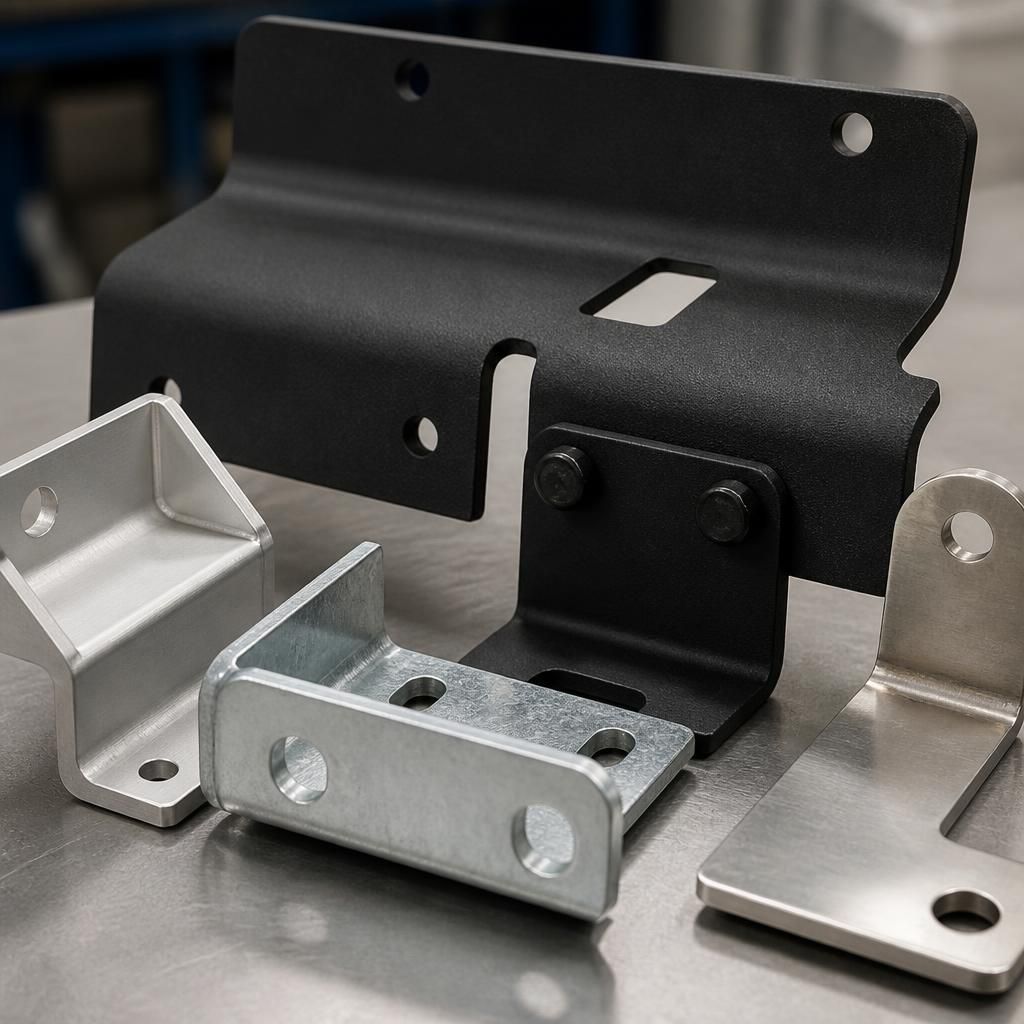
Components made from more than one metal need separate assessment before receiving a textured matte black powder coat. Steel, aluminium, stainless steel and zinc-coated areas can respond differently to cleaning, pre-treatment and heat, so treating the assembly as one uniform substrate may lead to uneven adhesion or visible differences in the finished texture.
Where practical, dissimilar metal parts should be separated before coating, with mating faces, threads, earth points and other functional areas masked or kept coating-free as required. If separation is not possible, the coater should review the joints, tolerances and curing conditions in advance. This is particularly important where the coating must not interfere with electrical contact, movement or the fit between components.
Discuss whether textured matte black powder coating suits your metalwork
If you are assessing whether a textured matte black powder coat is suitable for a particular component, discuss the metal type, previous finish, service conditions and functional requirements with the powder coating team. A review of these details can help establish the appropriate preparation and coating specification before production.