

What are the environmental benefits of using nylon and speciality powder coatings compared to traditional liquid coatings?
Nylon and speciality powder coatings can reduce environmental impact compared with traditional liquid coatings because they are applied without solvent-based liquid carriers, helping to minimise volatile organic compound (VOC) emissions. Their efficient application and durable finishes can also reduce coating waste, material use and the need for frequent recoating over the service life of metal components.
Nylon and speciality powder coatings can offer environmental advantages over traditional liquid coatings through simpler material handling, reduced solvent-related waste and longer-lasting protection of metal components. The overall benefit depends on the powder formulation, preparation process, curing requirements, recovery system and expected service conditions, so the coating should be assessed across its full life cycle rather than by application method alone.
Reduced solvent use and associated waste
Liquid coating processes commonly require solvents for dilution, equipment cleaning and removal of uncured residues. These activities can create additional waste streams, including contaminated cloths, filters, cleaning fluids and containers. Powder application does not require the same solvent-based cleaning routine. This can simplify waste segregation and reduce the amount of auxiliary material used around the coating operation.
For a manufacturer or fabricator, this distinction is relevant beyond the coating booth. Storage, handling and disposal procedures must also account for liquid residues and cleaning materials. A powder process can reduce the number of liquid substances involved, although the powder itself must still be handled and disposed of in accordance with its technical and safety information.
More efficient use of coating material
Where suitable equipment is used, unused powder can potentially be collected and returned to the application process. The practical environmental benefit depends on the coating specification, colour control requirements and whether the recovered material remains suitable for the intended finish. Nylon and speciality powders should therefore be assessed with the proposed application and recovery arrangements, rather than assuming that all unused material can be reused indefinitely.
Protection of the coated component
A coating that resists abrasion, impact, chemicals, moisture or corrosion can help protect the underlying metal during its working life. Nylon coatings are often considered where toughness, low friction or wear resistance is important, while speciality powders can be selected for particular environmental or performance demands. Protecting the component can support repair, refurbishment and continued use instead of premature replacement, particularly where the metal part is otherwise structurally suitable.
This is a life-cycle consideration rather than a claim that every powder coating will extend service life in every application. Correct pre-treatment, film thickness, curing and coating selection remain essential. A poorly specified or inadequately applied coating may fail early, cancelling the potential environmental advantage.
Energy use requires a balanced comparison
Powder coatings still require energy for application and curing. Their environmental performance should therefore be compared using the actual curing temperature, oven design, line loading, component size and production volume. Some speciality formulations may have demanding cure requirements, while others may be designed for particular processing conditions. A powder coating is not automatically the lower-impact option if it requires substantially more process energy than the alternative.
Useful questions when comparing systems include:
- What curing temperature and dwell time are required?
- Can the oven be efficiently loaded for the component batch?
- Can cure conditions be matched to the metal thickness and coating specification?
- Will the finish withstand the intended environment without avoidable stripping or reprocessing?
- Can the application system recover suitable unused powder?
Pre-treatment and end-of-life factors
The environmental assessment must include pre-treatment, as cleaning, conversion coatings, rinsing and drying can use water, chemicals and energy. These stages are not eliminated by choosing a powder coating. They should be specified carefully to achieve adhesion and corrosion protection without unnecessary processing.
End-of-life considerations also matter. A coated metal component may be recoverable through established metal recycling routes, but the coating and any pre-treatment layers remain part of the material stream. The correct route depends on the metal, coating system and recycler’s requirements. Where components are designed for refurbishment, the feasibility of stripping and recoating should be considered at the specification stage.
For sustainable manufacturing, the most reliable comparison is a process-specific review covering the coating chemistry, preparation stages, curing energy, material recovery, packaging, transport and anticipated service conditions. Nylon and speciality powder coatings can provide a lower-impact option in suitable applications, but the environmental result comes from the complete coating system and how it is operated, not from the powder material alone.
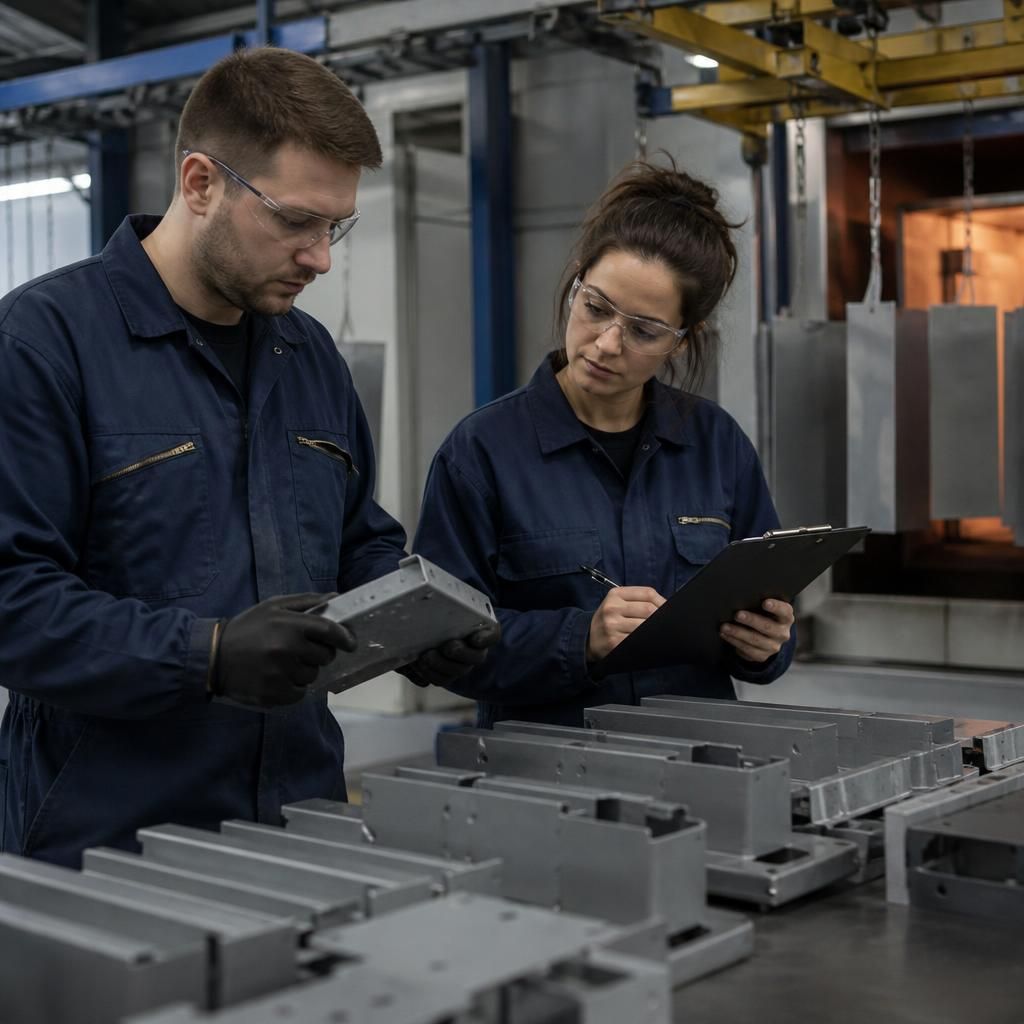
Nylon and speciality powder coatings are not automatically the lower-impact choice simply because they are powders. Their environmental profile also depends on the resin, pigments, additives and performance characteristics required for the application. A coating should therefore be specified for the actual exposure conditions rather than selecting a more complex formulation than the component needs.
Reviewing the product’s technical and safety information can help identify relevant handling, curing and disposal requirements before production begins. This supports a more accurate comparison with a liquid coating and helps ensure that the environmental benefit comes from the complete, appropriately specified coating system.
Discuss the environmental benefits of nylon and speciality powder coatings
For a process-specific environmental comparison, discuss your component material, operating conditions and proposed coating system with a powder-coating specialist. This can help identify suitable nylon or speciality powder options and the preparation, curing and recovery requirements involved.