

What types of surfaces are best suited for epoxy and polyester powder coatings?
Epoxy and polyester powder coatings are best suited to properly prepared metal surfaces, including steel, galvanised steel and aluminium. Epoxy is generally selected for components needing strong adhesion and chemical resistance, while polyester is better suited to metal exposed to sunlight and changing outdoor conditions.
The best surfaces for epoxy and polyester powder coatings are clean, dry, sound metal substrates that can be properly pre-treated and heated to the coating manufacturer’s specified curing conditions. The surface should be free from oil, grease, rust, mill scale, moisture, weld contamination and loose existing finishes before coating begins.
Commonly suitable component types include:
- Fabricated and pressed metalwork: brackets, enclosures, frames, panels, guards, housings and machine parts can provide consistent results when their surfaces are accessible for cleaning and spraying.
- Structural and architectural components: rails, supports, trims and other fabricated sections are suitable where the design allows complete coverage and does not trap water or contaminants.
- Machined and cast components: these can be coated, but sharp edges, recesses, casting pores and machining residues may require additional preparation to prevent thin coverage, pinholing or poor adhesion.
- Stainless and other specialist metal substrates: these may accept powder coatings when the surface is suitably abraded or chemically pre-treated. Their naturally passive surfaces should not be assumed to provide adequate adhesion without preparation.
Substrate condition is often more important than the metal’s name. A new component with drawing oil, weld spatter or handling residue may need more preparation than an older component with a clean, stable surface. Abrasive cleaning, degreasing, conversion treatment or other preparation methods should be selected according to the metal, the existing finish and the required service environment.
Geometry also affects suitability. Broad, accessible faces are generally straightforward to coat, while deep recesses, narrow channels and internal corners can create areas of uneven powder deposition. Sharp edges may receive less coating than adjacent flat faces, and enclosed fabrications can release trapped air or moisture during heating. Designs intended for powder coating should therefore avoid unnecessary pockets, provide drainage and allow the coating process to reach all required surfaces.
Galvanised or zinc-rich surfaces need particular attention because they can contain moisture or gases that are released during curing. Appropriate cleaning, stabilisation and outgassing controls can help reduce blistering, pinholes and adhesion problems. The same principle applies to porous castings and previously coated components: contaminants within the substrate may only become apparent after the part is heated.
Epoxy and polyester powders are not equally appropriate for every part of a component. Selection should consider whether the coated surface will face chemicals, abrasion, moisture, sunlight, temperature changes or frequent handling. It should also take account of whether the coating is intended as a single finish or as part of a wider coating system, because compatibility between layers and the condition of the underlying surface can affect the final result.
Materials attached to the metal should be checked before coating. Rubber, plastic, seals, adhesives, bearings and heat-sensitive fittings may distort, degrade or prevent complete coverage during the curing process. They are normally removed, masked or fitted after coating where the component design allows. Threads, accurately machined faces, earth points and joining surfaces may also need controlled masking so that the finished coating does not interfere with assembly or electrical contact.
Previously painted or powder-coated metal can be a suitable basis for recoating only when the existing layer is firmly bonded, compatible and free from corrosion or contamination. Loose, chalked, cracked or heavily damaged finishes should generally be removed rather than covered. A test area or sample component can be useful where the substrate history is uncertain, particularly for mixed batches or parts with several existing finishes.
Before specifying a coating, assess the substrate, its preparation requirements, component geometry, curing temperature tolerance and intended environment together. This gives a more reliable indication of suitability than selecting a powder solely by colour or gloss level.
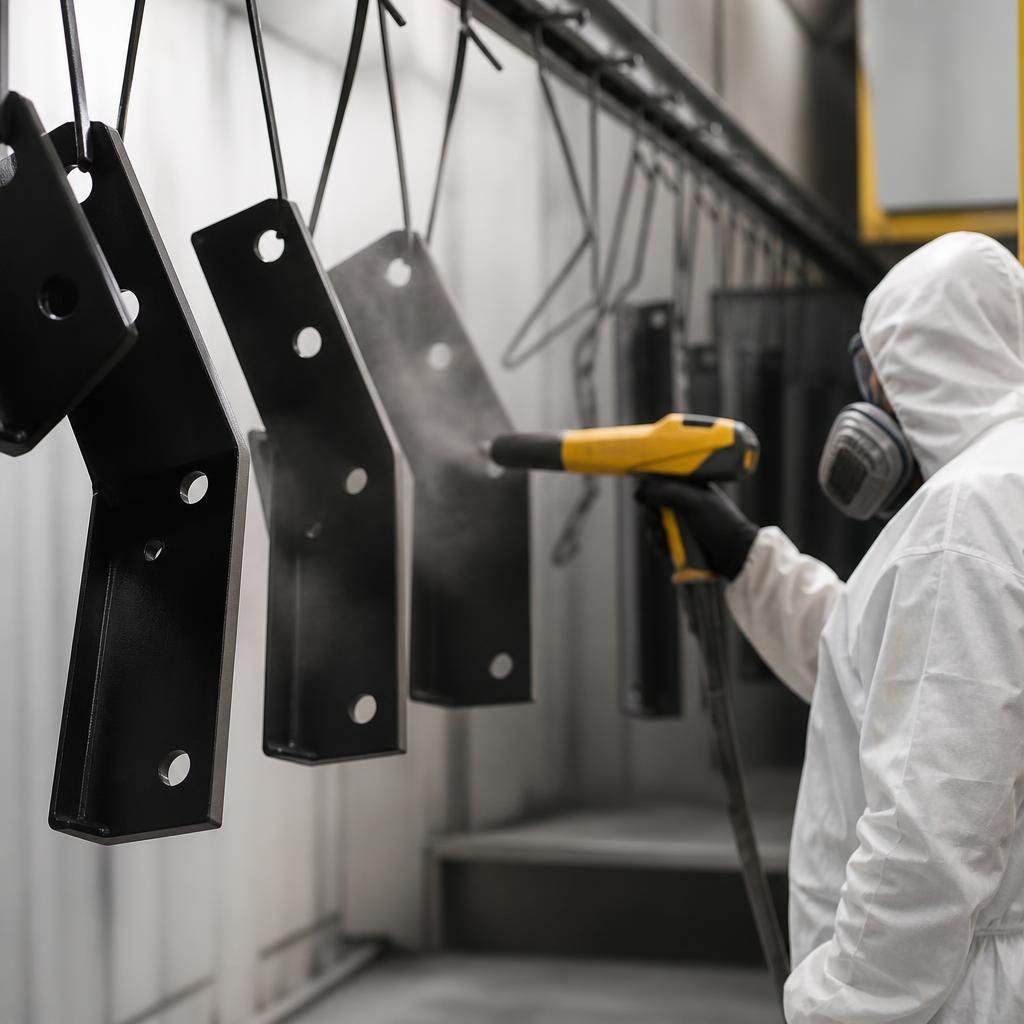
Powder coating is best suited to metal surfaces that can be electrically grounded during application. The electrostatic process relies on the part carrying a charge so the powder is attracted evenly; poor contact, heavy contamination or an insulating existing layer can lead to weak deposition and uneven coverage.
This is particularly important for small components, assemblies and parts with limited racking points. Contact areas may need to be planned and controlled so the component remains secure and conductive without leaving an unacceptable uncoated area. Where the surface condition or electrical contact is uncertain, a coating trial can help confirm that the powder can be applied consistently before a full batch is processed.
Discuss Your Surface and Coating Requirements
Discuss your component’s substrate, operating environment and finish requirements with the powder-coating team to help determine whether epoxy or polyester is the more suitable option. Providing drawings, photographs or a sample part can support a more informed assessment.