

What factors should be considered when choosing between epoxy and polyester powder coatings for specific industrial applications?
Choosing between epoxy and polyester powder coatings depends on the component’s service environment, exposure to UV light and chemicals, required appearance, mechanical demands, substrate and curing requirements. Epoxy is often preferred for strong adhesion and chemical resistance in interior or sheltered applications, while polyester is generally better suited to components exposed to sunlight and changing outdoor conditions because it offers stronger weather and colour retention.
The choice between epoxy and polyester powder coating should be based on the complete component specification rather than resin type alone. Key considerations include the part’s expected service life, substrate, fabrication design, coating thickness, required finish, curing process, inspection criteria, regulatory requirements and the consequences of coating failure. A coating that is suitable in one application may be inappropriate for another, even where the components appear similar.
Start with the required performance specification. Define what the coating must withstand and how failure would be identified. The specification may include adhesion, hardness, flexibility, abrasion resistance, impact resistance, electrical insulation, colour consistency, gloss level and resistance to particular process fluids. These requirements should be ranked, because no coating offers every property at the highest level. A part that is handled frequently may need a different balance of hardness and flexibility from a fixed enclosure or a decorative fabricated component.
Consider the substrate and component design. Steel, galvanised steel, aluminium and other metal substrates can require different preparation methods and coating systems. Surface contamination, mill scale, weld residues, sharp edges, deep recesses and areas where water can collect all affect the result. The design should allow the powder to reach the surfaces that need protection and should avoid features that make cleaning, application or curing inconsistent. Where the substrate has been galvanised or repaired, the preparation and outgassing risks should be assessed before selecting the resin system.
Review the fabrication and assembly process. Powder coating is normally applied after fabrication but before components are assembled. Confirm whether the coated part will later be drilled, bent, machined, welded or fitted with fasteners. Such operations can damage the finish or expose bare metal, while close tolerances may be affected by the added film thickness. Masking may be needed on threads, earthing points, bearing seats, mating faces and other areas that must remain uncoated. If a component has to be assembled using force, the coating’s resistance to chipping and abrasion during that operation becomes important.
Check the curing requirements against the component. The selected powder must be capable of curing fully within the oven process used for the job. This depends on oven temperature, air movement, metal temperature, part mass and geometry rather than oven temperature alone. Thin sections may reach curing temperature sooner than heavy sections, creating a risk of uneven cure if the process is not controlled. Large fabrications, assemblies containing heat-sensitive parts and components with concealed sections need particular attention. The applicator should establish a process that achieves the required cure without distorting the component or damaging attached materials.
Match the finish to the visual and functional requirement. Specify colour, gloss, texture and acceptable variation before production. Texture can help disguise minor surface irregularities, but it may also make cleaning more difficult or alter the apparent colour and gloss. Smooth finishes show substrate defects more readily and therefore place greater demands on preparation. If coated parts will be installed next to one another, consistency between batches, viewing angles and component positions should be included in the quality requirements.
Assess mechanical demands during use and handling. Consider impact from tools, vibration, repeated contact, sliding components, stacking, transport and installation. Edge areas are especially vulnerable because the coating may be thinner or less uniform there. Components that flex in service require a system and film build that will tolerate movement without cracking or losing adhesion. Where parts are regularly cleaned, the cleaning method, water temperature, pressure and chemicals should be included in the assessment rather than considered separately after coating.
Define preparation, film thickness and inspection controls. Resin selection cannot compensate for inadequate cleaning or poor surface preparation. The specification should state the preparation standard, pretreatment, target film build, acceptable visual condition and the tests required. Dry-film thickness checks, adhesion testing and visual inspection may be appropriate, depending on the component and its criticality. Excessive build can affect tolerances, edges and curing, while insufficient build can reduce protection and produce an inconsistent appearance.
Consider production and supply-chain constraints. The decision may be affected by batch size, colour changes, required masking, component dimensions, collection and delivery arrangements, and whether all parts can be processed using the same validated schedule. For repeat work, record the agreed powder specification and application controls so that later batches can be compared with the original approval sample. For one-off or mixed components, confirm that each item is compatible with the selected preparation and curing process.
Compare whole-life consequences, not just the initial coating cost. Include preparation, masking, rejects, transport, inspection, installation damage and any future repair or recoating in the assessment. A coating that meets the immediate appearance requirement but is difficult to repair or incompatible with later work may create additional cost and disruption. Conversely, selecting a more demanding system than the component needs can add unnecessary processing requirements. The appropriate choice is the one that meets the documented service and quality requirements with a controlled, repeatable process.
For a commercial or industrial project, provide the coating applicator with drawings, substrate details, component dimensions, service conditions, finish requirements, tolerances and any existing coating information. This allows epoxy and polyester options to be evaluated against the actual part, including preparation and curing limitations, rather than selected from a colour or product description alone.
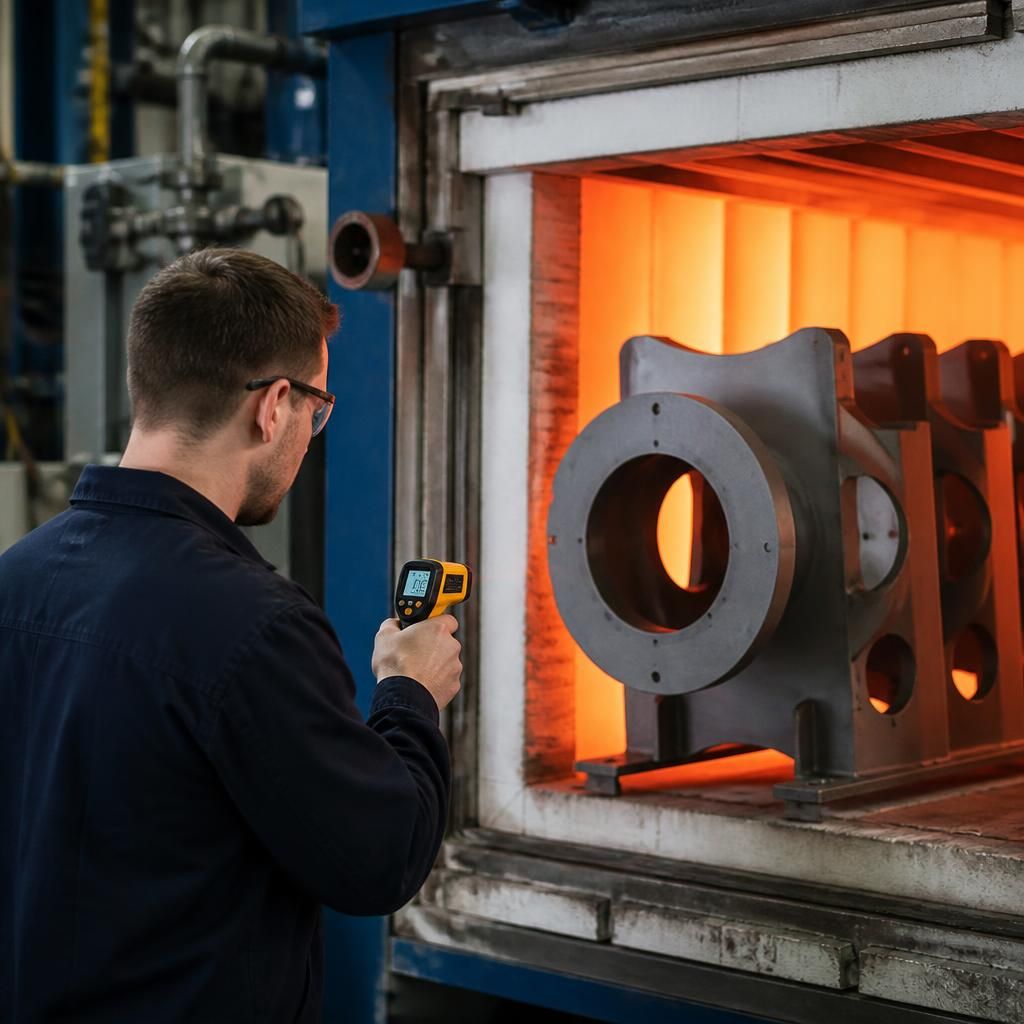
Thermal cycling is an important selection factor where a component moves between hot and cold conditions. Repeated expansion and contraction of the metal can place stress on the coating, particularly where different metals are joined or where the part has thin sections, welded areas or rigid connections. Assess the expected temperature range, rate of change and any differential movement before choosing the resin system.
Where components are installed outdoors, near heat sources or in temperature-controlled equipment, the coating should be evaluated for adhesion and flexibility under the actual service conditions rather than selected solely by colour or initial appearance. This helps distinguish a polyester system intended for changing environments from an epoxy system chosen primarily for other performance requirements.