

How do epoxy and polyester powder coatings affect the maintenance and longevity of metal components in different environments?
Epoxy powder coatings provide strong adhesion and resistance to chemicals and corrosion, making them suited to many sheltered or indoor metal components, while polyester coatings generally offer better resistance to ultraviolet exposure and changing weather for external applications. Choosing the correct system for the environment, together with sound surface preparation and appropriate cleaning, helps reduce maintenance requirements and extend the component’s service life.
Epoxy and polyester powder coatings affect longevity mainly by controlling the rate at which moisture, chemicals, ultraviolet radiation and mechanical damage reach the metal substrate. The best choice depends on the component’s complete exposure profile, not simply whether it is used indoors or outdoors. A coating that performs well in a dry factory may require a different resin system, pretreatment or maintenance regime in a coastal, chemical or high-wear environment.
Indoor and sheltered components: Epoxy is often well suited to metalwork protected from direct sunlight, particularly where resistance to oils, solvents, cleaning agents and industrial contamination is important. Its performance still depends on the specific formulation and chemical involved. Repeated contact with aggressive substances, elevated temperatures or abrasive deposits can gradually soften, stain or wear the film. Polyester can also be used in sheltered areas where colour retention, general weather resistance or a particular appearance is required.
External and high-UV exposure: Polyester generally retains colour and gloss more effectively than standard epoxy when exposed to sunlight. Epoxy used externally may lose gloss and develop surface chalking as ultraviolet radiation breaks down the exposed resin. Chalking is primarily a surface deterioration issue, but it indicates that the coating is no longer providing its original appearance and may signal the need for assessment. A polyester coating can therefore reduce appearance-related maintenance on external components, although it is not immune to fading, contamination or physical damage.
Moisture, condensation and coastal conditions: Water becomes a significant longevity risk when it can reach poorly prepared steel, unsealed edges, scratches or areas where deposits remain trapped. In coastal or persistently damp locations, airborne salts can hold moisture against the surface and accelerate corrosion at defects. Coating selection should be accompanied by suitable substrate preparation, attention to welds, corners and joints, and a design that allows water to drain rather than collect. Regular removal of salt and dirt is particularly important because deposits can undermine the protective system even when the visible coating appears intact.
Chemical and industrial environments: Epoxy can provide strong protection where components encounter specified chemicals, but resistance is not universal. The concentration, temperature, exposure time and frequency of cleaning all affect the result. Polyester may be appropriate for general industrial exposure and external service, but the exact product data should be checked where acids, alkalis, solvents or process chemicals are present. Where conditions combine chemical attack with sunlight, a system may need to balance chemical resistance against ultraviolet stability rather than relying on resin type alone.
Abrasion, impact and handling: Powder coating can be damaged by sharp edges, dropped parts, fasteners, forklift contact, rubbing components and unsuitable handling equipment. Once the film is cut through, corrosion can begin locally and spread beneath the surrounding coating if moisture enters the defect. Components subject to frequent contact should be assessed for the required hardness, flexibility and resistance to impact or abrasion. Protective packing, suitable lifting methods and avoiding metal-to-metal contact during installation can extend service life just as effectively as selecting a different resin.
How maintenance affects longevity:
- Inspect surfaces for loss of gloss, colour change, chalking, blistering, cracking, rust staining, edge lifting and impact damage.
- Clean with water and a mild, compatible detergent to remove dust, salts, oils and industrial deposits.
- Use soft cloths or non-abrasive equipment; aggressive pads, harsh solvents and unapproved chemicals can mark or soften the coating.
- Rinse away cleaning residues and allow the surface to dry, paying attention to joints, recesses and horizontal areas.
- Deal with scratches and exposed metal before corrosion becomes established beneath the surrounding film.
Maintenance intervals should reflect the environment rather than follow a universal timetable. A clean indoor component may need little more than routine inspection, while external, coastal, chemical or heavily handled parts need more frequent checks. Cleaning is preventative: it removes contaminants that retain moisture or attack the film, making it easier to identify defects before they become extensive.
Preparation and application are central to service life. Contamination, oil, mill scale, rust, weld residue and inadequate pretreatment can cause poor adhesion, pinholing or corrosion beneath an otherwise sound-looking finish. Coverage must also be consistent around edges, recesses and complex profiles. Under-curing, excessive curing or an unsuitable film build can alter the coating’s hardness, flexibility and chemical performance. For that reason, the resin choice should be considered alongside the metal substrate, pretreatment, component geometry, curing requirements and expected exposure.
When a coated component begins to deteriorate, the correct response depends on the failure mode. Surface dirt or early chalking may call for cleaning and assessment, whereas blistering, widespread rusting, peeling or loss of adhesion generally requires removal of unsound material and investigation of the underlying cause. Touch-up work may be suitable for limited damage, but larger areas normally need controlled preparation and recoating so that the repair bonds to a stable surface.
In practical terms, polyester is usually the more durable choice for retaining appearance in exposed outdoor service, while epoxy can offer valuable protection in sheltered or chemically demanding conditions. Neither coating is automatically the longest-lasting in every environment. Longevity is determined by the interaction between resin chemistry, preparation, application quality, component design, exposure and maintenance. A coating specification that records these factors provides a more reliable basis for choosing between systems and planning future maintenance.
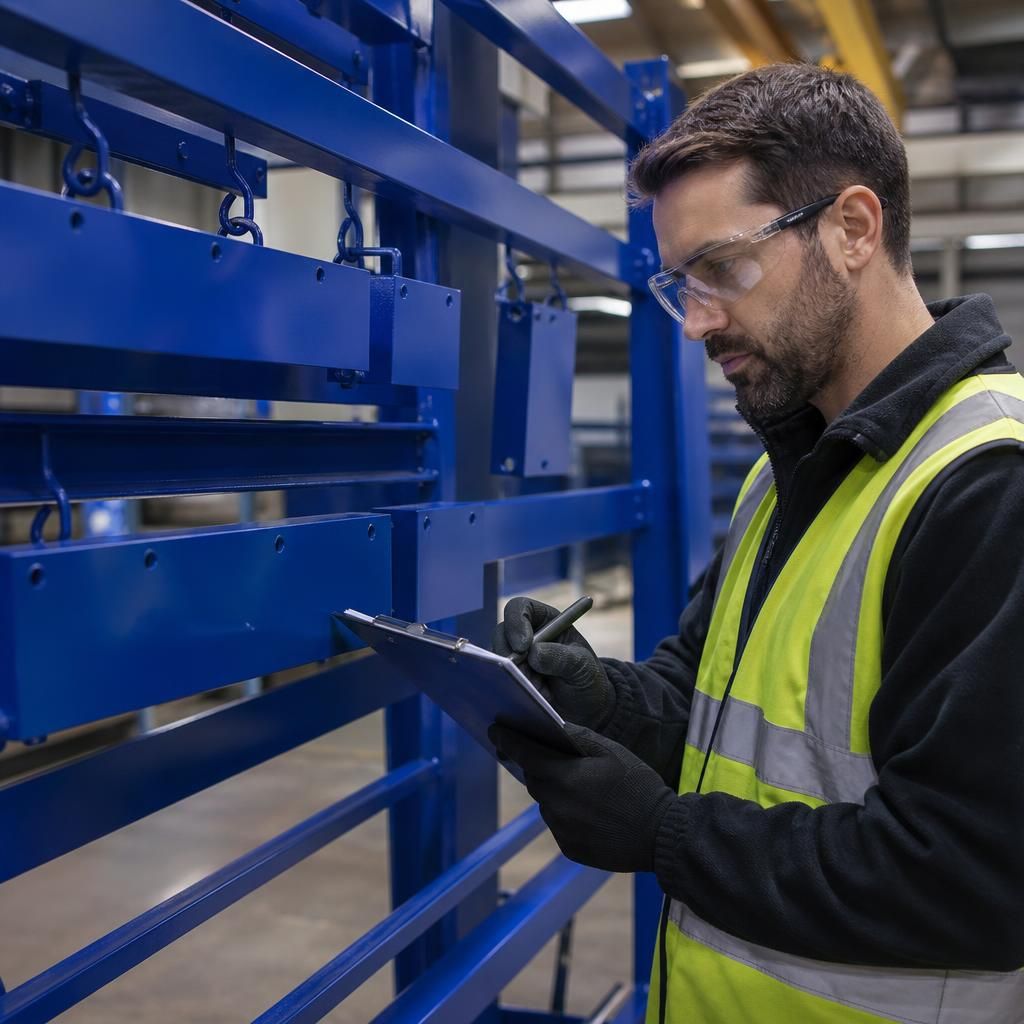
Maintenance planning for powder-coated metal components should consider both the rate of coating deterioration and the consequence of failure. A lightly loaded bracket that is easy to replace may be managed differently from a structural, safety-related or difficult-to-access component, even when both use the same epoxy or polyester system.
For critical components, record the original coating specification, substrate preparation, curing requirements and installation conditions. Establishing this baseline makes later changes easier to assess and helps distinguish normal surface ageing from loss of protective performance. Inspection can then prioritise areas where failure would interrupt production, expose the substrate to severe conditions or require extensive dismantling.
This approach improves longevity by directing cleaning, minor repairs and planned recoating towards the components where intervention has the greatest protective value. It also avoids treating resin type as the only measure of service life: a well-documented maintenance strategy can be just as important as the choice between epoxy and polyester.
Review Your Epoxy or Polyester Coating Requirements
Review your component’s exposure conditions, substrate and expected service life with the powder-coating team to identify whether an epoxy or polyester system is more appropriate. Provide details of the component, operating environment and batch requirements so the coating specification can be assessed accurately.