

What factors should I consider when choosing between RAL standard colours and custom colour matching for my project's powder coating?
Choose RAL standard colours when you need a recognised reference, straightforward specification and consistent results across batches; choose custom colour matching when an exact brand, product or design colour is more important than using a standard shade. Compare the required colour accuracy, batch-to-batch repeatability, sample approval process, likely project volume, cost implications and the finished appearance on the chosen substrate before deciding.
The choice between a RAL standard colour and a custom match should be based on how the colour will be specified, assessed, used and maintained throughout the product’s life. A RAL colour is normally the simpler technical reference, while a custom match is more appropriate when the required shade comes from an existing component, corporate identity, architectural scheme or other physical reference rather than a standard colour card.
Consider how the colour will be communicated. RAL references provide a common language for drawings, purchase orders and production records. This can reduce ambiguity where several organisations are involved in approving or supplying coated parts. A custom colour needs a clearly controlled reference, such as an approved master sample, colour measurement data or a defined colour specification. A description such as “dark blue” or “matching the existing equipment” is not sufficiently precise for dependable production.
For a custom match, establish which reference takes priority. A digital image, screen display, printed document and painted sample may all represent the intended colour differently. Physical samples can also have faded, contaminated or weathered surfaces. If the existing item is being matched, it is important to identify whether the target is its original colour or its current appearance. The coating supplier should know the source and condition of the reference before a match is assessed.
Assess the importance of identification and compliance. Some products need colours that support visual identification, warning systems, access control or site conventions. Where a recognised colour reference is required by a specification, project document or internal standard, a RAL shade may be preferable even if a visually similar custom option could be produced. Colour alone should not be treated as proof of regulatory compliance; any applicable safety, marking or industry requirements should be checked separately.
Decide how closely the colour must relate to other surfaces. A powder-coated metal part may sit next to liquid paint, plastic, anodised aluminium, printed graphics or an older powder-coated component. Even when nominally similar colours are selected, differences in material, gloss, texture and manufacturing method can make them appear unlike one another. If visual continuity across different materials matters, assess representative samples under the lighting conditions in which the finished product will normally be viewed.
Lighting deserves particular attention. A colour can appear different under daylight, artificial lighting and low-light conditions. Some shades also show more noticeable changes between light sources than others. Where a project will be inspected or displayed under a specific lighting arrangement, colour assessment should take place under comparable conditions rather than relying solely on a screen or office lighting.
Specify the appearance as well as the hue. “The same colour” does not necessarily mean the same finished appearance. Gloss level, matt or satin appearance, fine or coarse texture, metallic effect and surface structure all influence how light is reflected. A custom colour can therefore look incorrect if the hue is matched but the gloss or texture differs from the reference. The purchase specification should record these elements separately and avoid treating a colour name as a complete finish description.
Check whether the intended shade is suitable for the component and its use. The substrate, pretreatment, coating formulation and curing conditions can influence the final appearance. Highly textured finishes can mask small colour differences but may not resemble a smooth reference. Conversely, smooth or high-gloss surfaces can make variations more apparent. The colour decision should be considered alongside the required coating system and the condition of the metal surface, not as an isolated design choice.
Plan for future replacement parts. A custom match is only useful over the long term if the colour information is retained in a form that can be reproduced. Keep the approved sample, specification, finish description and relevant production records together. For a RAL selection, record the complete reference rather than relying on a colour name alone. This is particularly important where additional parts may be coated by different batches or at a later stage in the product’s service life.
Allow for acceptable variation in the specification. No visual manufacturing process should be controlled by an undefined expectation of absolute identity. The parties involved should agree how colour will be evaluated, which reference will be used and what level of visible difference is acceptable. This is especially important for large components, assemblies containing multiple coated parts and products viewed at close range. A written approval process provides a clearer basis for resolving differences than informal verbal descriptions.
In practical terms, choose a RAL standard where recognised identification, straightforward documentation and alignment with an established project palette are the priorities. Consider custom matching where the colour must relate to a particular physical object, visual identity or non-standard design requirement. In either case, define the reference, gloss, texture, substrate, viewing conditions and approval method before production so that the selected colour is judged as part of the complete powder-coated finish.
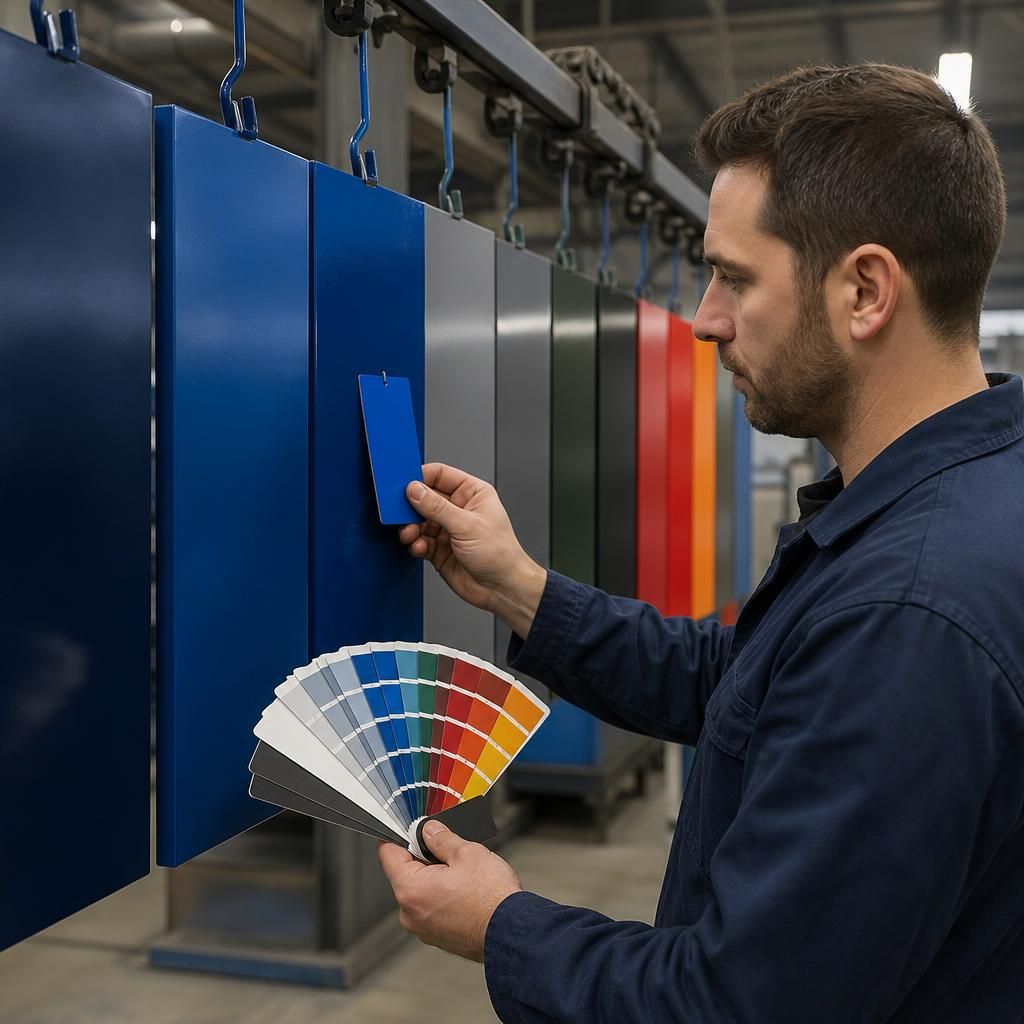
The cost difference between a RAL standard colour and a custom match depends on the coating material, preparation required and the quantity being produced, rather than on colour choice alone. RAL powders are generally easier to specify and source because the shade is already defined. A custom match may involve sample development, approval and a dedicated production arrangement, which can be harder to justify for a small or one-off batch. For a larger, repeat project, the value of maintaining a specific brand or product colour may outweigh this additional coordination. Compare the expected production volume, future reorders and the consequences of using an approximate standard shade before making the final decision.