

How do the environmental conditions of my project impact the choice of powder coating colour?
Environmental conditions influence powder coating colour choice because UV exposure, heat, moisture, chemicals and abrasion can affect colour stability and finish performance. Select a coating system and colour suited to the service environment, considering factors such as sunlight exposure, surface temperature, chemical contact and the required appearance over time.
Environmental conditions affect powder coating colour choice by determining how well the selected pigment, gloss level and surface texture will retain their intended appearance in service. Colour should therefore be chosen alongside the coating formulation and finish specification, rather than treated as a purely visual decision.
Begin by defining where the coated component will be used and what appearance it must maintain. An internal machine guard, an external architectural panel and a component exposed to industrial handling may all require different approaches, even if they are specified in the same RAL colour. The coating system should be matched to the service environment first; the colour can then be assessed for its likely appearance and maintenance requirements.
Colour depth is an important consideration. Very dark shades can make surface marks, scuffs and unevenness more noticeable, particularly on components that are handled, transported or inspected closely. Very light shades may show deposited dirt and handling marks sooner. Mid-tone colours are often more forgiving where the item is exposed to regular use, although the correct choice depends on the component’s design and cleaning arrangements.
Gloss and texture also change how environmental wear is perceived. A smooth, high-gloss finish can make colour look stronger and may make small surface imperfections more visible. Matt and fine-textured finishes can disguise minor marks, but their appearance may be harder to reproduce exactly during later repairs or additions. Textured coatings can also retain more surface contamination than smooth finishes in some applications, so the cleaning method and access to the component should be considered before the finish is selected.
For equipment used outdoors or in visually prominent locations, specify the required level of colour and gloss retention as part of the coating system. A colour sample viewed indoors under artificial lighting may look different in daylight or beside adjacent materials. Assessment should be made using representative samples, where possible, and under the lighting conditions in which the finished component will normally be seen.
Industrial cleaning can influence the practical colour choice as well. Frequent washing, pressure cleaning or the use of detergents may gradually affect the appearance of an unsuitable coating system. The coating specification should identify the cleaning products, contact method and frequency expected during the component’s life. A colour that hides routine deposits may be more practical than one selected solely for initial visual impact, provided it remains suitable for identification, branding or design requirements.
Colour can also have a functional role:
- Safety identification: colours used to distinguish guards, access points, pipework or hazards should be selected in accordance with the relevant site or industry convention.
- Visibility: high-contrast colours may help workers identify equipment boundaries, moving parts or restricted areas, subject to the project’s safety requirements.
- Heat perception: colour can affect how a surface is perceived and may influence the design decision, but the coating’s technical temperature rating must be established separately from its visual colour.
- Inspection: a consistent, easily assessed finish can make damage, contamination or corrosion-related defects easier to identify during maintenance checks.
Where components are installed as a set, consider how adjacent colours, materials and finishes will weather together. A colour that matches a nearby painted or coated surface initially may appear different later if the two systems have different retention characteristics. This is particularly relevant for replacement panels, extensions and batch-produced parts that may be coated at different times.
Before approving the colour, provide the coater with the intended use, installation position, cleaning regime, likely contact with other materials and any required safety or identification standard. Confirm the RAL reference together with the gloss level, texture, coating type and any special performance requirement. A RAL reference identifies the colour family, but it does not by itself define the complete coating specification or guarantee identical appearance across different finishes.
The most reliable selection process is to review a physical sample or approved panel, confirm the complete coating system with the powder coater, and retain the agreed specification for future batches. This approach reduces the risk of choosing a colour that looks suitable in isolation but is impractical for the conditions in which the finished metal component will be used.
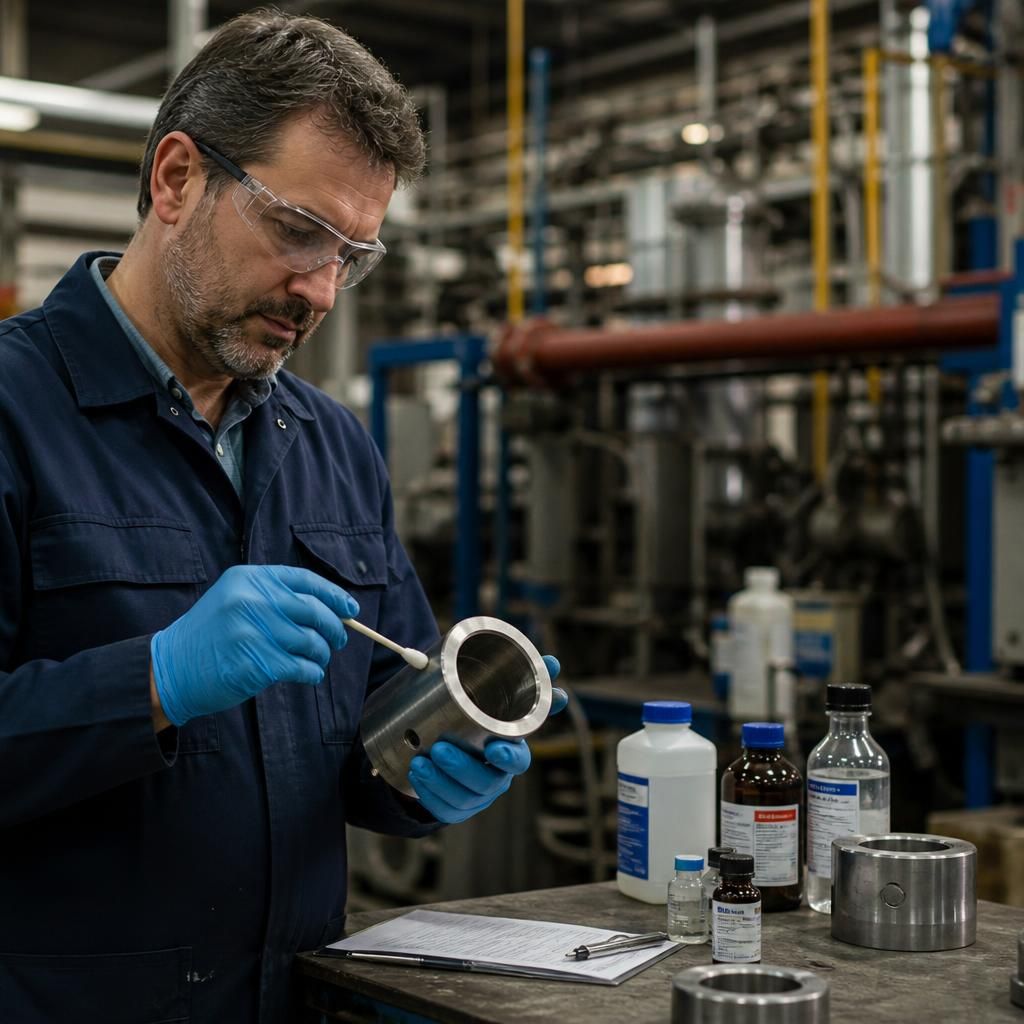
Where metal components may contact chemicals, colour should be selected only after the coating chemistry has been assessed. The same RAL colour can be available in coating systems with different resistance to oils, solvents, acids, alkalis or process fluids, so the colour reference alone cannot confirm suitability.
Specify whether exposure will involve occasional splashes, repeated cleaning, prolonged contact or immersion. The coater can then assess the coating manufacturer’s technical information and identify any required resistance testing. This is particularly important for process equipment, storage areas and components exposed to substances that may soften, stain or attack an unsuitable finish.
Discuss Your Environmental Powder Coating Requirements
Discuss your project’s environmental conditions with our powder coating team and provide details of the component’s use, exposure and required appearance. We can help you identify the coating specification and colour options to review for your application.