

What types of industrial applications benefit most from using two-coat and thermoset coating systems?
Two-coat and thermoset coating systems benefit industrial applications where metal components face corrosion, chemicals, abrasion, weathering or demanding handling. They are particularly suited to structural and architectural steelwork, machinery, automotive components, fabricated parts, enclosures and other batch-produced metalwork requiring a durable, consistent finish.
Two-coat and thermoset coating systems are most beneficial for metal applications where a single protective layer may not provide sufficient resistance to corrosion, chemicals, abrasion or weathering. They are particularly appropriate when the component has a long service life, is difficult to access after installation, or must retain a consistent appearance while exposed to demanding operating conditions.
Outdoor and exposed metalwork benefits from a system in which the coats perform different functions. A suitable primer can improve corrosion protection and support adhesion, while the thermoset topcoat provides the external barrier against moisture, sunlight, dirt and routine handling. This approach is relevant to items such as access equipment, support assemblies, site infrastructure and external plant components, provided the coating specification matches the exposure and the metal has been correctly prepared.
Industrial plant and process equipment can also justify a two-coat system where surfaces encounter oils, cleaning chemicals, process residues or repeated contact with tools and materials. The topcoat should be selected for the actual chemical and mechanical conditions rather than simply for colour or gloss. A thermoset finish forms a cross-linked film during curing, giving it greater resistance to softening and deformation than a coating that remains thermoplastic. It is therefore useful for robust metal housings, guards, frames and support components used around production equipment.
Electrical and control equipment may benefit where the enclosure or cabinet needs a durable, uniform finish that protects the underlying metal during installation and service. Two coats can be considered for cabinets, panels, switchgear housings and similar components that may be handled repeatedly or installed in areas where condensation and airborne contaminants are present. The coating specification must still account for masking requirements, earthing points, tolerances, hinges, threads and any areas that require electrical contact.
Transport and handling equipment is another suitable application group. Components that are loaded, moved, stacked or exposed to impact can experience local damage that allows corrosion to begin. A primer and topcoat combination can provide a more considered protective build than a decorative single layer, particularly for frames, brackets, racks, chassis-related parts and heavy-duty accessories. Design details such as sharp edges, recesses and welded joints should be addressed during preparation because these areas can otherwise receive uneven coverage.
Components exposed to abrasion benefit when the topcoat is specified for the type of contact involved. Sliding contact, repeated loading, grit, dust and material transfer place different demands on a coating. A thermoset topcoat can provide a hard, stable surface, but it is not a substitute for sound design or for a specialist lining where severe, continuous abrasion is expected. The most suitable system depends on the substrate, service temperature, contact materials and whether impact resistance is also required.
Two-coat systems are also valuable for complex fabricated assemblies and welded constructions. Welds, corners and areas adjacent to heat-affected zones can present greater corrosion risk than broad, flat faces. A correctly selected primer helps establish protection across the prepared substrate, while the topcoat provides the final barrier and appearance. This is especially relevant where the finished assembly cannot easily be dismantled, recoated or inspected once in service.
The application is most likely to justify a two-coat thermoset specification when several factors occur together:
- the metal will face sustained outdoor exposure or a corrosive atmosphere;
- the component will encounter chemicals, oils, detergents or process contamination;
- abrasion, impact and repeated handling are expected;
- maintenance access will be restricted after installation;
- both corrosion protection and a controlled decorative finish are required; or
- the component forms part of a batch where repeatable preparation, application and curing can be controlled.
The system still needs to be matched to the component rather than applied as a default. Steel, galvanised metal and aluminium may require different preparation methods; the coating manufacturer’s curing requirements must be compatible with the component; and excessive film build can affect fits, moving parts and threaded connections. Edges, cavities and welds should be reviewed before coating, with masking used where coating would interfere with assembly or function.
For a coating decision, the key questions are what the metal will encounter, how long it must remain serviceable, how it will be handled, and whether it can be maintained after installation. Where the answer involves several forms of exposure or limited access, a properly prepared and cured two-coat thermoset system generally offers a more appropriate application strategy than relying on a single protective layer.
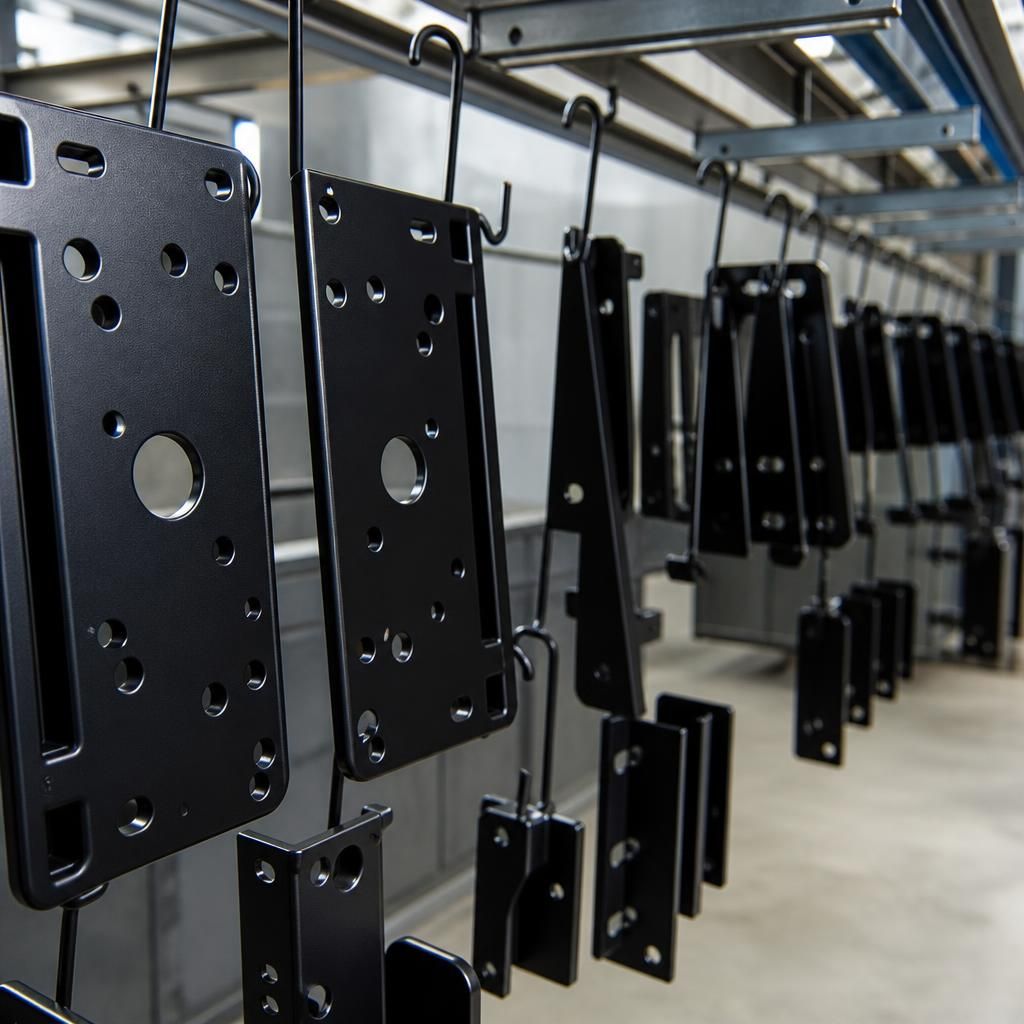
Two-coat and thermoset systems are particularly suitable for discrete metal components that can be removed from the finished product and processed before final assembly. This allows the component to be cleaned, prepared, coated and cured under controlled conditions, without exposing seals, electronics, bearings or other heat-sensitive parts to the curing cycle.
This makes the system a practical choice for repeat-manufactured covers, mounting plates, rails, brackets and subassemblies where consistent coverage and accurate masking are important. It is less suitable for fully assembled equipment containing heat-sensitive materials or components that cannot tolerate the preparation and curing process. The application should therefore be assessed alongside the component’s construction, assembly sequence and dimensional tolerances.