

How does the two-coat and thermoset system enhance the lifespan and reliability of metal surfaces compared to traditional coating methods?
A two-coat thermoset system combines a protective base coat with a chemically cured topcoat, creating a more robust barrier against corrosion, chemicals, abrasion and weathering than many traditional single-layer methods. By separating adhesion and substrate protection from surface durability, it helps metal components retain their protective finish and remain reliable for longer in demanding industrial environments.
A two-coat thermoset system can extend the usable life and reliability of a metal component by controlling how the coating responds to damage, movement and repeated service exposure. Rather than relying on one film to provide every property, the system uses compatible layers with distinct roles, so a local defect or gradual surface wear is less likely to become an immediate loss of protection.
It limits the consequences of local damage. With a single-layer coating, a scratch, pinhole or thin area may create a direct route to the substrate. In a correctly applied two-coat system, the underlying layer can continue to separate the metal from the surrounding environment while the topcoat absorbs some of the initial contact and wear. This does not make the component immune to damage, but it can slow the progression from a small coating defect to widespread breakdown.
The thermoset topcoat provides a stable, cross-linked film. During curing, its resin forms a permanent chemical network rather than simply drying through evaporation. Once properly cured, this structure gives the surface dimensional stability and resistance to softening under the types of service conditions for which the coating has been specified. That stability helps the finish remain functional when components are handled, assembled, cleaned or exposed to repeated contact.
Reliability also depends on how the coating manages the different stresses present in service. Metal parts may experience vibration, temperature changes, impact, contact with other components or movement at edges and joints. A suitable two-coat specification can balance adhesion, hardness and limited flexibility more effectively than a coating selected only for its initial appearance. The correct balance reduces the risk of premature flaking, cracking or loss of film continuity.
The system can make failure more gradual and easier to identify. Surface wear on the topcoat may be visible before the underlying protective layer has been fully compromised. This gives inspection and maintenance teams a clearer opportunity to assess the part, address damage and decide whether recoating or replacement is appropriate. By contrast, failure beneath a single thin film may be less apparent until the substrate or component performance has already been affected.
The comparison with traditional coating methods must still be made against a defined specification. A well-prepared, correctly applied conventional coating may perform effectively in a suitable environment, while a poorly prepared two-coat system may fail early. Service life is influenced by:
- the condition and cleanliness of the metal before coating;
- the compatibility of the base coat and thermoset topcoat;
- film thickness and coverage on edges, recesses and complex profiles;
- the specified curing temperature and time;
- the nature and frequency of mechanical or chemical exposure; and
- handling, assembly and maintenance after curing.
These controls are particularly important for manufactured parts and fabricated assemblies, where inconsistent preparation or curing can create weak points across a batch. Inspection should therefore consider more than visual uniformity. Coaters and quality teams may assess coverage, adhesion, cure and the condition of vulnerable areas so that the finished component matches the intended service requirement.
For a business specifying the system, the practical benefit is greater predictability rather than simply a thicker finish. The coating specification can be matched to the component’s substrate, geometry and operating conditions, reducing the likelihood that a single compromise layer will be asked to provide adhesion, barrier protection and surface durability at the same time. The result is a more dependable finish when the two coats are compatible, correctly applied and maintained in line with the component’s environment.
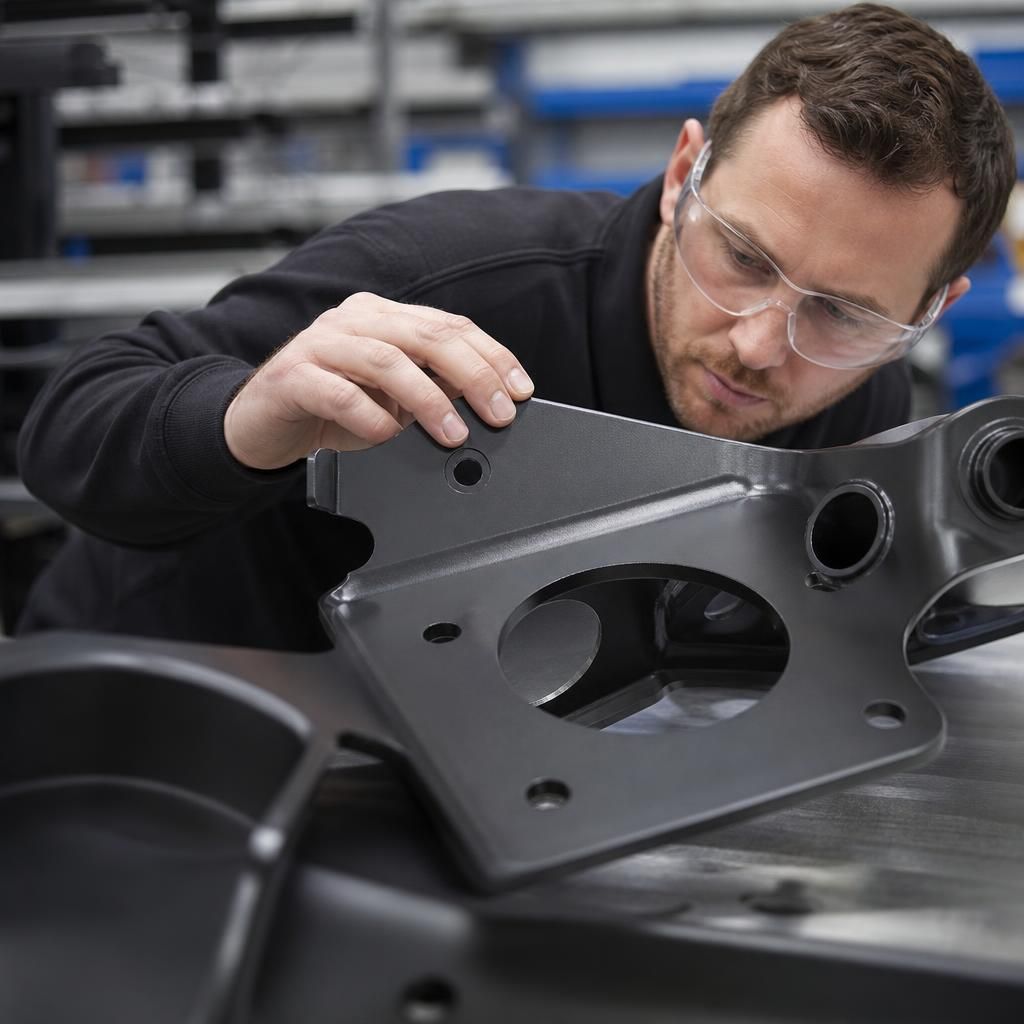
A two-coat thermoset system can improve operational reliability by protecting both the metal surface and the functional areas of a component. This is important where brackets, housings, guards, frames or fabricated parts must retain accurate contact points, clearances and fitting surfaces throughout service.
The coating specification should therefore account for more than general corrosion protection. Film build at holes, threads, mating faces, edges and recesses needs to be controlled so the finish does not interfere with assembly or leave vulnerable areas under-protected. A properly cured thermoset topcoat provides a hard, stable surface, while the underlying coat supports overall barrier protection. Together, these characteristics help the component continue performing its intended mechanical function rather than relying on appearance alone as an indicator of reliability.