

How does the surface preparation impact the effectiveness of the two-coat and thermoset coating system?
Surface preparation directly affects how well a two-coat and thermoset coating system adheres, cures and protects the metal. Removing oil, rust, scale and other contaminants, while creating a suitable surface profile, helps prevent defects such as peeling, blistering and premature corrosion.
Surface preparation determines whether each layer of a two-coat thermoset system can form a consistent, durable film. It affects the condition of the substrate, the bond between the metal and the first coat, the bond between coats, the appearance of the finished surface and the ability of the coating to provide continuous protection.
Preparation starts with assessing the metal. Different substrates and fabrication methods present different coating risks. Mild steel, galvanised steel, aluminium, castings and previously coated components may require different preparation methods. Welds, sharp edges, recesses, drilled holes and areas affected by heat can behave differently from flat sheet or tube. Identifying these features before processing helps determine whether additional cleaning, abrasion, edge treatment or masking is needed.
The surface profile is particularly important because it gives the first coat a suitable mechanical key. A profile that is too shallow may provide insufficient anchorage, while an excessively rough or uneven surface can affect coverage, appearance and the amount of coating required. Preparation should therefore be controlled to suit the substrate and the coating specification rather than treated as an identical process for every component.
Pretreatment also influences the chemical bond and corrosion protection of the system. Where appropriate, a conversion treatment or other approved pretreatment can condition the metal before powder application. This helps the coating system interact consistently with the substrate and can provide an additional barrier at the metal-to-coating interface. The correct process depends on the material, the intended service conditions and the products selected for the two-coat system.
Fabrication residues need particular attention. Welding can leave spatter, heat tint and residues around joints, while cutting, drilling and grinding can leave particles or sharp transitions. Oils from manufacturing, handling residues, marking materials and remnants of previous coatings can also affect the uniformity of the finish. These issues should be dealt with before coating rather than relying on the powder film to conceal them.
Moisture control is another essential part of preparation. Components must be fully dry before powder is applied. Moisture held in seams, hollow sections, joints, porous castings or surface irregularities may be released during heating. This can interfere with film formation and create localised finish problems. Hollow fabrications may also need suitable drainage or venting as part of their design and preparation, particularly where they will be heated during curing.
The condition of edges and transitions affects coverage in both coats. Very sharp edges can receive a thinner film than adjacent flat areas, while burrs and rough welds can remain visible through the finished coating. Removing burrs, smoothing unsuitable transitions and checking weld quality helps the primer or basecoat form a more even foundation for the thermoset topcoat. This is important where the component will experience handling, abrasion or exposure to chemicals.
Preparation must also account for areas that should not be coated. Threads, bearing seats, electrical contact points, machined faces and assembly tolerances may need masking or temporary protection. Poorly defined masking can leave unwanted powder on functional surfaces or require later removal that damages the coating. The masking plan should be agreed with the component design and the required finished dimensions.
For a two-coat system, preparation does not end when the first coat is applied. The basecoat must be compatible with the topcoat and sufficiently cured, or otherwise conditioned according to the specified process, before the second layer is applied. Its surface should be clean, even and free from handling contamination. If the interval between coats allows dust, moisture or other contamination to settle, the second coat may not develop the intended bond or appearance.
Curing is closely linked to preparation and coating thickness. The component, rather than only the oven air, must reach the required curing conditions for the selected thermoset materials. Variations in mass, geometry and metal thickness can cause different parts of a batch to heat at different rates. Correct preparation, consistent loading and process checks help ensure that both layers develop their intended properties without masking an underlying substrate problem.
Inspection should take place at several stages:
- before coating, to confirm that the substrate, welds, edges, masking and preparation condition meet the specification;
- after the first coat, to check coverage, surface condition and any areas requiring correction;
- between coats, to confirm that the base layer is suitable for the thermoset topcoat; and
- after final curing, to assess appearance, coverage, film build and any exposed or damaged areas.
If preparation reveals pitting, embedded contamination, excessive roughness or an unsuitable existing coating, recoating without correction may simply preserve the underlying problem. The appropriate response may involve further preparation, local repair, removal of the affected coating or a change to the specified system. Recording these decisions is useful for repeat production because it links the final result to the substrate condition and process controls used.
In practical terms, effective preparation gives the two-coat thermoset system a stable foundation, a controlled interface between layers and a more predictable final film. It cannot compensate for an unsuitable coating specification or incorrect curing, but it is the stage that allows those materials and processes to perform as intended.
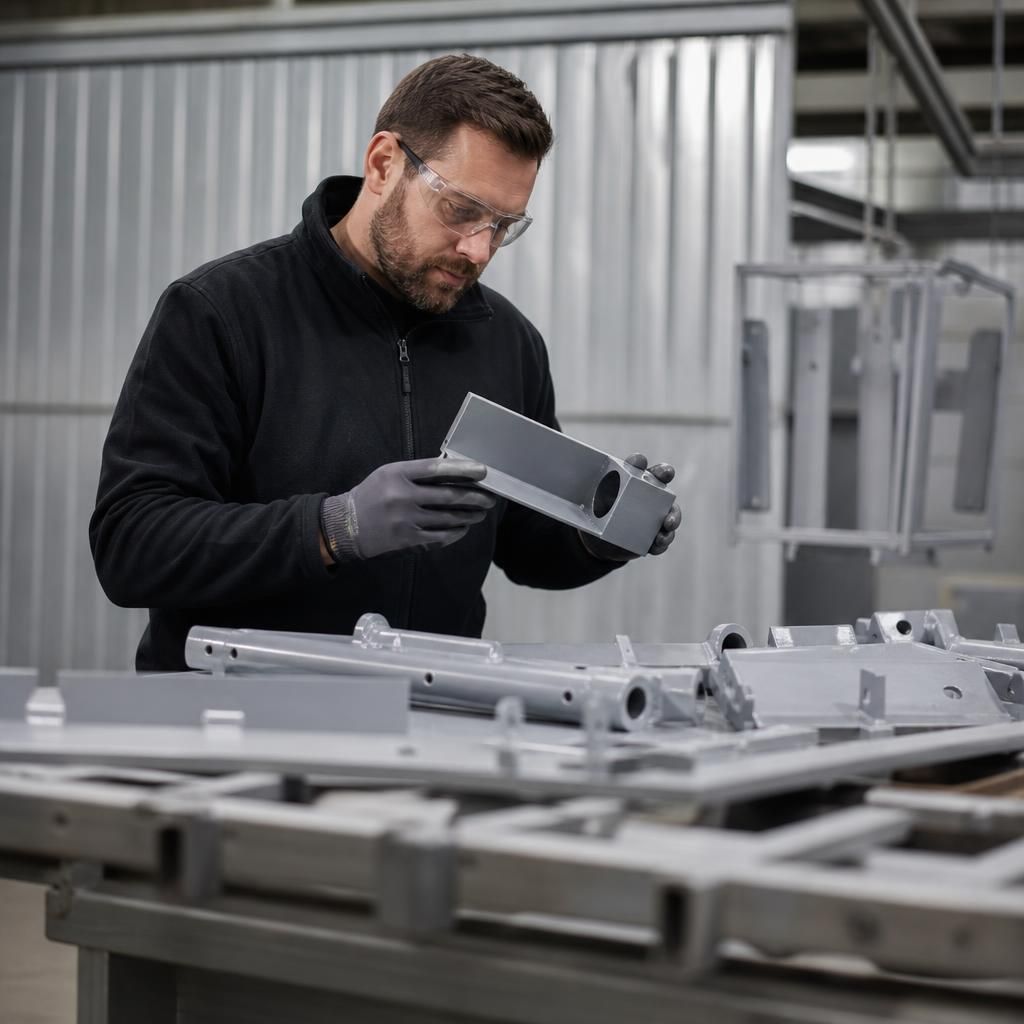
Surface preparation is most reliably assessed by qualifying the complete two-coat thermoset process on metal that represents the actual components. A flat test panel may not reveal issues associated with cast surfaces, fabricated joints, recesses or changes in material thickness, so representative samples provide a more accurate indication of how the preparation route will perform in production.
This qualification can compare the specified preparation method with the required coating build, intercoat condition and curing process before a batch is coated. It helps identify whether the selected system is suited to the substrate and service environment, while also establishing consistent acceptance criteria for appearance, coverage and coating performance. Where component design or material changes, the preparation route should be reviewed rather than assumed to remain suitable.