

How does Rilsan Nylon 11 coating improve the corrosion resistance of metal components?
Rilsan Nylon 11 coating improves corrosion resistance by forming a continuous, non-porous barrier between the metal surface and corrosive agents such as moisture, salts and chemicals. By limiting the contact that drives oxidation and preventing damage from exposing the substrate, the coating helps protect metal components and support a longer service life.
Rilsan Nylon 11 improves corrosion resistance by creating a stable polymer layer that separates the metal from the conditions that promote corrosion. Its effectiveness depends not only on the nylon itself, but also on coating adhesion, film continuity, edge coverage, substrate preparation and the severity of the operating environment.
Corrosion often begins at vulnerable areas such as exposed edges, joints, fixing points, scratches or surface irregularities. A correctly applied Nylon 11 coating helps seal these areas and reduces the opportunity for moisture and contaminants to reach the substrate. Strong adhesion is particularly important: if the coating remains firmly bonded, corrosion is less likely to spread beneath the film from a local defect.
The coating also provides resistance to several substances that can accelerate metal degradation. Depending on the grade and service conditions, Nylon 11 can help protect components exposed to water, salts, oils and selected industrial chemicals. This makes it relevant to metalwork used in demanding manufacturing, construction and automotive environments, where exposure may be intermittent or continuous. Suitability should be checked against the exact chemical, concentration, temperature and contact duration involved.
Its comparatively tough surface helps preserve this protective function during handling and use. A brittle or poorly bonded finish can crack, chip or detach when a component is knocked, flexed or subjected to abrasion. Nylon 11 is valued for its combination of coating toughness and wear resistance, which can reduce the number of pathways through which corrosive agents reach the underlying metal. It does not make a component immune to corrosion, however; severe impact, cutting, prolonged abrasion or an incompatible operating condition can still compromise the finish.
Electrical isolation can provide an additional benefit for certain assemblies. Where coated metal parts would otherwise form an unwanted conductive contact, the polymer layer may separate the metal from adjacent components or conductive contaminants. This can help reduce corrosion associated with contact between dissimilar metals, although the design must account for coating damage, fasteners, contact points and any areas that require electrical continuity.
The condition of the metal before coating has a direct effect on long-term protection. Rust, mill scale, oil, grease, dust and other contaminants can prevent proper bonding or remain beneath the coating as a source of future failure. Industrial preparation normally involves cleaning and suitable surface treatment, followed by controlled application and curing. Components should also be designed and inspected with coating coverage in mind, particularly around recesses, apertures, welds and sharp transitions.
For a coating system to perform consistently, the specification should consider:
- the base metal and its existing condition;
- the type and duration of exposure to moisture, salt, chemicals and abrasion;
- the likely operating temperature and mechanical loading;
- required coating thickness and coverage of edges and complex profiles;
- areas that must remain uncoated for assembly, earthing or dimensional reasons; and
- how the finished component will be handled, transported, installed and maintained.
Inspection after application can identify thin areas, pinholes, poor coverage, impact damage or adhesion problems before they become significant corrosion sites. If the coating is damaged in service, the affected area should be assessed and repaired using a method compatible with the original system. Simply covering active corrosion or applying an unsuitable touch-up material can trap contamination and weaken the repair.
In practical terms, Rilsan Nylon 11 is most effective when it is selected for the actual exposure conditions and applied to a properly prepared component. It offers a durable line of defence against corrosion, but performance remains dependent on specification, application quality, component design and control of damage throughout the part’s service life.
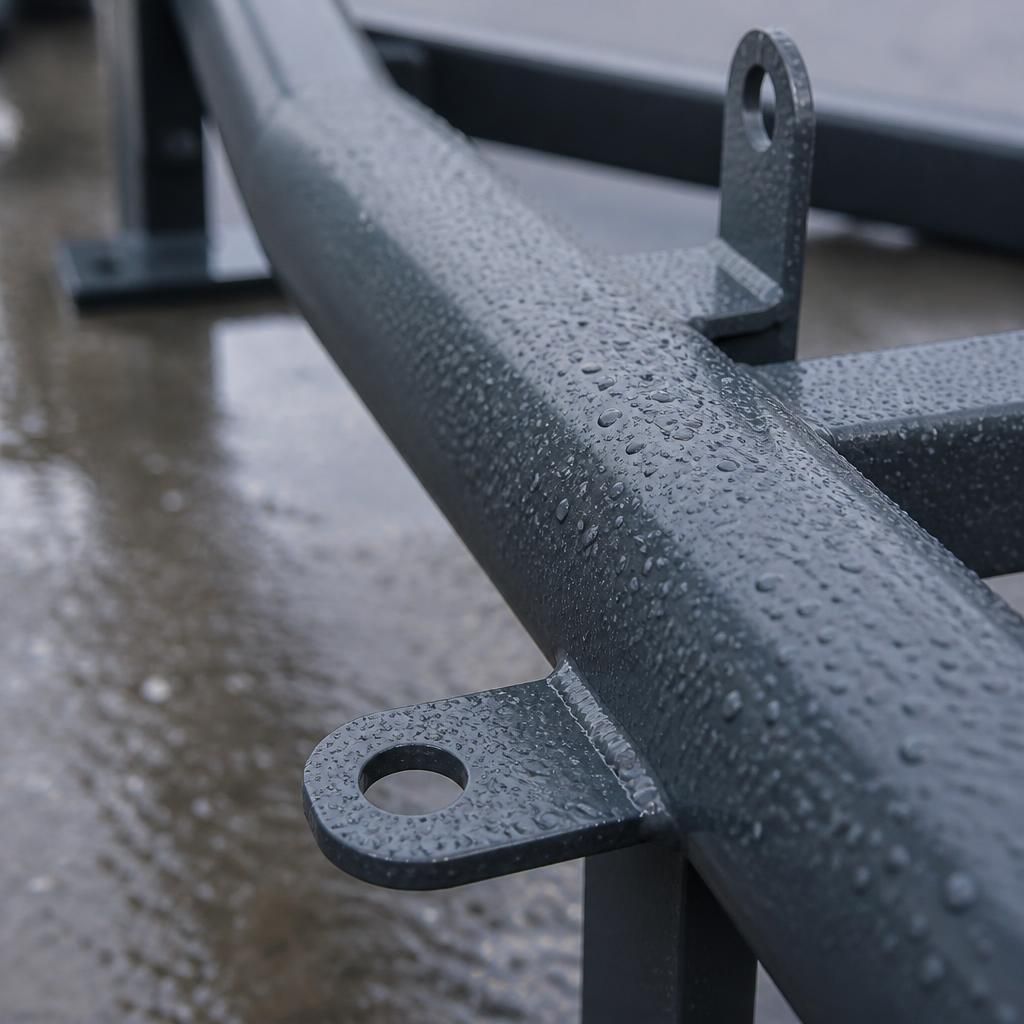
A further factor in Rilsan Nylon 11’s corrosion resistance is its relatively low moisture uptake compared with many other polyamides. The coating is less likely to absorb water and undergo significant swelling, helping it retain a stable protective layer around the metal component.
This dimensional stability can be important where coated parts experience repeated changes in humidity or immersion conditions. By reducing movement within the film, Nylon 11 can help limit stress at the coating–metal interface and preserve protection during service. The result still depends on correct preparation, application and compatibility with the component’s specific environment.