

What specific industries benefit the most from applying zinc powder coat primers over mill scale and zinc surfaces?
Industries that benefit most include construction, structural fabrication, manufacturing and automotive, where steel components may be exposed to moisture, handling or demanding service conditions. A zinc powder coat primer over suitably prepared mill scale or zinc surfaces provides a corrosion-resistant foundation for the subsequent powder coating system.
The industries that benefit most from zinc powder coat primers are those using steel components exposed to moisture, salts, condensation, chemicals, abrasion or difficult maintenance conditions. The primer provides a corrosion-resistant foundation beneath the finishing powder coat, while the value of the system is greatest where the coated part must remain serviceable for extended periods and replacement or recoating would be disruptive.
Infrastructure and civil engineering are significant users of zinc-primed steelwork. Fabricated supports, access equipment, barriers, brackets, frames and other outdoor components may face persistent wetting, road salt and atmospheric pollution. A suitable zinc primer can add an additional level of corrosion protection beneath the visible topcoat, provided the steel is correctly prepared and the complete coating specification matches the exposure conditions.
Utilities and process facilities can also benefit where metalwork is installed around water, waste, chemical handling or mechanical plant. Enclosures, support frames, guards, pipework accessories and fabricated housings may be exposed to condensation or corrosive substances. In these settings, the primer should be selected alongside the topcoat rather than treated as a standalone product. Chemical exposure, operating temperature, edge geometry and the possibility of coating damage all affect the appropriate system.
Agricultural and material-handling equipment often combines outdoor exposure with abrasion, impact, dirt and frequent handling. Frames, guards, panels, brackets and machine components may be manufactured from steel carrying mill scale, or from galvanised steel and other zinc-coated substrates. Zinc powder coat primers can be appropriate where the preparation method and coating build are compatible with the substrate. Areas that receive impact or rubbing still require particular attention, as primer selection cannot compensate for unsuitable design or inadequate preparation.
Electrical, mechanical and industrial equipment manufacturers may use the process for cabinets, bases, frames, covers and fabricated assemblies. These parts often require a consistent decorative finish as well as protection from workshop handling, humidity and service environments. A primer can be especially useful where the component has folded edges, welds or mixed steel surfaces, although each feature must be cleaned and prepared so that it does not become an early corrosion point.
Architectural metalwork and public-realm products can benefit where appearance and durability must be considered together. Railings, street furniture, lighting supports, signs, shelters and similar items are exposed to weather and may be difficult to remove once installed. For galvanised or zinc-coated steel, the surface normally needs controlled preparation to remove contaminants, reduce excessive smoothness and provide a suitable key without unnecessarily stripping the protective zinc layer.
The strongest case for a zinc powder coat primer is usually found when several of the following conditions apply:
- The component will be installed outdoors or in a damp, humid or contaminated environment.
- Corrosion at scratches, cut edges, welds or handling damage would have serious practical consequences.
- The item is large, fixed in place or costly to remove for maintenance.
- The steel has mill scale or a zinc-coated surface requiring a carefully specified multi-layer system.
- The part combines corrosion protection with a durable, uniform powder-coated appearance.
- The operating environment justifies a higher-performance coating system than a single decorative coat.
Not every part requires a zinc primer. Indoor components in controlled, dry conditions may need only a suitably prepared substrate and compatible powder topcoat. Conversely, a zinc primer is not a substitute for removing loose mill scale, rust, oil, salts or other contaminants. Mill scale can contain discontinuities and may weaken adhesion if it is left as an unstable surface. Zinc-coated steel can also require different preparation from bare or scaled steel, including removal of passivation residues and attention to outgassing risk.
For any of these industries, the correct assessment should consider the base metal, existing zinc coating, intended service environment, component design, exposure category, handling requirements and desired appearance. The primer and topcoat should be tested as one system, with particular attention to adhesion, film thickness, edge coverage, weld areas and repair requirements. This approach identifies where zinc powder coat primers offer a meaningful advantage and where a simpler coating specification would be sufficient.
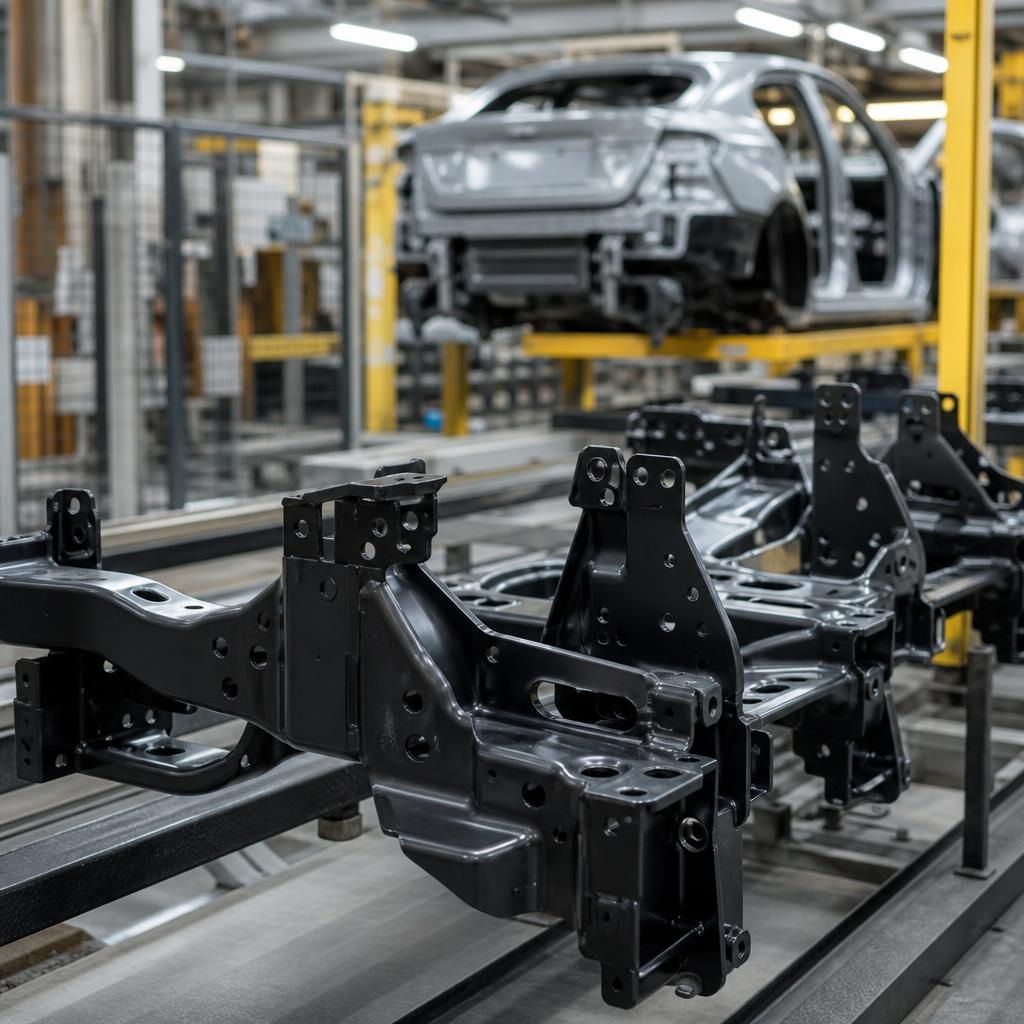
Automotive and transport component manufacturing can benefit from zinc powder coat primers where steel brackets, mounts, guards and fabricated supports will be enclosed or difficult to access after assembly. Corrosion protection beneath the finishing coat is particularly relevant when components may encounter road spray, condensation, handling damage or contact with other parts during installation.
The coating specification must still account for dimensional tolerances, threaded areas, welds, sharp edges and any existing zinc coating. These details can affect assembly and adhesion, so the primer, preparation method and topcoat should be assessed together rather than selected solely by the industry in which the finished component is used.
Discuss the Right Zinc Powder Coat Primer for Your Industry
Discuss your component materials, service environment and preparation requirements with a powder coating specialist to determine whether a zinc primer and compatible topcoat are appropriate. A coating assessment can help establish the right system for mill scale, galvanised or other zinc-coated surfaces.