

What factors should be considered during surface preparation when applying a zinc powder coat primer over mill scale?
Surface preparation should establish a clean, sound and suitably profiled substrate by removing oil, grease, dirt, loose mill scale, rust and other contaminants, typically through an appropriate abrasive blasting process. Particular attention is needed at welds, edges and pits, followed by thorough dust removal and confirmation that the steel is dry and free from residues before the zinc powder coat primer is applied.
The main consideration is whether the remaining mill scale provides a stable, compatible foundation for the zinc powder coat primer. Mill scale is not uniform: tightly bonded areas may remain sound, while cracked, layered or poorly attached scale can separate beneath the primer and compromise the entire coating system. Preparation should therefore be based on the actual condition of the steel, the primer manufacturer’s requirements and the intended level of corrosion protection.
Assess the mill scale and steel condition
- Determine whether the scale is continuous and firmly attached or showing flaking, lifting and under-scale corrosion.
- Check for pitting, laminations and surface defects that could trap abrasive, moisture or process residue.
- Consider whether the component has previously been exposed to weather, cutting fluids, chemicals or storage conditions that may affect the steel beneath the scale.
- Do not rely on the zinc primer to stabilise unsound mill scale. Any layer that can detach from the steel can also take the primer and subsequent topcoat with it.
Match the preparation standard to the coating system
The required degree of preparation depends on the primer’s technical data, the chosen topcoat and the exposure conditions expected in service. Some systems require a near-bare steel surface, whereas others may permit a tightly adherent residual scale. The applicable preparation grade, surface profile and cleanliness level should be agreed before work begins rather than selected solely by appearance.
Surface profile is particularly important. The abrasive process should create enough key for mechanical adhesion without producing a profile so pronounced that the primer fails to cover the peaks. An unsuitable profile can increase primer consumption, leave exposed high points or create a rough finish that affects the appearance and performance of later coats. Profile checks should be made using a suitable comparator or measuring method specified for the project.
Control abrasive and process contamination
Abrasive choice affects both the profile and the risk of embedding foreign material into the steel. Abrasive should be clean, dry and appropriate for the equipment and substrate. Recycled abrasive needs effective control so that it does not introduce oil, salts, dust or metallic residues. Compressed air, blast equipment and handling tools should also be checked for contamination before prepared steel is accepted for priming.
After preparation, avoid touching the steel with bare hands or placing it on dirty supports. Clean gloves, protected handling points and suitable storage or transfer arrangements help prevent recontamination between preparation and powder application. If the part must be moved, its preparation status should be preserved throughout handling.
Consider soluble salts and corrosion risk
Steel that has been stored outdoors or exposed to industrial atmospheres may contain soluble salts that are not obvious during visual inspection. These residues can attract moisture beneath the coating and contribute to osmotic blistering or premature corrosion. Where the service environment or steel history makes this a concern, the preparation specification should include an appropriate salt assessment and any required remedial cleaning before coating.
Prepared steel should not be left in conditions that allow flash rust to develop. If discolouration or early oxidation appears, the surface may need reassessment and further preparation before the zinc primer is applied. The acceptable condition should be defined by the coating specification, particularly for components intended for damp, external or corrosive environments.
Manage temperature, humidity and condensation
Steel must be dry at the point of powder application, and its temperature should be considered in relation to the surrounding air. A component can appear dry while carrying invisible condensation if its surface is near the dew point. Sudden movement between cold storage and warmer production areas can create this problem even when the room itself seems suitable.
Preparation and coating areas should therefore be controlled to limit condensation, airborne dust and moisture re-entering the surface. The relevant environmental limits should come from the powder and primer technical documentation. If conditions move outside those limits, coating should be deferred until the substrate and workspace are suitable again.
Account for component design
Shape and construction influence how effectively a surface can be prepared and coated. Deep recesses, narrow gaps, internal corners and tubular sections may be difficult to blast, inspect and coat consistently. Drainage and venting holes should be considered where appropriate, while masking may be needed to protect threads, machined faces, electrical contact points and other areas that must remain free of powder.
Welded assemblies may require additional preparation of weld beads, heat-affected areas and fabrication marks because these zones can differ from the surrounding mill scale in texture and cleanliness. Weld spatter and sharp projections can create local defects or thin spots in the coating, so they should be addressed in accordance with the agreed fabrication and coating specification.
Confirm compatibility and sequence
A zinc powder coat primer must be compatible with the steel condition, any permitted residual mill scale and the intended topcoat. Check the product documentation for preparation requirements, application limits, curing conditions, recoating intervals and restrictions on other pre-treatments. A conversion coating or chemical treatment should not be introduced without confirmation that it is suitable for the complete powder coating system.
Where a multi-coat system is specified, the sequence matters. The prepared component should be transferred into priming without avoidable delay, and the primer should be cured and overcoated within the stated process window. Excessive delay, uncontrolled storage or handling after preparation can undermine otherwise satisfactory work.
Inspect before releasing the part for priming
- Visually inspect the complete accessible surface for remaining unstable scale, corrosion, abrasive residue and preparation marks.
- Verify the surface profile and cleanliness against the project specification.
- Check that masking, plugs and hanging points will not interfere with coverage or electrical continuity during powder application.
- Confirm that the steel is dry and that environmental conditions remain suitable.
- Record any areas that were inaccessible or accepted with residual mill scale, so they can be considered when assessing the coating system.
For demanding components, a trial preparation and coating area can help confirm that the selected abrasive method, profile and zinc primer work together before full production. This is especially useful where mill scale varies across a batch, the geometry is complex or the coated parts will face severe corrosion exposure.
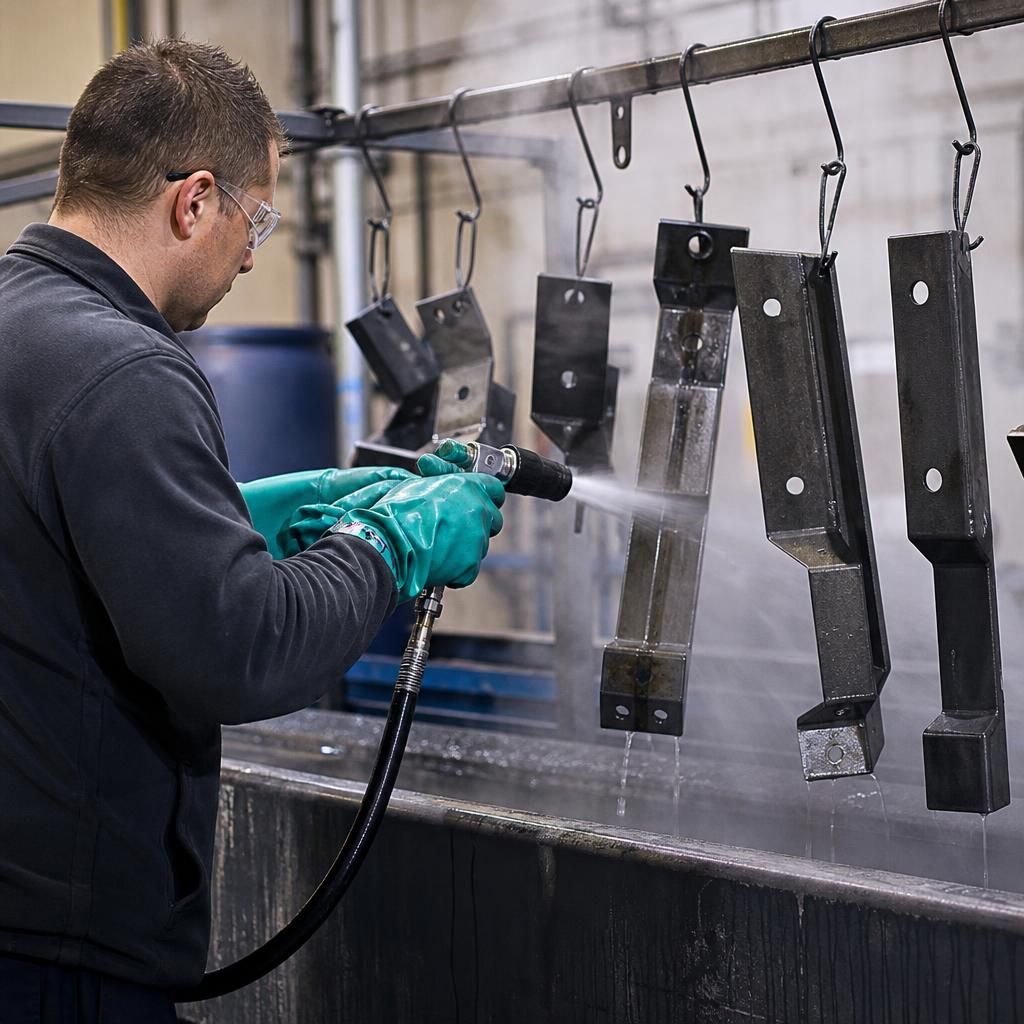
Degreasing should take place before abrasive preparation where the steel carries oil, grease, drawing compounds or cutting-fluid residues. Blasting contaminated steel can spread these substances across the surface or drive them into the profile, leaving areas that appear clean but weaken adhesion beneath the zinc powder coat primer.
The cleaning agent and method must be suitable for the substrate and fully removed before blasting. Any residual detergent, solvent or rinse water can become a new contaminant, so the prepared surface should be allowed to dry and checked before the primer is applied. This sequence is particularly important for fabricated components that have been machined, handled with oily equipment or stored after manufacture.