

What environmental conditions can affect the performance of zinc powder coat primer on mill scale?
Moisture, condensation, surface contamination and unsuitable temperatures can reduce the adhesion, curing and corrosion protection of a zinc powder coat primer applied over mill scale. Keep the steel dry and clean, avoid application where condensation may form, and follow the primer manufacturer’s specified application and curing conditions.
The performance of a zinc powder coat primer on mill scale is governed by two environmental stages: the conditions that affect film formation during curing and the atmosphere to which the finished coating is exposed. Even when the primer has been correctly applied, ultraviolet radiation, thermal cycling, chemicals, immersion and mechanical exposure can influence its protective life.
Ultraviolet exposure and weathering
Sunlight does not normally attack the zinc pigment directly, but prolonged ultraviolet exposure can degrade the organic binder around it. This may cause chalking, colour change, loss of flexibility or a gradual reduction in barrier protection. The risk is greater where the zinc primer is left as the final finish rather than protected by a compatible topcoat. For external components, the complete coating system should therefore be assessed for weathering resistance, not just the primer in isolation.
Thermal cycling and temperature variation
Repeated heating and cooling can place stress on the interface between the primer, mill scale and steel. Steel, mill scale and the cured coating can expand at slightly different rates. Over many cycles, particularly on large or thin sections, this movement may contribute to micro-cracking, edge breakdown or loss of adhesion if the coating system is not suitable for the operating range.
This is different from the temperature used during application and curing. For production work, the part’s mass, geometry and position in the oven can affect how evenly it reaches the required metal temperature. Heavy sections may heat more slowly than thin areas, while recessed features can receive a different thermal exposure from exposed faces. Oven calibration, representative temperature checks and compliance with the powder manufacturer’s cure schedule help reduce under-cured or over-cured areas.
Industrial, marine and chemical atmospheres
The surrounding atmosphere is important after curing. Marine air, road-salt deposits and industrial pollutants can increase the corrosive load on exposed steel, particularly at cut edges, drilled holes, joints and areas where the coating has been damaged. Acidic or alkaline vapours may also attack the binder or interfere with the stability of the coating system. A primer selected for a general indoor environment may not be suitable for a chemically aggressive plant, coastal installation or externally exposed structural component.
Where chemicals are present, assessment should consider their concentration, contact frequency, temperature and whether contact is by vapour, splash or immersion. A coating that withstands occasional splash may not withstand continuous contact. Compatibility should be confirmed for the complete primer and topcoat system rather than inferred from the zinc content alone.
Immersion, trapped water and drainage
Continuous immersion or water trapped in laps, seams and poorly drained profiles creates a more demanding environment than ordinary atmospheric exposure. These locations can remain saturated for long periods and may develop corrosion at defects or edges that are not obvious during a visual inspection. Component design should allow drainage and ventilation, and the coating specification should state whether immersion is permitted and under what conditions.
Mechanical exposure in service
Impact, vibration, abrasion and repeated movement can damage a zinc powder coating even where the surrounding atmosphere is not especially aggressive. Forklift contact, sliding components, aggregate, metal-to-metal contact and maintenance work may expose the mill scale or steel beneath the film. Once the coating is breached, corrosion can progress from the damaged point and may undermine adhesion around it.
Parts exposed to these conditions may need a tougher topcoat, increased attention to edges and handling controls, or a different coating specification. Coated components should be supported and packed in a way that avoids concentrated pressure and scuffing before installation.
Part geometry and local environmental exposure
Environmental effects are rarely uniform across a component. Sharp edges, weld areas, recesses, bolt holes and overlapping sections can receive different coating thicknesses and experience different airflow, drainage and chemical retention. These locations often become the first points of failure, even when broad flat surfaces remain intact. Inspection should therefore focus on edges, corners, joints and other details rather than relying only on an overall visual check.
A reliable specification should describe the actual service environment, including indoor or outdoor use, exposure to sunlight, chemicals, salt, immersion, temperature changes, abrasion and impact. It should also define the complete coating system, curing requirements and inspection criteria. This allows the zinc powder coat primer to be judged against the conditions it will face over the life of the component, rather than against application conditions alone.
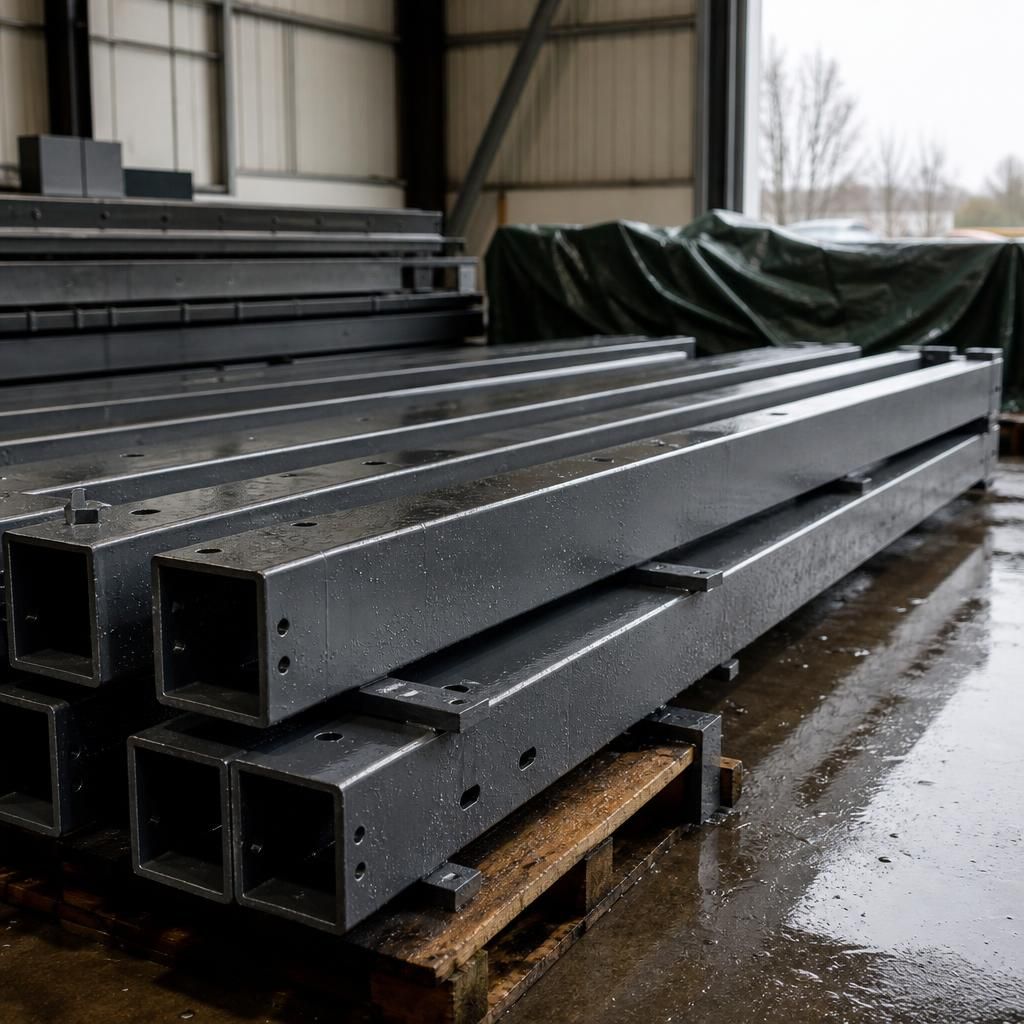
Environmental exposure between surface preparation and powder application can reduce the performance of a zinc primer on mill scale. Cleaned steel may attract airborne dust, workshop oils or salts from handling, while humid conditions can leave a thin moisture film that is not obvious during visual inspection.
Prepared components should be protected from rain, condensation and airborne contamination while they await coating. Store them under cover, keep them off damp floors, minimise handling with bare hands and inspect the surface again before spraying. If the steel has been exposed to unsuitable conditions, further cleaning or preparation may be necessary rather than relying on the primer to cover the contamination.