

What are the specific benefits of using a zinc powder coat primer when working with mill scale?
A zinc powder coat primer can improve the adhesion and durability of a coating system applied over mill scale, while its zinc content provides additional corrosion protection through sacrificial action. It is most effective when the mill scale is suitably prepared and the primer is compatible with the chosen topcoat.
The specific benefit of a zinc powder coat primer on mill-scale steel is that it creates an active, controlled protective layer between the steel substrate and the decorative or functional topcoat. This is important because mill scale is not a consistent coating: it can contain several iron-oxide layers with different degrees of stability, and it may conceal areas of exposed steel or local corrosion.
It reduces reliance on mill scale as protection. Mill scale can appear sound while remaining vulnerable to moisture ingress, impact and chemical exposure. A correctly specified zinc primer provides a deliberate part of the coating system rather than treating the existing oxide layer as a dependable barrier. This gives the finished specification a clearer protective function and makes the coating system easier to assess against the conditions in which the component will be used.
It helps limit corrosion spreading beneath the finish. If moisture reaches a small defect, the zinc-rich layer can protect the surrounding steel through its electrochemical action. The benefit is particularly relevant to fabricated components that may be exposed to condensation, road contaminants, industrial pollutants or intermittent wetting. It does not make the surface immune to corrosion, but it can reduce the consequences of isolated coating damage when the full system has been correctly designed.
It provides a more robust two-layer specification. Using a zinc primer beneath a compatible powder topcoat separates the protective role from the appearance and surface-performance role. The primer is selected for steel protection, while the topcoat can be selected for colour, gloss, chemical resistance, weathering or wear requirements. This is more adaptable than expecting one powder layer to provide every required property, especially on industrial parts where both corrosion exposure and finish requirements matter.
It can improve protection at vulnerable details. Corners, edges, punched holes, cut-outs, weld areas and handling points are often more exposed than broad, flat faces. A zinc primer can provide an additional protective reserve in these locations, provided the coating is applied with suitable coverage and the component design allows the powder to reach them. Care is still required: sharp edges, recesses and weld contamination may create defects that no primer can correct by itself.
It supports more predictable specification and inspection. A separate primer layer allows the coating system to be considered in stages. The applicator can check the condition of the steel and the primer before applying the topcoat, rather than inspecting only the final appearance. This is useful for batch-produced parts, fabricated assemblies and components with different levels of exposure, because the required system can be documented according to substrate condition, service environment and finish requirements.
It can be useful where future local damage is possible. Industrial components are frequently moved, assembled or handled after coating. A zinc-containing primer does not remove the need for careful transport and repair, but it gives the system an extra protective element if the topcoat is locally scratched or chipped. Any damage should still be assessed and repaired using a compatible method; leaving exposed steel untreated can allow corrosion to develop regardless of the primer beneath it.
The benefits depend on the primer being specifically suitable for powder-coating work over steel and compatible with the selected topcoat. Mill scale that is loose, contaminated or poorly bonded remains a risk, and excessive or uneven primer application can create curing, appearance or intercoat problems. The correct specification therefore considers the condition of the mill scale, the intended service environment, the required finish and the complete curing schedule rather than treating zinc primer as a universal solution.
For manufacturers and fabricators, the practical value is a better-defined protective system for steel components where mill scale cannot simply be treated as a reliable finish. The zinc primer contributes active corrosion protection, supports a separately selected topcoat and gives the coating specification a more controlled basis for inspection and maintenance.
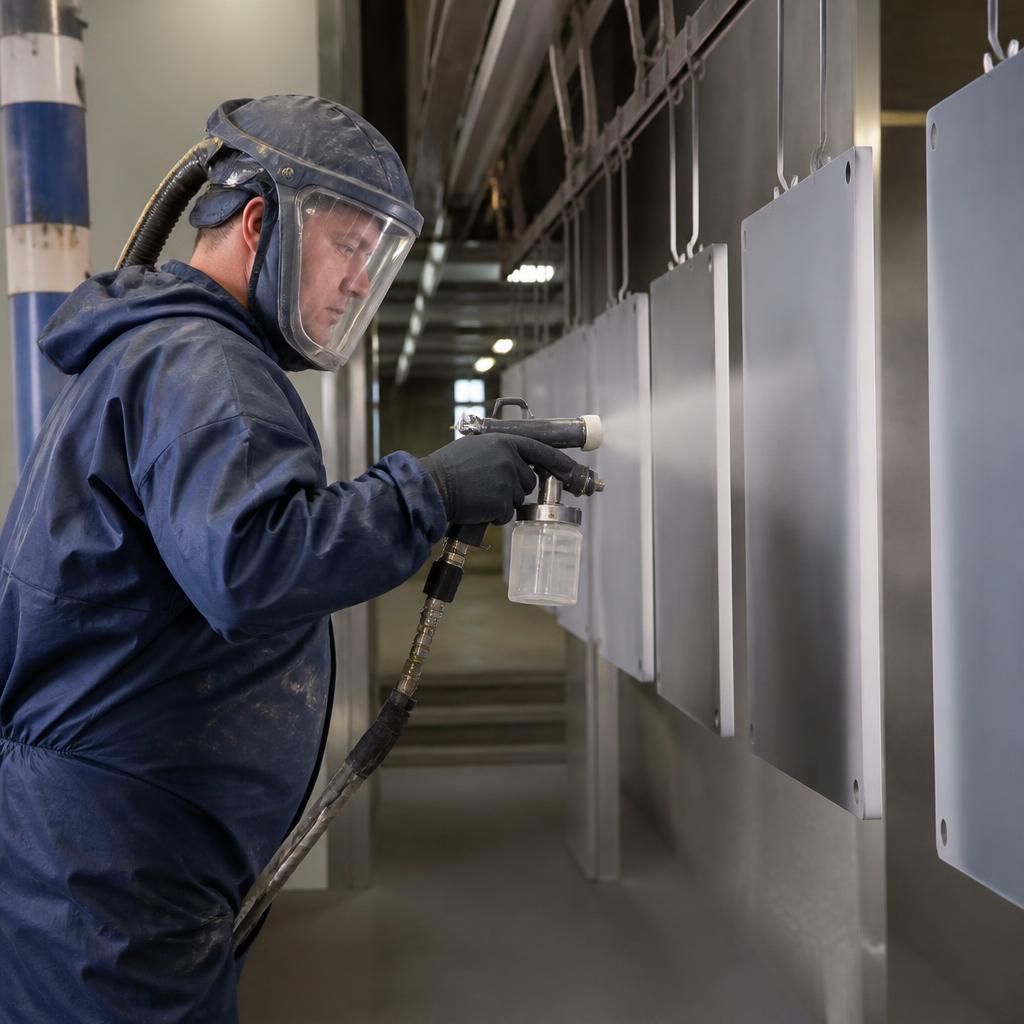
The corrosion benefit of a zinc powder coat primer depends on the zinc particles forming an electrically connected protective layer, not simply on the product containing zinc. When the primer is correctly specified and cured, zinc can act preferentially to protect exposed steel at small coating defects. This is why a zinc-rich primer may provide a different level of protection from a conventional powder primer applied over mill scale.
Mill scale must still be prepared sufficiently for the primer to contact sound substrate and form a continuous film. Loose oxide, oil, weld residue or other contamination can interrupt adhesion and electrical continuity, reducing the value of the zinc layer. The primer should therefore be assessed as part of the complete coating system, including substrate condition, film coverage, curing and topcoat compatibility.
Discuss Zinc Powder Coat Primer for Mill Scale
Discuss your mill-scale components with the powder-coating specialists to assess whether a zinc powder coat primer is suitable for the substrate, exposure conditions and required topcoat. You can also review the preparation and application requirements for your industrial coating specification.