

What are the recommended application techniques for applying zinc powder coat primer over mill scale?
Recommended application begins with removing loose mill scale, oil and contaminants, followed by suitable abrasive preparation to provide a clean, profiled surface. Apply the zinc powder primer evenly by electrostatic spray at the specified film thickness, then cure it precisely to the product manufacturer’s schedule before applying any topcoat.
The recommended technique is a controlled, staged application in which the prepared steel is inspected, the zinc powder primer is deposited uniformly, and the coating is cured according to its technical specification. Particular attention is needed at edges, corners, welds, recesses and other areas where electrostatic powder can build up unevenly or fail to reach the surface.
Inspect the component before spraying. Once preparation is complete, check that the surface is visibly consistent and free from dust, abrasive residue and handling contamination. Look for remaining tightly bonded scale, sharp projections, weld spatter or surface defects that could affect coating continuity. Components should also be dry and handled with clean gloves after preparation, as fingerprints and workshop contamination can interfere with adhesion.
Use a controlled powder application system. Electrostatic spray equipment should be set up in line with the powder supplier’s technical data, including the appropriate voltage, current, powder output and atomising-air settings. Excessive charge can cause back-ionisation, uneven deposition or poor coverage in recesses, while insufficient charge may reduce transfer efficiency. The correct settings depend on the equipment, component geometry and powder formulation, so they should be confirmed through a trial piece or test panel rather than assumed.
Maintain a consistent spray technique. Keep the gun at a steady distance from the workpiece and use smooth, overlapping passes. Avoid dwelling on edges, corners or flat areas, because this can create localised heavy film build. A deliberate sequence is more reliable than repeatedly correcting missed areas: coat difficult-to-reach features first, then cover the broad faces with controlled passes. Rotate or reposition the component where practical so that all faces receive a comparable deposit.
Pay special attention to Faraday areas. Box sections, internal corners, holes and deep recesses can repel charged powder or receive less coverage than exposed surfaces. Reduce the electrostatic effect where appropriate and adjust the gun angle, distance and powder flow to improve penetration. Recesses should not be flooded with powder in an attempt to compensate, as excessive deposit may sag, trap defects or cure differently from the surrounding film.
Control edges, welds and complex geometry. Sharp edges can receive a different film build from adjacent faces, while weld profiles and heat-affected areas may have different surface characteristics from the parent metal. Spray passes should cross these transitions rather than leaving them at the edge of a single pass. Where the design permits, edge radiusing and sound weld finishing before coating help the primer form a more continuous protective layer.
Check the uncured deposit before placing the part in the oven. A visual inspection can identify bare patches, excessive build, contamination, powder lumps or areas disturbed during handling. Correct defects at this stage, since curing will make them more difficult to rectify. For production work, a repeatable hanging arrangement and consistent grounding are important. The component, rack and spray equipment must be arranged to maintain effective electrical contact; poor grounding can produce erratic deposition and unnecessary powder loss.
Use clean, compatible powder. Zinc primer powder should be stored and handled in accordance with its product data, protected from moisture and contamination. Powder recovered from the booth should only be reused if the coating system and process controls permit it. Mixing primer residue with another powder, topcoat material or incompatible reclaimed material can alter colour, flow, adhesion and corrosion performance.
Cure by the specified metal temperature and time. The oven schedule normally relates to the temperature reached by the component, not simply the displayed air temperature. Heavy sections, enclosed fabrications and densely loaded racks can heat at different rates from thin parts. Temperature monitoring or an established process validation method helps confirm that the primer receives the required cure without relying on appearance alone. Under-curing can leave inadequate mechanical and chemical resistance; excessive heat or time may affect the primer or the bond with a subsequent coat.
Confirm compatibility before applying a topcoat. Some zinc powder primers are designed to be overcoated after a defined cure state or within a specified recoat interval. Follow the primer’s technical data for whether the next coat is applied over a fully cured film, a partially cured film or a prepared cured surface. If the interval is exceeded, additional cleaning or surface conditioning may be required. A small representative trial can reveal problems such as poor intercoat adhesion, pinholing, bubbling or excessive texture before production parts are processed.
Verify the finished coating. Inspection should cover appearance, continuity, film thickness, adhesion where required by the specification and any visible defects. Measurements should be taken at representative locations rather than relying on a single easy-to-reach face. Where the parts are destined for demanding service, process records should identify the powder batch, application settings, curing conditions and inspection results. This makes it easier to investigate variation and maintain consistent application across batches.
For components with variable mill scale, unusual thickness, enclosed sections or a complex design, the most dependable approach is to validate the complete sequence on a representative sample first. The powder supplier’s technical documentation and the requirements of the final coating system should govern application settings, film build, curing and overcoating decisions.
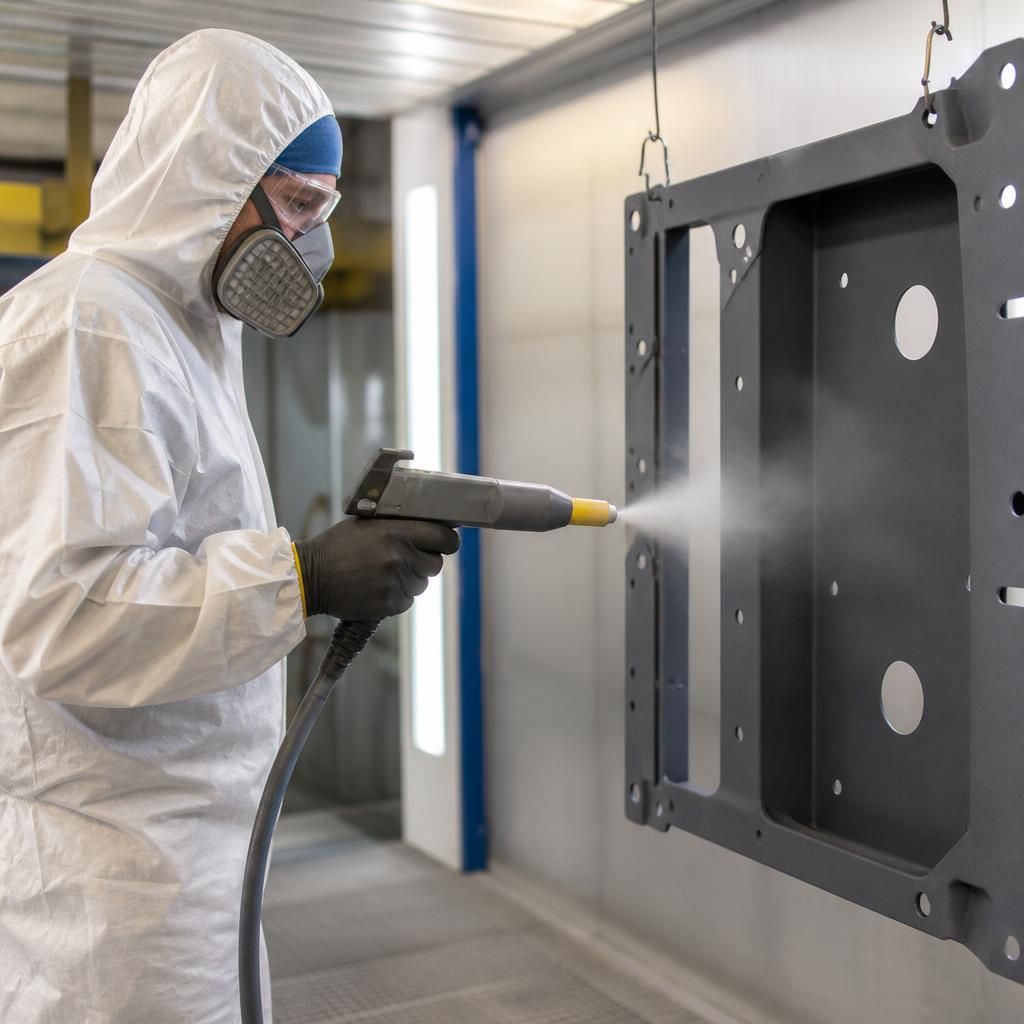
Conditioning the steel and the spray environment is an essential application technique when applying zinc powder coat primer over mill scale. The component must be clean and dry, with its temperature suitable for the primer system and above the point at which condensation could form. Moisture on the surface can interfere with powder adhesion and may become trapped beneath the coating.
Before spraying, check the technical data for the permitted application conditions and consider the temperature of heavy sections, enclosed fabrications and recently handled parts rather than relying only on the room temperature. Keep prepared components protected from rain, condensation, dust and workshop contamination between preparation and coating. If conditions change during production, pause and reassess the surface before continuing; applying powder to damp or contaminated steel can undermine the coating system even when the spray settings and curing process are correct.