

How does the application of zinc powder coat primers impact the long-term maintenance requirements of coated metal surfaces?
A zinc powder coat primer provides sacrificial corrosion protection beneath the topcoat, helping limit rust development when the coating is damaged and reducing the need for intensive remedial work. Long-term maintenance still involves inspection, prompt repair of chips or exposed areas, and attention to moisture, contamination and mechanical damage.
Zinc powder coat primers change long-term maintenance from relying solely on the outer finish to managing a multi-layer protective system. When correctly specified and applied beneath a compatible powder topcoat, the primer helps preserve the condition of the metal and supports a more predictable maintenance programme. It does not make the coating maintenance-free: the completed system still needs suitable cleaning, periodic assessment and controlled repair where its protection has been compromised.
Maintenance becomes more condition-based
A zinc primer can provide an additional margin of protection beneath the decorative or functional topcoat. This means that minor deterioration of the outer layer does not necessarily require immediate full removal and recoating of the component. Maintenance decisions can instead be based on the extent, location and cause of the defect. A small isolated defect may need local treatment, whereas widespread blistering, loss of adhesion or corrosion staining indicates that the coating system and the preparation beneath it require a more detailed investigation.
This distinction is important for fabricated assemblies, structural components and production parts that are difficult to remove or access. A primer system can help make maintenance planning more manageable, but the appropriate response depends on the coating specification, the surrounding environment and whether the underlying metal remains sound.
Routine cleaning remains important
Deposits such as dust, salts, oils, processing residues and other contaminants can retain moisture against the coating or interfere with visual assessment. Cleaning should therefore use methods and materials that are suitable for the powder coating. Harsh abrasives, aggressive chemicals and tools that scratch the surface can create new failure points. The cleaning method should also account for the geometry of the part, including joints, edges, recesses and drainage points where deposits may accumulate.
After cleaning, the surface should be allowed to dry sufficiently for its condition to be assessed. A clean coating makes it easier to distinguish ordinary soiling from problems such as staining, cracking, blistering, loss of gloss, flaking or localised corrosion.
Inspection should assess the complete coating system
Maintenance checks should not focus only on the visible topcoat. Inspectors should consider whether damage is confined to the outer layer or extends through to the zinc primer and substrate. Particular attention is appropriate at cut edges, corners, welds, fasteners, holes, joints and areas subject to repeated contact or abrasion. These locations often experience different coating thickness, handling loads or exposure than broad, flat faces.
Where a defect is found, its pattern can help identify the likely cause. Isolated impact damage suggests a different repair approach from widespread loss of adhesion. Repeated defects along an edge may point to design, preparation or application issues rather than ordinary service wear. Recording the location, type and progression of defects helps determine whether the maintenance response should be local repair, further testing or broader review of the coating specification.
Repair work must restore compatibility
Repairing a zinc-primed powder-coated surface involves more than covering a visible mark. Loose or poorly bonded material must be removed, the exposed area prepared without unnecessarily damaging sound surrounding coating, and the repair product selected for compatibility with the existing layers. The repair should address the full defect, including any exposed primer or metal, rather than simply applying paint over contamination or corrosion.
Where damage is extensive, a local repair may not provide a reliable result. Complete recoating or removal and reprocessing may be more appropriate, particularly when adhesion has failed across a larger area. The decision should take account of access, the component’s function, the exposure conditions and the required appearance as well as the condition of the metal.
Specification affects future maintenance
The primer’s contribution to maintenance depends on factors established before coating, including surface preparation, primer film formation, topcoat compatibility, edge coverage and curing. If the zinc primer is poorly bonded, contaminated or inadequately cured, later maintenance may involve premature failure of the entire system rather than simple attention to the outer finish. For this reason, coating records should identify the system used and any relevant preparation or curing requirements.
Environmental exposure also influences the maintenance approach. Components exposed to persistent moisture, industrial contaminants, road salts, outdoor weather or frequent abrasion normally require closer condition monitoring than parts kept in a clean, dry interior environment. Design features that trap water or make inspection difficult can increase maintenance demands even where the coating materials are well selected.
Practical lifecycle effect
In practical terms, a zinc powder coat primer can extend the useful service of a properly prepared and correctly coated metal surface by giving maintenance teams more time to identify and manage local deterioration before it develops into a wider coating failure. Its value is greatest when combined with suitable design, controlled application, appropriate cleaning and documented inspection. The primer should therefore be viewed as one part of a planned corrosion-control system, not as a substitute for sound preparation or ongoing care.
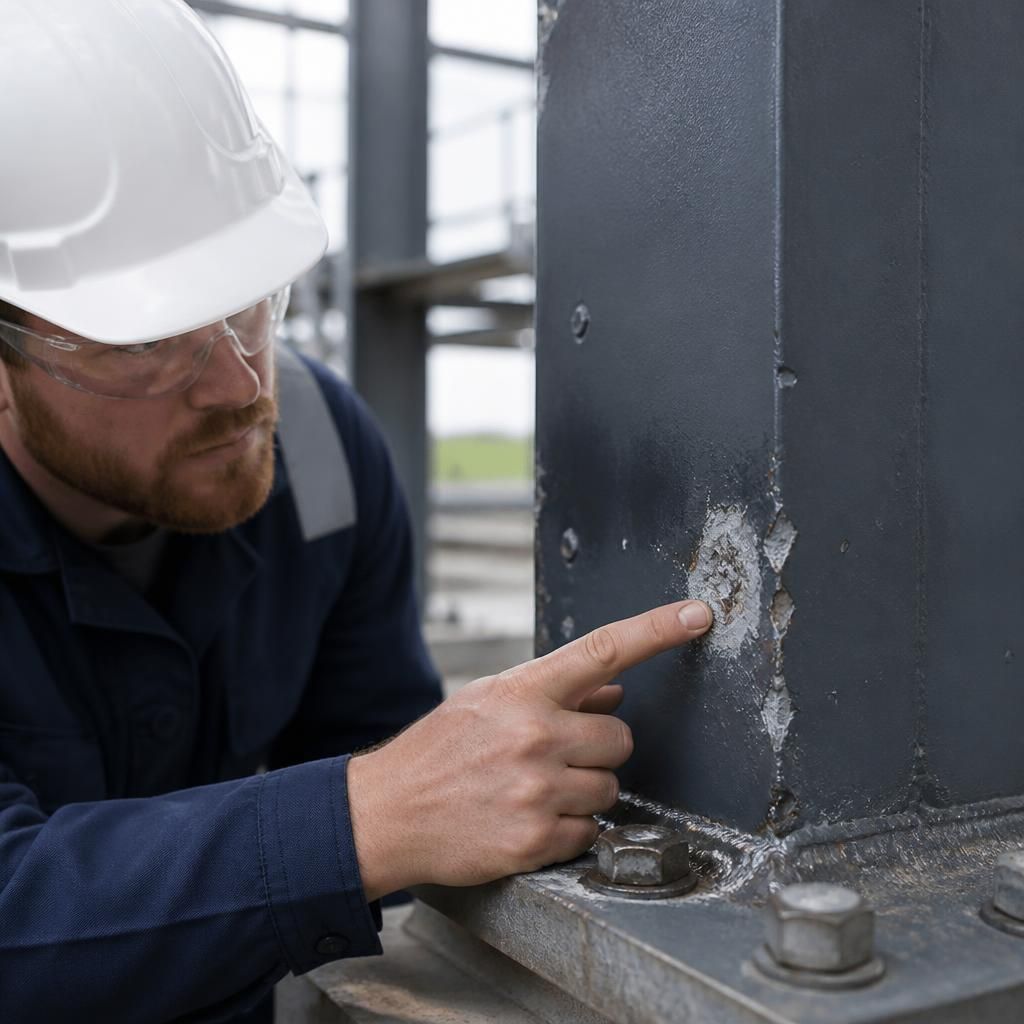
Zinc corrosion products need to be distinguished from steel rust during maintenance inspections. If a chip or exposed edge allows moisture to reach the primer, zinc may oxidise first and produce a white or grey deposit. This can indicate that the primer is providing sacrificial protection rather than proving that the steel substrate has already developed extensive rust.
The deposit should not simply be painted over. It should be assessed alongside the condition of the surrounding topcoat, the extent of exposure and any signs of red-brown corrosion from the underlying steel. Removing loose products, cleaning the area and selecting a repair method compatible with the zinc primer can prevent a minor defect from becoming a wider coating failure. Correctly interpreting these signs helps maintenance teams target remedial work without treating every mark as evidence that the complete coating system needs replacement.