

What steps should I follow to prevent powder coating defects on galvanised steel?
Prevent defects on galvanised steel by assessing the zinc surface, removing contaminants, preparing it with a compatible pretreatment, and allowing for outgassing before applying powder. Control film thickness and curing conditions, then inspect the finished coating for adhesion, pinholes, craters, bubbling and uneven coverage.
Preventing defects on galvanised steel requires the coating process to be controlled as a complete system, from component design and zinc condition through to handling, powder application and final verification. Galvanised steel is not a uniform substrate: its surface chemistry, texture and geometry can vary between parts, so the process should be agreed against the specific galvanising method, component design and intended service conditions.
-
Confirm the coating specification before production. Define the required appearance, corrosion protection, operating environment and any dimensional limits before selecting the powder system. The powder manufacturer’s technical data should confirm suitability for use over zinc-coated steel, including the recommended application sequence and curing requirements. This is particularly important where the part will be exposed to moisture, chemicals, outdoor conditions or temperature changes.
-
Review the component design for coating-related risks. Hollow sections need correctly positioned drain and vent holes so that cleaning fluids, air and heat can move through the component. Enclosed areas without adequate ventilation can retain moisture or release gas during heating, creating bubbling or pinholing. Drainage should also prevent liquid collecting in corners or behind overlapping sections.
-
Deal with zinc irregularities before the part reaches the coating stage. Runs, sharp projections, heavy build-up, rough areas, weld spatter and damaged edges can remain visible through the powder film or create weak points. These areas should be corrected using a method that does not introduce incompatible material or excessive heat. Any repair to the galvanised layer should be assessed for compatibility with the pretreatment and powder system rather than assumed to behave like the surrounding zinc.
-
Allow the prepared component to stabilise before coating. Galvanised parts may retain moisture after processing or storage, particularly around seams, overlaps and recessed areas. Coating should not begin until the steel is dry and at a suitable temperature for the selected process. Moving parts from a cold or damp storage area directly into application can increase the risk of condensation and inconsistent powder deposition.
-
Use suitable masking and racking. Masking must withstand the process temperature and should be positioned so that it does not leave exposed steel, pull powder away from an edge or create a visible ridge. Contact points for hooks and racks should be planned around the drawing and finish requirements. Poor electrical contact can produce uneven deposition, while excessive contact marks can require unnecessary repair after coating.
-
Control application around difficult geometries. Recesses, internal corners, returns and narrow gaps can behave differently from open faces because of the Faraday cage effect. Gun distance, movement speed, voltage and powder flow should be adjusted for the component rather than left at a single setting for every surface. Applying too much powder to compensate for weak coverage can cause sagging, uneven texture or incomplete curing. The operator should also avoid directing a concentrated spray at one edge for too long.
-
Prevent powder contamination between batches. Application equipment, hoses, booths and recovery systems should be cleaned in accordance with the powder system being used. Different colours, chemistries or finishes can contaminate one another and cause specks, colour variation or surface defects. Powder should be stored sealed and handled according to its technical instructions; material that has absorbed moisture or formed hard agglomerates should not be introduced into a critical finish without assessment.
-
Validate the process on representative parts. A trial piece or test panel made from the same galvanised material can reveal problems before a full batch is processed. The trial should represent the most difficult geometry, not only a flat, easily coated area. Record the powder reference, batch details, application settings, part orientation and oven conditions so that an acceptable result can be reproduced and deviations can be investigated.
-
Check the metal temperature rather than relying only on air temperature. The steel must reach the powder system’s specified cure condition throughout the relevant areas. Thick sections, tightly packed loads and shaded positions in the oven may heat differently from thin, exposed sections. The cure schedule should therefore be checked against actual component temperature, with oven loading and part spacing kept consistent between batches.
-
Inspect using agreed acceptance criteria. Inspection should cover appearance, colour and texture consistency, coverage at edges and recesses, masking lines, contact marks and any signs of gas release. Where required by the specification, use calibrated coating-thickness equipment and a defined adhesion or cure test suitable for the complete coating system. Inspection results should be recorded by batch so that recurring faults can be traced to a particular material, rack position, application setting or oven load.
If a defect is found, avoid simply applying another coat over it. First identify whether the cause was component design, zinc condition, handling, electrical contact, powder contamination, application or heat exposure. The correct remedial route may involve local preparation, removal and recoating, or rejection of the part where the zinc layer or coating system has been compromised. For repeat production, correcting the process cause is more reliable than repairing each affected component individually.
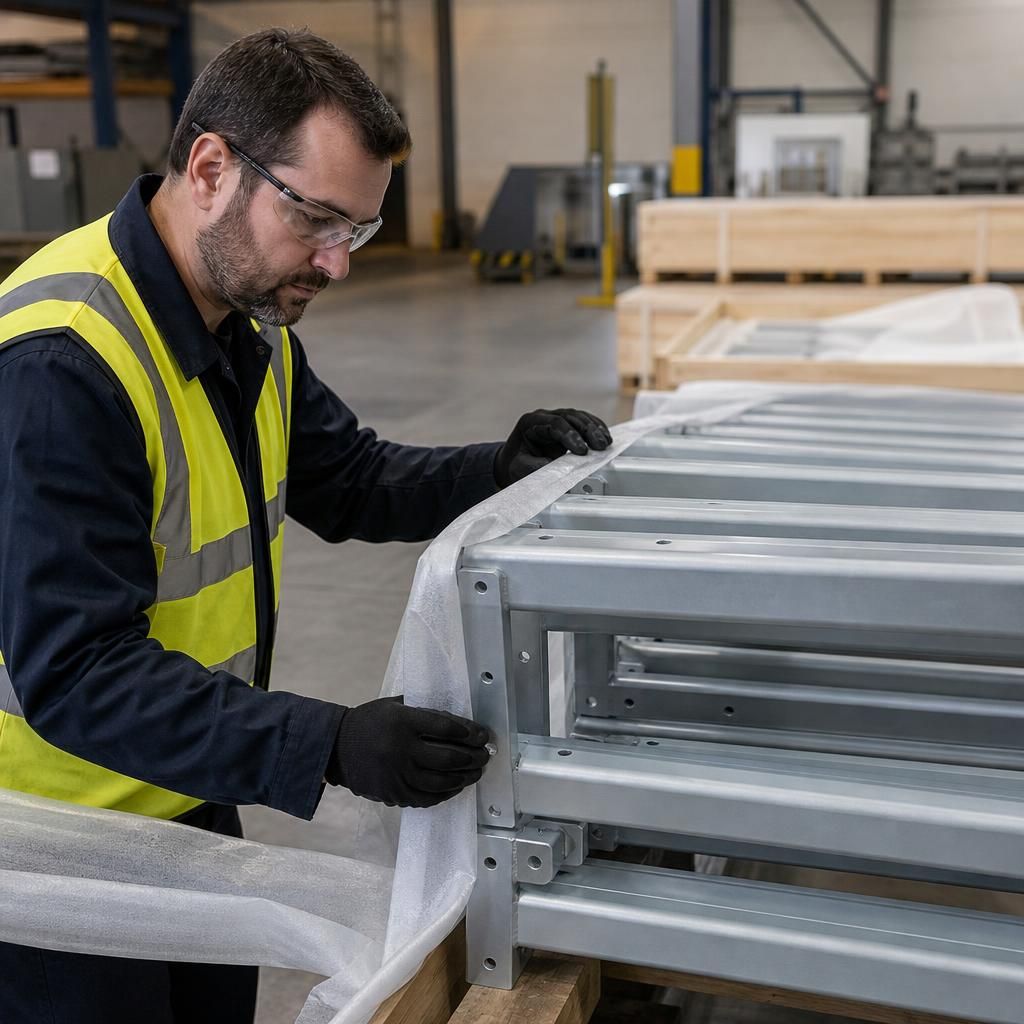
Preventing defects on galvanised steel continues after curing: correct cooling, handling and storage are needed to stop a sound coating being damaged before installation. The powder film may be fully cured but still vulnerable to impact, abrasion and pressure from unsuitable packing or stacking.
- Allow components to cool sufficiently before placing them in contact with one another or applying protective wrapping.
- Use clean, non-abrasive separators that will not trap moisture against the coated surface.
- Support parts at suitable points to prevent rubbing, distortion or concentrated pressure on edges and corners.
- Keep coated items away from metal swarf, grit, oils and other contaminants that can mark the finish or interfere with later assembly.
- Inspect contact areas, edges and lifting points after handling, and record any damage before the parts move to the next stage.
Where coating has been chipped or scraped, do not treat the affected area as a cosmetic issue only. Check whether the damage has exposed the galvanised layer or underlying steel, then follow the agreed repair procedure for the coating system. Correct handling prevents avoidable defects from being mistaken for application or curing failures.