

What specific challenges are involved in powder coating over galvanised steel?
Powder coating over galvanised steel is challenging because the zinc surface can vary in texture and cleanliness, while trapped moisture or gases may cause pinholing, bubbling and adhesion loss during curing. Successful results depend on correctly preparing and profiling the galvanised surface, controlling coating thickness, and selecting a compatible powder and cure schedule.
The main challenges when powder coating over galvanised steel are managing the interaction between the zinc coating and the powder system, maintaining consistent appearance across different galvanised components, and protecting the zinc layer during fabrication, handling and curing. The steel may be suitable for powder coating, but the finished result depends on how the galvanising process, component design and coating specification work together.
Variation in the galvanised layer: Galvanised steel does not always have a uniform surface from one component to another. Zinc thickness, crystal structure, surface dullness and localised roughness can vary according to the steel grade, immersion conditions and cooling history. These differences can affect the visual texture and the way the finished coating reflects light. A coating that looks consistent on one batch may therefore appear slightly different on another unless the incoming material is assessed and processed consistently.
Compatibility with treatments applied by the galvaniser: Galvanised components may arrive with passivation treatments, temporary corrosion protection or other residues. These treatments can interfere with the coating system if they are not identified before work begins. The coater needs to know what has been applied to the zinc and whether it is intended to remain, be removed or be replaced with a suitable conversion treatment. Treating every galvanised surface as chemically identical can produce inconsistent results.
Damage caused during fabrication and handling: Drilling, cutting, welding and forming can remove or disturb the zinc coating. Weld areas may also contain residues, heat-affected zones and uneven transitions between bare steel and galvanised steel. Lifting points, sharp tools and metal-to-metal contact can create scratches or local damage before powder is applied. These areas require particular attention because the powder finish cannot restore zinc that has already been removed; any exposed steel must be dealt with as part of the agreed coating system.
Component design and drainage: Hollow sections, folded profiles and enclosed fabrications create practical difficulties. Small openings may not allow adequate drainage or inspection, while unvented sections can create safety and quality problems during heating. Water, cleaning fluids or process residues can also remain in poorly designed cavities. Components should therefore be designed with suitable drain and vent holes, accessible faces and enough clearance for racking, spraying and curing. Powder coating cannot reliably compensate for inaccessible surfaces or sealed cavities.
Edges, corners and weld transitions: Galvanised fabrications often combine broad flat areas with sharp edges, internal corners and welds. Powder tends to behave differently at these points: sharp edges may receive less coverage, while corners and rough weld profiles can produce uneven film build. Excessive rounding, grinding or weld dressing may also remove more zinc than intended. The design and fabrication standard should take the final protective system into account, particularly where the component will be exposed to water, salts, abrasion or industrial contamination.
Appearance matching: A powder finish over galvanised steel may not look identical to the same powder applied to untreated steel or another substrate. Differences in substrate colour, surface profile and reflectivity can influence the perceived shade and gloss. This becomes more noticeable on large panels, assembled structures or parts viewed side by side. Appearance-critical work should be assessed using representative samples or an agreed reference rather than relying only on the powder manufacturer’s colour description.
Heat-related movement and assembly tolerances: Galvanised steel and its attached components may expand at different rates during the curing cycle. Thin sections, long fabrications and mixed-metal assemblies can move or distort if their design does not allow for thermal expansion. Powder thickness can also affect clearances at hinges, threads, sliding faces and mating parts. Masking, racking and assembly requirements should be established before coating so that functional areas remain usable.
Repair and site damage: Once a coated galvanised component has been transported or installed, repairs may involve more than applying matching paint. Scratches can expose both the powder layer and the zinc beneath it, while cutting or welding during installation can expose bare steel. The appropriate repair method depends on the depth and location of the damage, the exposure conditions and whether the repaired area must match the surrounding appearance. Repair materials should be compatible with the original protective system and specified before installation work starts.
These challenges are best controlled through a defined specification covering the galvanising condition, component design, fabrication standard, coating system, appearance requirements, masking and inspection criteria. Representative trial work can be useful where the steel source, galvanising finish or component design is variable. Inspection should consider the complete system rather than judging the powder layer in isolation, including coverage at edges and welds, treatment of damaged areas, functional clearances and the intended service environment.
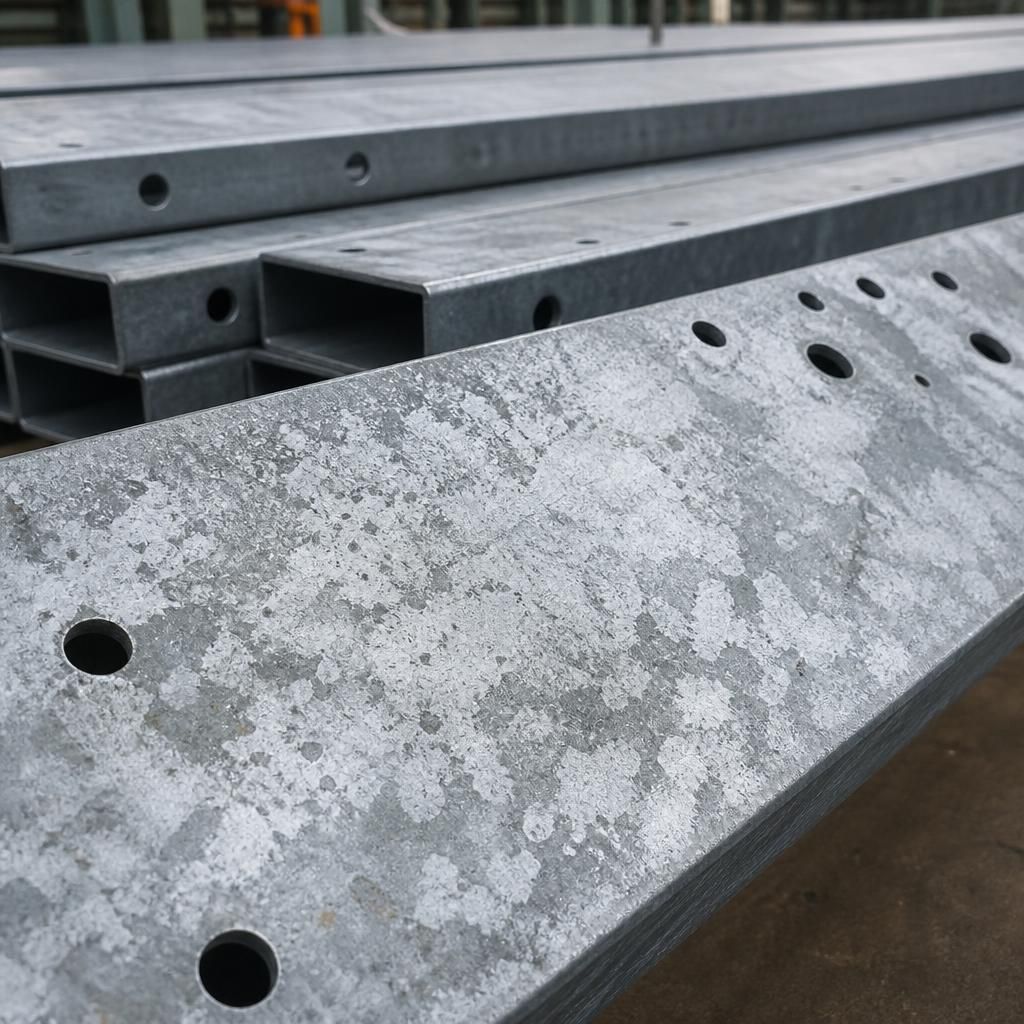
White rust, or wet-storage staining, is a specific challenge when powder coating galvanised steel. It forms when zinc remains damp during storage or transport, leaving pale, powdery corrosion products on the surface. If these deposits are coated over, they can retain moisture and create an unstable base for the powder film, affecting adhesion and appearance.
The surface should be assessed before coating rather than assuming that recently galvanised steel is ready for treatment. Loose white-rust deposits need to be removed using a method that cleans the zinc without unnecessarily reducing its protective layer. The component must then be thoroughly dried and checked for remaining powdery areas, staining or active corrosion. Where the zinc surface has been seriously affected, the appropriate treatment may need to be agreed before powder application.
Discuss Your Galvanised Steel Coating Requirements
If you are specifying powder coating over galvanised steel, discuss your component design, galvanising condition and service requirements before production begins. Powder-coatings.co.uk can help assess the proposed coating system and identify practical requirements for preparation, masking and inspection.