

What are the benefits of using powder coating over galvanised steel?
Powder coating over galvanised steel creates a duplex protection system: the zinc layer protects the underlying steel from corrosion, while the powder coating adds a durable, coloured finish that can improve resistance to weathering, abrasion and surface damage. It also provides greater design flexibility than galvanising alone, with a consistent appearance suited to visible metal components.
Powder coating over galvanised steel is beneficial because it combines the structural protection of a zinc-coated substrate with a separately applied finish that can be specified for appearance, handling and service conditions. This duplex system can extend the useful performance of fabricated steel while giving designers and manufacturers more control over the finished component.
One important advantage is added protection at points where the galvanised surface may be exposed to demanding conditions. The powder layer acts as a barrier over the zinc, limiting direct contact with moisture and contaminants. If the outer coating is locally damaged, the galvanised layer still provides a secondary level of protection to the steel beneath. This is particularly useful for components used outdoors, in industrial environments or where regular handling could affect the surface.
The process also provides greater control over the specification of the finished part. Powder can be selected in different colours, gloss levels and textures, allowing components to be matched to a product range, identified by function or integrated into a wider colour scheme. Textured finishes may also help disguise minor visual variation in the underlying galvanised surface, although they do not replace proper preparation or inspection.
Powder coating is a dry finishing process, so it does not require the liquid solvents associated with many conventional wet-paint systems. Overspray can also be collected during suitable applications, reducing material waste compared with a process in which unused liquid coating cannot be recovered. The environmental profile still depends on the powder chemistry, curing requirements, energy used and how the component is prepared, but the process can be a practical option where a robust finish and controlled material use are required.
For manufacturers and fabricators, a coated galvanised component can be easier to incorporate into a finished product because the coating provides a defined final colour and surface texture in one controlled operation. This can reduce the need for additional painting after assembly, provided that the design, masking points, tolerances and curing conditions have been considered before production. Powder coating is therefore suited to items such as fabricated frames, brackets, guards, enclosures and other metal parts where both substrate protection and a specified appearance matter.
The benefits depend heavily on preparation. Galvanised steel can retain oils, passivation treatments, zinc salts or other contaminants, and its surface may vary according to how it was galvanised and stored. Cleaning, suitable abrasion or pretreatment, correct outgassing control and an appropriate powder system are needed to achieve dependable results. These steps help prevent blistering, pinholing, poor adhesion and premature coating failure. The coating specification should also reflect the component’s exposure, operating temperature, geometry and required finish rather than relying on a standard powder for every application.
- Long-term protection: the powder layer and zinc coating work together, providing two complementary forms of protection rather than relying on the finish alone.
- Specification flexibility: colour, gloss and texture can be selected to suit the product, environment and identification requirements.
- Controlled production: curing in a coating facility allows the finish to be applied consistently across batches when the parts are designed and prepared appropriately.
- Lower finishing complexity: a defined powder finish can remove the need for a separate decorative painting stage in some manufacturing workflows.
- Reduced reliance on solvent-based application: powder coating avoids the liquid solvent content of conventional wet paint systems, subject to the powder and process selected.
Powder coating is not automatically suitable for every galvanised item. Components with trapped air, deep recesses, heavy zinc runs or tight dimensional tolerances need particular attention, and the galvaniser’s surface condition should be discussed before coating. A specialist coater can assess the substrate, recommend preparation and confirm whether the proposed powder system is appropriate for the intended industrial use.
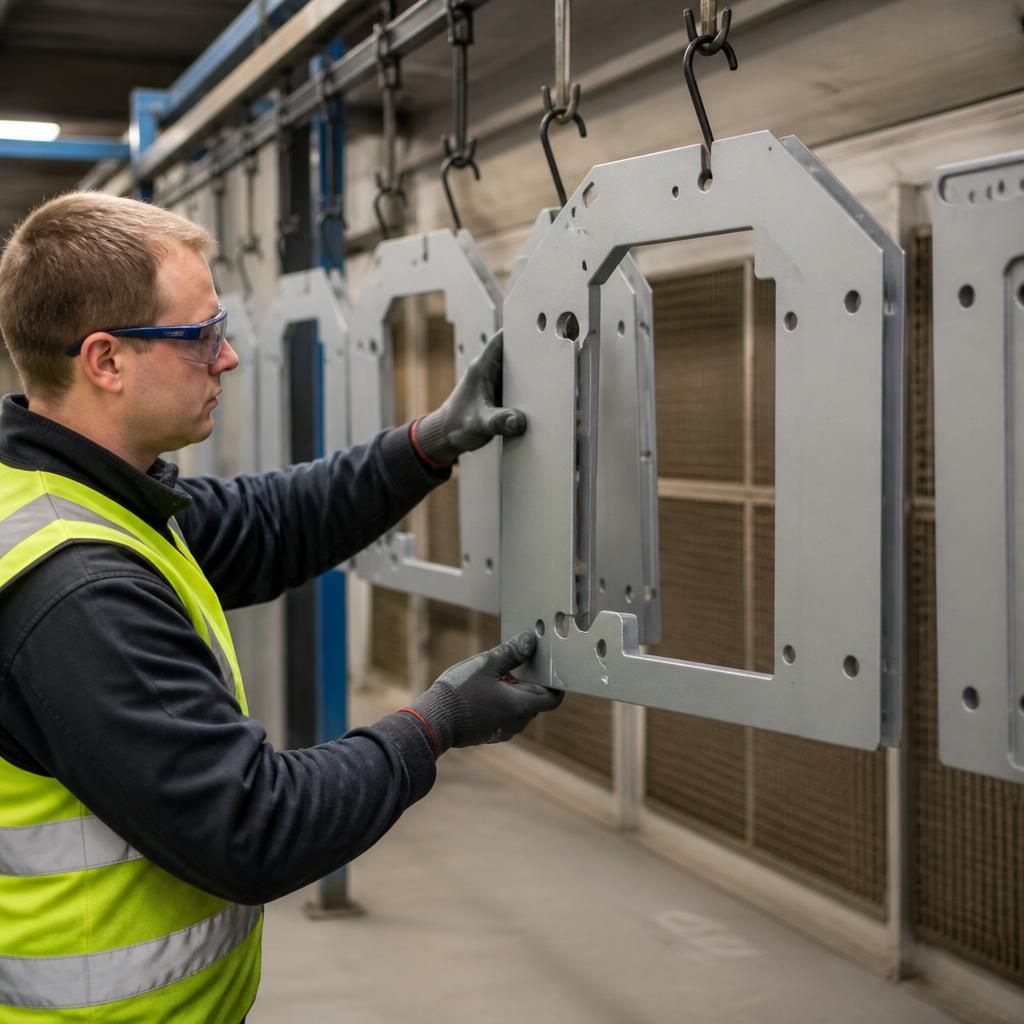
A further benefit of powder coating over galvanised steel is the ability to separate the finished appearance from the corrosion-protection specification. The galvanised layer can be selected for the steel component’s protective requirements, while the powder system is chosen for the visible surface, colour and texture. This is useful where one fabricated design is supplied in different finishes without changing the underlying steel or galvanising process.
The distinction also helps define functional areas during manufacture. Threads, mating faces, earth points and bearing surfaces can be masked before coating, while the remaining areas receive the specified finish. Careful design and dimensional checks are still required, but this controlled approach can make coated galvanised components easier to integrate into assemblies where both corrosion protection and accurate fit are important.
Discuss powder coating over galvanised steel
If you are assessing powder coating for galvanised steel, discuss the component design, substrate condition and service environment with a specialist before specifying the finish. Powder-coatings.co.uk can help review your requirements and advise on a suitable preparation and coating approach.