

How can I ensure proper adhesion of powder coatings on galvanised steel surfaces?
Ensure proper adhesion by degreasing and preparing the galvanised surface to remove oils, passivation residues, loose zinc and oxidation before applying the powder. Use a coating system compatible with galvanised steel, including primer where specified, then apply the correct film thickness and cure it according to the powder manufacturer’s requirements.
Proper adhesion on galvanised steel depends on controlling the zinc surface condition, selecting a compatible coating system and verifying the complete process on representative parts. Galvanised components are not uniform substrates: zinc coating thickness, surface texture, passivation, storage condition and the steel’s fabrication history can all affect how powder bonds and cures.
Assess the galvanised surface before processing. Confirm whether the material has been newly galvanised, stored outdoors, exposed to moisture or previously treated with a passivating product. White corrosion products, handling residues and surface contamination can interfere with bonding even when the zinc appears visually sound. Differences between centrifuged, sheet and continuously galvanised material may also require adjustments to the treatment route.
Control moisture and outgassing risks. Zinc and the underlying steel can retain moisture or release gases during the heating cycle. These gases may cause pinholes, bubbles, craters or local loss of adhesion. Components should therefore be dry before coating, and enclosed sections, overlaps, seams and folded areas should be reviewed as potential sources of trapped moisture or air. Where the component design allows, suitable drainage and venting reduce the risk of defects developing beneath the film.
Use an appropriate pre-treatment sequence. The treatment must create a chemically receptive surface rather than simply making the metal look clean. The chosen process should be suitable for zinc and should not leave residues that are incompatible with the powder system. Where a chemical conversion treatment is used, its operating controls and rinsing requirements need to be maintained consistently, as carry-over or incomplete rinsing can undermine adhesion.
Consider a primer or duplex system where the service conditions justify it. A compatible primer can provide an additional bond layer and improve corrosion protection, particularly where the finished component will face demanding exposure, impact or edge damage. The primer and topcoat must be assessed as one system: incompatibility between layers, excessive intercoat contamination or incorrect recoat conditions can create a weak interface even when each product performs well independently.
Apply the powder consistently across the whole component. Corners, recesses, welds, sharp edges and areas with restricted access can receive a different coating deposit from broad flat surfaces. Uneven deposition may produce weak spots, excessive build or poor coverage. Good earthing, suitable gun settings and controlled part presentation help maintain a stable electrostatic application, while complex components may require particular attention to Faraday-cage areas.
Verify curing using the metal temperature, not merely the oven setting. The powder manufacturer’s cure schedule relates to the temperature reached by the component and the time it remains at that temperature. Galvanised parts of different mass or geometry may heat at different rates, so the same conveyor or oven settings will not necessarily produce the same cure. Under-cure can leave the film insufficiently developed, while excessive heat can damage the coating or affect the zinc surface. A production process should be checked against the actual part temperature and the specified cure requirements.
Use representative trials for unfamiliar work. A test panel made from ordinary mild steel may not reveal problems that occur on galvanised material. Trial pieces should match the production substrate, geometry and preparation route, including welds, edges and enclosed features where relevant. Examine the cured finish for blistering, pinholing, cratering and areas of lifting before committing a full batch.
Adhesion should be checked after the coating has reached its required cure and has cooled. A suitable cross-hatch, scrape or pull-off assessment can help identify whether failure occurs within the coating, between coating layers or at the zinc interface. The result is more useful when recorded alongside the substrate condition, pre-treatment route, powder batch, application settings and cure profile.
Good handling after coating is also important. Abrasion, impact and contamination before the finish has fully stabilised can create damage that is mistaken for an adhesion problem. Parts should be supported without marking the coating, kept separated where contact could occur and inspected at points likely to experience assembly stress. If adhesion varies across a batch, investigate substrate history, storage, preparation controls and cure data rather than adjusting powder application alone.
For industrial components with variable galvanised surfaces or demanding service requirements, a coating specialist can review the substrate, agree a compatible system and establish process checks before full production. This approach is particularly useful for batch work, large fabricated parts and assemblies where repair or reprocessing would be difficult.
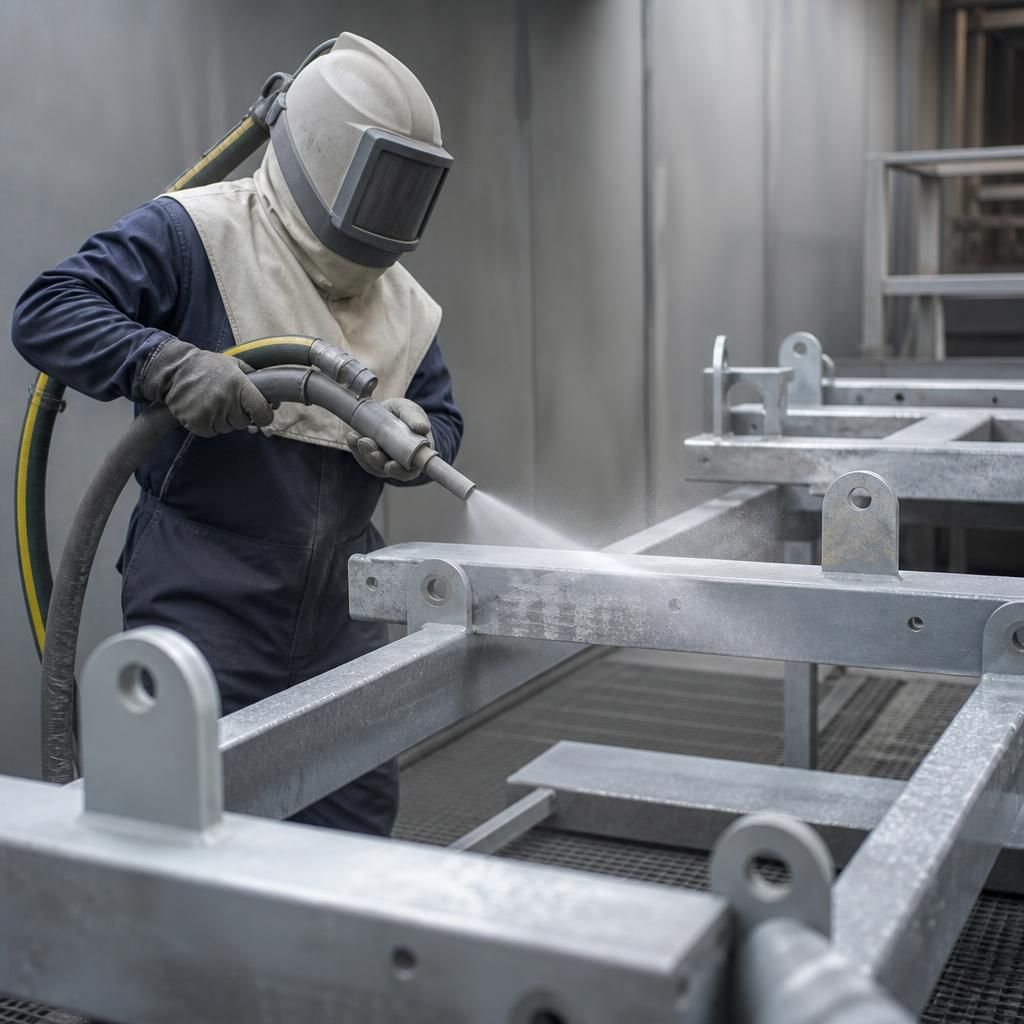
Where chemical preparation alone does not provide a suitable bonding surface, controlled sweep blasting can improve adhesion on galvanised steel. The aim is to remove weak surface material and create a light, even key without stripping away the protective zinc layer. Excessive blast pressure or an unsuitable abrasive can expose the underlying steel, producing local differences in corrosion protection and coating behaviour.
Blasting parameters should therefore be matched to the zinc coating and the component’s geometry. After treatment, remove all dust and inspect the surface for exposed steel, embedded abrasive or uneven areas before powder application. A small trial on representative galvanised material helps confirm that the chosen preparation produces a sound interface without damaging the substrate.