

What are the key benefits of using nylon powder coating over other types of coatings?
Nylon powder coating provides a tough, wear-resistant finish with low friction, making it well suited to metal components exposed to repeated contact, sliding or impact. Compared with many conventional coatings, it can also offer useful resistance to chemicals and corrosion while providing a smooth, durable surface without the need for liquid solvents.
Nylon powder coating’s main advantage over many alternative finishes is that it combines surface protection with useful engineering properties, including electrical insulation, noise reduction and controlled film build. This makes it more than a decorative treatment: it can form part of the functional design of a metal component.
It can provide a substantial, continuous coating. Depending on the nylon grade and application method, the finish can be applied as a relatively thick film that covers edges, profiles and complex shapes. This is useful where a thin paint film may not provide the required separation between a component and the surfaces around it. The correct film thickness still depends on tolerances, geometry and the intended service conditions, so it should be agreed during specification rather than assumed.
Nylon can reduce noise and vibration. Its polymer structure provides a degree of cushioning between contacting parts. This can help reduce rattling, chattering and transmitted noise in items such as guides, brackets, rollers, housings and handling equipment. A metal component coated in nylon may therefore operate more quietly than an equivalent uncoated part or one protected only by a hard, thin finish.
It offers electrical insulation as well as physical separation. Where a metal component must be isolated from another conductive surface, nylon can act as an insulating barrier. This may be relevant to brackets, supports, clips, housings and industrial assemblies. Electrical performance depends on the coating formulation, thickness, continuity and operating environment; it should be validated against the relevant design requirements rather than inferred solely from the material name.
The finish can support consistent component handling. Nylon’s relatively smooth polymer surface can help parts slide through guides, chutes and handling systems with less tendency to snag or mark adjacent components. It can also be useful where a metal edge or surface needs a protective interface against another component. This is distinct from simply selecting a visually attractive coating, because the finish is being specified for how the assembly behaves in use.
Nylon powder coating can be preferable where a solvent-based liquid system is impractical. Powder application uses a dry coating material and can produce an even film without leaving a liquid carrier in the finished layer. This can simplify the specification of components that need a clean, continuous polymer surface. As with any powder system, the preparation of the metal, application method and curing or fusion conditions are important to the final result.
It can protect the underlying metal without changing the component design. Applying a polymer layer may avoid the need to manufacture a separate sleeve, bush, liner or protective cap for some applications. That can reduce the number of interfaces and assembly operations, although the coating thickness must be included in dimensional calculations. Parts with close fits, threaded areas, bearing seats or sealing faces may require masking or a coating allowance.
Compared with common alternatives, the choice can be summarised as follows:
- Compared with liquid paint: nylon is selected when the component needs a functional polymer layer with insulation, cushioning or a controlled protective interface, rather than colour alone.
- Compared with a very hard metallic finish: nylon may be more suitable where contact noise, marking or electrical isolation matters, although it may not suit high-temperature or highly abrasive conditions.
- Compared with a thin general-purpose powder finish: nylon can be considered where a thicker polymer film or a more specialised service property is required.
- Compared with a separate plastic component: coating can retain the strength and form of the metal substrate while adding a polymer surface, provided the coating’s thickness and adhesion meet the application requirements.
Nylon is not automatically the best choice for every component. Temperature, exposure to sunlight, chemicals, moisture, dimensional tolerances, impact conditions and the required electrical properties all affect suitability. The nylon grade and preparation method should be matched to the substrate and service environment, with sample testing or specification review where the component has tight tolerances or demanding performance requirements.
For manufacturers and fabricators, the practical benefit is therefore flexibility: nylon powder coating can be specified not only to protect a metal part, but also to provide insulation, cushioning, quieter operation and a controlled interface within an assembly. A Midlands-based specialist serving industrial customers can assess the component’s geometry, preparation needs and intended use before recommending whether nylon is more appropriate than a conventional paint, metallic finish or another polymer coating.
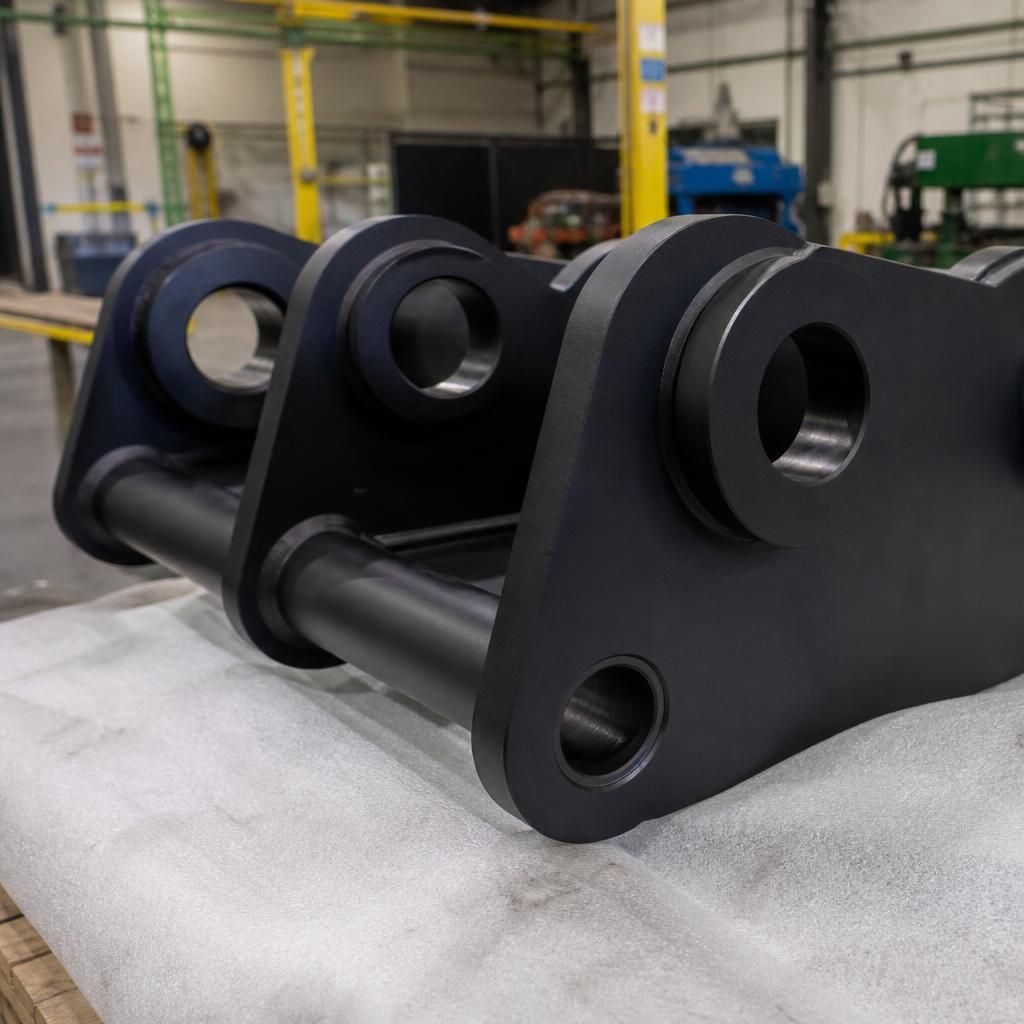
A further benefit of nylon powder coating is that it can provide a durable working surface without adding a separate material to the assembly. The coating forms a bonded polymer layer over the prepared metal, so the component retains its original structural strength while gaining a surface suited to contact, guidance or separation duties. This can simplify designs that would otherwise require additional liners, pads or sleeves.
That advantage depends on accurate specification. Coating thickness, masking requirements and the condition of the substrate must be considered alongside fits, threads and moving interfaces. Where these details are defined before production, nylon can serve as an integrated functional surface rather than a purely decorative finish.