

How does the nylon powder coating process differ for various metal types and applications?
The nylon powder coating process is adjusted to suit each metal’s surface condition, heat response and geometry, as well as the application’s requirements for wear, corrosion and chemical resistance. Steel, aluminium and cast components may therefore require different preparation, masking, application and curing controls to achieve a consistent, well-adhered finish.
The nylon powder coating process differs mainly according to the substrate’s thermal behaviour, surface chemistry, porosity and dimensional tolerance, together with the service conditions of the finished component. A steel bracket, an aluminium casting and a galvanised assembly may therefore require different cleaning methods, preheating parameters, masking arrangements and inspection criteria, even when they receive the same nylon coating system.
Steel and iron components
Mild steel and fabricated ironwork generally provide a stable substrate for nylon coating, but the preparation must deal with mill scale, rust, welding residues, grease and sharp fabrication edges. Abrasive preparation is commonly selected to produce a clean, keyed surface. Welds, corners and recessed areas are then checked carefully because contaminants or uneven profiles in these locations can affect coating continuity.
The size and mass of a steel component also influence how heat enters and leaves the part. A thin pressed panel reaches processing temperature differently from a heavy machined block. Large weldments may contain areas of varying thickness, so the coating specialist must consider heat distribution across the whole assembly rather than relying on a single nominal setting. Drain holes, lifting points and rack positions may also affect access and finish consistency.
Cast iron needs additional attention because its pores can retain oil, moisture or process residues. Heating may release these contaminants during coating, causing pinholes, bubbling or other surface defects. Degreasing, suitable pre-treatment and, where appropriate, controlled preheating help identify and manage this risk before the nylon powder is applied.
Aluminium components
Aluminium has a naturally formed oxide layer and is more easily marked or distorted than heavier ferrous materials. Preparation therefore has to remove contamination and provide a suitable surface without unnecessarily damaging the substrate. Abrasive selection, handling pressure and cleaning chemistry are chosen with the alloy and component design in mind.
Aluminium also transfers heat differently from steel. Thin sections, fins and delicate profiles can reach temperature rapidly, while larger castings may contain substantial differences in wall thickness. These characteristics affect how the nylon melts and flows over the part. Threads, bearing seats, machined faces and electrical contact areas usually require precise masking because the coating can alter clearances and functional dimensions.
Cast aluminium may contain mould-release residues, entrapped air or surface porosity. A suitable pre-treatment route and controlled heating programme reduce the likelihood of outgassing defects. The component’s alloy, casting quality and intended use should be supplied with the job specification so that the coating route is selected on the basis of the actual material rather than its appearance alone.
Galvanised and zinc-coated steel
Galvanised parts present a different challenge because the zinc layer is part of the corrosion-protection system and should not be removed unnecessarily. The surface may carry passivation residues, storage contamination or uneven zinc deposits. Cleaning and keying must be sufficient for adhesion while preserving the underlying zinc protection.
Zinc-coated surfaces can also release gases when heated. The coating specification may consequently require particular pre-treatment, controlled heating or a suitable venting approach. Box sections and enclosed fabrications need drainage and vent holes where appropriate; without them, trapped air or moisture can affect both safety and finish quality. The condition of the galvanised layer should be recorded before processing, especially where the coating is being used to supplement rather than replace the zinc protection.
Stainless steel and other specialised substrates
Stainless steel is resistant to corrosion, but that does not automatically make it easy to coat. Oils, polishing compounds and handling marks must be removed, and the surface needs a suitable mechanical or chemical key. Abrasives and equipment should be controlled to avoid transferring ferrous contamination onto the stainless surface, as this can create localised staining or undermine the appearance of the finished part.
Zinc die-castings, copper-based parts and mixed-metal assemblies require individual assessment. Their melting points, thermal expansion characteristics and surface chemistry may differ substantially from those of steel. Components containing solder, adhesives, inserts or dissimilar metals can also react differently during heating. A coating specialist may recommend a trial piece or representative sample where the substrate combination, operating temperature or dimensional tolerance creates uncertainty.
How the application changes the process
The required performance of the component determines more than the choice of nylon powder. It also influences the acceptable coating build, surface texture, masking plan and inspection method:
- Wear and sliding applications: the finish should be sufficiently even and free from raised particles that could increase friction or create premature wear. Edges, contact faces and moving interfaces may need special control, and the coating thickness must be compatible with the available clearance.
- Impact-prone components: the substrate should be examined for sharp edges, weld spatter and abrupt profile changes that could concentrate stress in the coating. Racking and handling are important because a sound coating can still be damaged by contact with supports before the part is released for use.
- Outdoor or corrosive environments: preparation of the underlying metal becomes particularly important. Any exposed edge, unsealed crevice or poorly treated corrosion site can become a weakness beneath the coating. Drainage, joint design and the condition of the base metal should be considered alongside the powder specification.
- Electrical or insulating uses: contact points, earth connections and mating faces normally require controlled masking. The required dielectric behaviour depends on the coating system, thickness and operating conditions, so electrical requirements should be stated before processing rather than assessed only by visual appearance.
- Chemical or immersed service: the exact chemical, concentration, temperature and exposure duration matter. Nylon grades do not have identical resistance profiles, and laboratory or service-condition testing may be appropriate where failure would have operational consequences.
- Close-tolerance parts: threads, bores, shafts, slots and locating faces must be identified in the drawing or job instructions. Masking and dimensional checks help prevent interference after coating, particularly where several coated parts must assemble together.
Choosing the application route
Nylon powder can be applied using different methods, including electrostatic spraying and processes in which a heated component receives powder that melts onto its surface. The suitable route depends on the component’s dimensions, shape, required thickness, production quantity and access to internal or recessed areas. Electrostatic application can be useful for controlled deposition on accessible surfaces, while preheated-part methods may be considered where a heavier or more enveloping layer is required. The route must be matched to the powder system and the substrate’s heat tolerance.
Racking is also application-specific. It must provide reliable electrical contact where electrostatic application is used, support the part without obstructing important faces and allow heat to reach the component consistently. Contact marks, hanging points and areas hidden from the powder stream should be agreed in advance, particularly for visible architectural, automotive or fabricated components.
Specification and quality checks
A useful coating specification identifies the metal or alloy, existing surface treatment, service environment, areas to be coated, surfaces to remain clear and any critical dimensions. It should also note whether the component has enclosed sections, inserts, oils, previous coatings or heat-sensitive materials. These details allow the process to be designed around the part rather than applying a standard cycle to every metal type.
Inspection may include visual examination, coating-thickness measurement, adhesion assessment and checks of masked or uncoated areas. Depending on the application, additional checks can cover continuity, porosity, dimensional fit or resistance to a specified operating environment. For an unfamiliar substrate or demanding use, a representative test piece can help confirm that the chosen preparation and nylon system are suitable before a full production batch is processed.
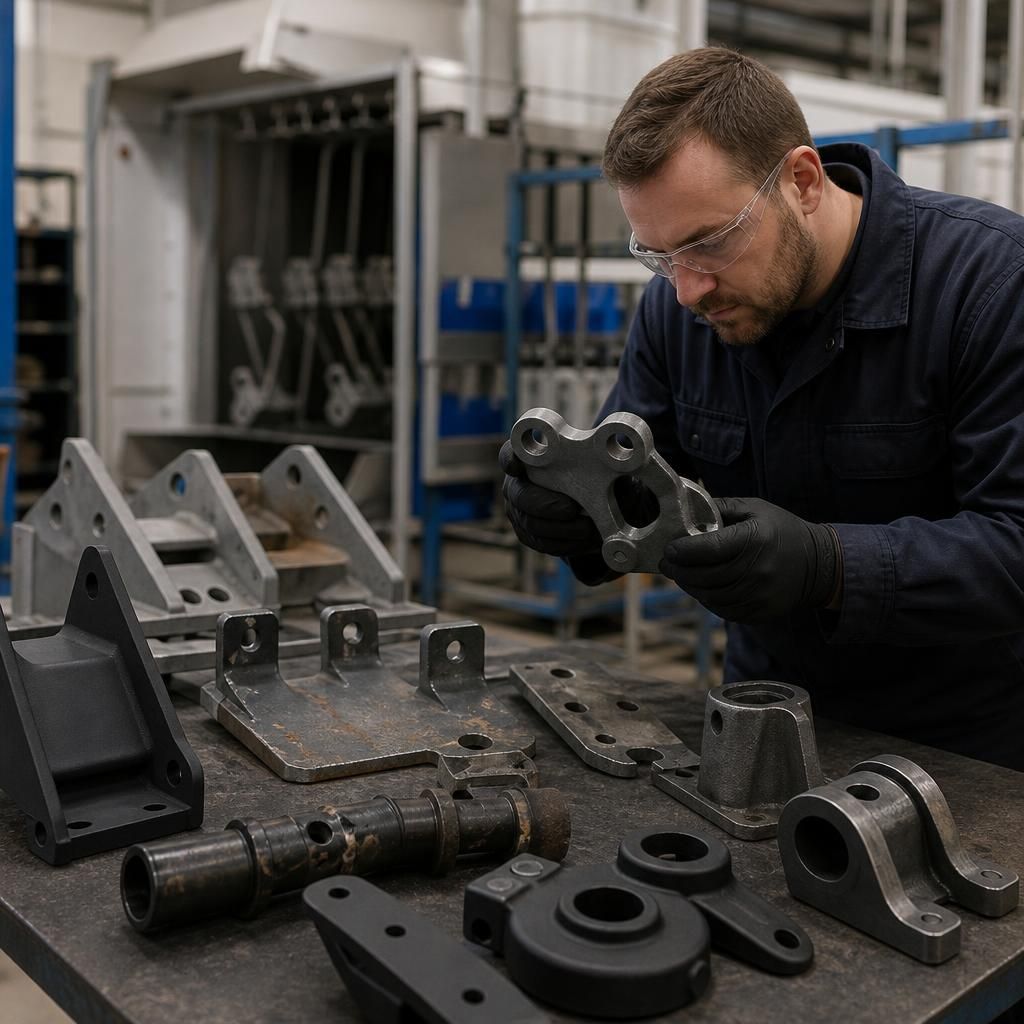
Previously coated or refurbished components require a different nylon powder coating assessment from newly fabricated metal. The existing finish, any corrosion beneath it and the condition of the substrate must be established before a new coating route is selected. Applying fresh powder over an unsuitable or poorly bonded layer can conceal defects and compromise the result.
- Existing coating: its type, adhesion and compatibility with the proposed nylon system need to be considered.
- Substrate condition: corrosion, repairs, impact damage and embedded contamination may require additional preparation or repair before coating.
- Assembly history: previously used parts may contain oils, chemicals or residues that are not present on new components.
- Functional changes: a replacement coating can alter clearances, insulation or surface friction, so critical interfaces should be reviewed again.
For refurbishment work, representative samples or test areas can help establish whether the existing finish should be removed, locally repaired or treated as part of the new coating specification. This assessment prevents a standard process being applied to parts whose previous service has changed their surface condition.