

What surface preparation is necessary before applying nylon coatings to metal components?
Metal components should be thoroughly degreased, stripped of rust, scale and unsuitable previous coatings, then abrasively cleaned to create a sound, keyed surface. Before nylon coating, the parts must be free from dust, moisture and contaminants, with edges, welds and recesses inspected so defects can be addressed and the surface is suitable for even adhesion.
Necessary preparation for nylon coating involves more than making a metal part look clean. The substrate must be correctly identified, chemically prepared, dry and suitable for the coating system, while areas that must remain uncoated need to be protected before processing. The preparation method should be selected according to the metal, its previous service conditions, the required appearance and the component’s dimensional tolerances.
Identify the substrate and its condition
Steel, stainless steel, aluminium, galvanised steel and cast materials can require different preparation routes. The coater should establish the substrate before work begins, including whether it contains plating, conversion treatments, sealants, adhesive residue or other materials that could affect adhesion. Components returning from service may also contain process chemicals or embedded residues that are not visible during a basic visual inspection.
Any existing finish should be assessed for compatibility rather than simply coated over. If the old coating is poorly bonded, chemically unsuitable or likely to interfere with the nylon system, it needs to be removed as part of the agreed preparation specification. The condition of the metal beneath it should then be assessed for pitting, distortion or other features that could remain visible after coating.
Use the correct chemical pretreatment
After the initial preparation stage, a suitable pretreatment may be required to promote adhesion and provide additional protection at the metal-to-coating interface. The chemistry depends on the substrate. A process suitable for aluminium is not automatically appropriate for carbon steel or galvanised components.
Effective pretreatment requires controlled contact time, concentration, rinsing and drying. Inadequate rinsing can leave residues beneath the nylon, while poor drying can introduce moisture into the coating operation. The treatment should therefore be managed as a defined process rather than treated as an informal wash. Where a particular specification applies, the pretreatment should be agreed against the component’s intended environment and any relevant customer requirements.
Prepare the component design for coating
Preparation also includes deciding which surfaces are to be coated and which must remain clear. Threads, bearing seats, bores, mating faces, electrical earth points, identification marks and close-tolerance locations may need temporary masking or suitable plugs. Masking materials must tolerate the coating conditions and be positioned so that they do not leave unwanted edges or interfere with the finish.
- Confirm critical dimensions before coating and identify areas where added coating thickness could affect assembly.
- Provide suitable access for handling and electrical contact where the process requires it.
- Check enclosed sections for drainage and ventilation, particularly where trapped liquid or air could affect preparation or heating.
- Remove temporary transport materials, labels and protective films before the component enters the preparation sequence.
- Agree how sharp geometry, joints and fabricated sections will be treated where they could influence coverage.
Castings, porous fabrications and welded assemblies may need additional consideration because they can retain oils, moisture or gases. These materials may release residues during heating, causing pinholes, bubbling or other defects in the nylon finish. The appropriate remedy may involve additional conditioning or a change to the component preparation plan; it should be determined before production rather than after a defect appears.
Control handling after preparation
Once the preparation sequence is complete, components should be handled in a way that preserves their condition. Contact with bare hands, dirty supports, workshop dust or unsuitable packaging can reintroduce substances that compromise the coating. Clean gloves, appropriate racks and protected transfer between stages help prevent this. Components should also be kept under conditions that avoid condensation before coating.
A final pre-coating check should confirm that the prepared metal is visually acceptable, fully dry, correctly masked and free of processing residues. It should also verify that the preparation has not altered critical features or left areas inaccessible to the coating process. For repeat batches, recording the substrate, preparation route, masking arrangement and inspection requirements creates a consistent basis for production and makes any later coating issue easier to investigate.
For B2B components with complex fabrication, mixed metals or demanding dimensional requirements, the preparation specification should be agreed before parts are sent for nylon coating. Powder-coatings.co.uk provides nylon coating services for industrial components and can discuss the required preparation route for parts collected and delivered across the Midlands and surrounding areas.
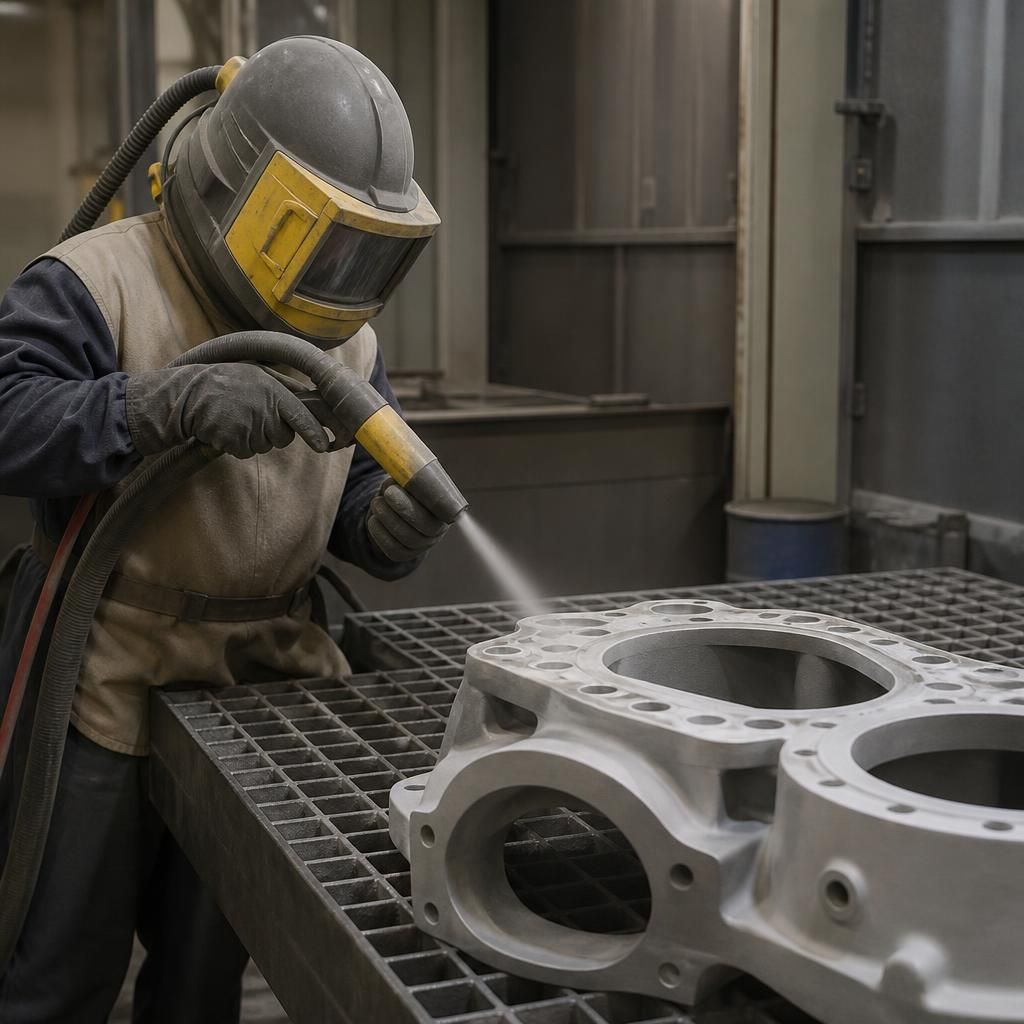
Abrasive cleaning must create a consistent surface profile without damaging the component. The abrasive grade, pressure and technique should suit the substrate: excessive blasting can round edges, thin vulnerable sections or distort close-tolerance features, while insufficient cleaning may leave a profile too shallow for dependable mechanical adhesion. The chosen abrasive should also be clean and compatible with the metal, as embedded particles or transferred contamination can affect the nylon finish.
After blasting, the surface should be assessed under suitable lighting for remaining scale, corrosion products, gloss or uneven preparation. Profile checks may be appropriate where the coating specification requires controlled roughness. Any prepared part that shows localised variation should be corrected before coating, rather than relying on the nylon layer to conceal differences in the underlying surface.