

How do different nylon coating finishes affect the performance and lifespan of metal components?
Different nylon coating finishes influence a metal component’s surface friction, impact resistance, cleanability and exposure protection, so they can affect how well it performs and how long it remains serviceable. The most suitable finish depends on the component’s operating environment, contact or abrasion demands, appearance requirements and the level of surface protection needed.
Nylon coating finish refers to the surface texture and sheen produced by the coating system, rather than its colour alone. Smooth, satin, matt and textured nylon finishes can alter how a component contacts other parts, accumulates contamination, is inspected and withstands repeated service. However, the finish is only one part of the performance specification: nylon grade, coating thickness, surface preparation, cure and the component’s operating conditions usually have a greater effect on total service life.
A smooth nylon finish produces a relatively even surface with few raised areas. This can be useful where coated parts slide against one another, where dirt must be removed readily or where close-fitting components need consistent dimensions. It also makes the coating easier to inspect for pinholes, scratches, incomplete coverage and contamination. The disadvantage is that surface marks and preparation defects can remain more visible, so the metal must be properly cleaned and prepared before coating.
Satin finishes provide a lower sheen without creating the pronounced surface profile associated with a coarse texture. They are often selected where a less reflective appearance is required but the component still needs to remain reasonably easy to wipe and inspect. In practical terms, satin is a compromise between the visual uniformity of a smooth finish and the light-diffusing effect of a matt or textured surface. Its suitability still depends on the coating formulation and the intended use, rather than on sheen alone.
Matt and fine-textured finishes diffuse reflected light and can make minor surface irregularities less noticeable. A controlled texture may also improve handling where a completely smooth surface would be difficult to grip. The trade-off is that the increased surface profile can retain dust, oils or process residue, particularly on components used in dirty environments. Cleaning may therefore require more attention, and the texture should not be so pronounced that it interferes with mating faces, moving interfaces or dimensional tolerances.
Coarse textures create the strongest change in surface profile. They may be appropriate for covers, guards, handles or other parts where tactile contact and reduced visual glare are more important than a highly polished appearance. They are less suitable for sliding contact, sealing faces, threaded interfaces and precision assemblies unless those areas are masked or otherwise protected during application. A textured finish can also experience localised wear on raised points, so the coating specification should consider the direction and frequency of contact.
The effect of finish on lifespan is often indirect. A surface that is easier to clean may reduce the time that abrasive particles, moisture or chemicals remain on the component. Conversely, a deep texture can hold contaminants against the coating, while repeated rubbing over prominent texture peaks can accelerate local wear. Scratches, impact damage and coating breakdown can expose the underlying metal; once that occurs, the quality of the original finish cannot compensate for inadequate preparation or an unsuitable nylon formulation.
Finish selection should therefore be made alongside the following factors:
- Contact conditions: identify whether the part slides, rubs, grips, seats against another component or remains largely untouched.
- Contamination: consider dust, grease, production residue, moisture and the cleaning methods used in service.
- Dimensional control: allow for the specified coating build on bores, threads, mating faces and other close-tolerance areas.
- Exposure: assess chemicals, temperature changes, weathering, impact and abrasion against the nylon grade’s resistance data.
- Inspection requirements: decide whether the finished part must allow easy visual checking for damage, coverage and surface defects.
- Appearance: specify the required sheen and texture separately from the colour, as two parts with the same colour can behave differently if their surface profiles differ.
Application control is essential because an intended smooth or fine-textured finish can be undermined by uneven film build, poor atomisation, contamination or incomplete curing. The metal surface should be prepared to the required standard, and coating should be kept away from areas where build-up would affect assembly. For repeat production, a retained reference sample or agreed finish standard helps prevent gradual variation between batches.
For critical components, the specification should state the nylon coating type, colour, finish level, acceptable texture, target thickness, preparation requirements and curing conditions. Representative test pieces can then be used to check appearance, adhesion and resistance to the relevant service conditions before production parts are processed. This approach is more reliable than selecting a finish by appearance alone and gives the chosen nylon coating the best chance of providing consistent performance throughout the component’s intended life.
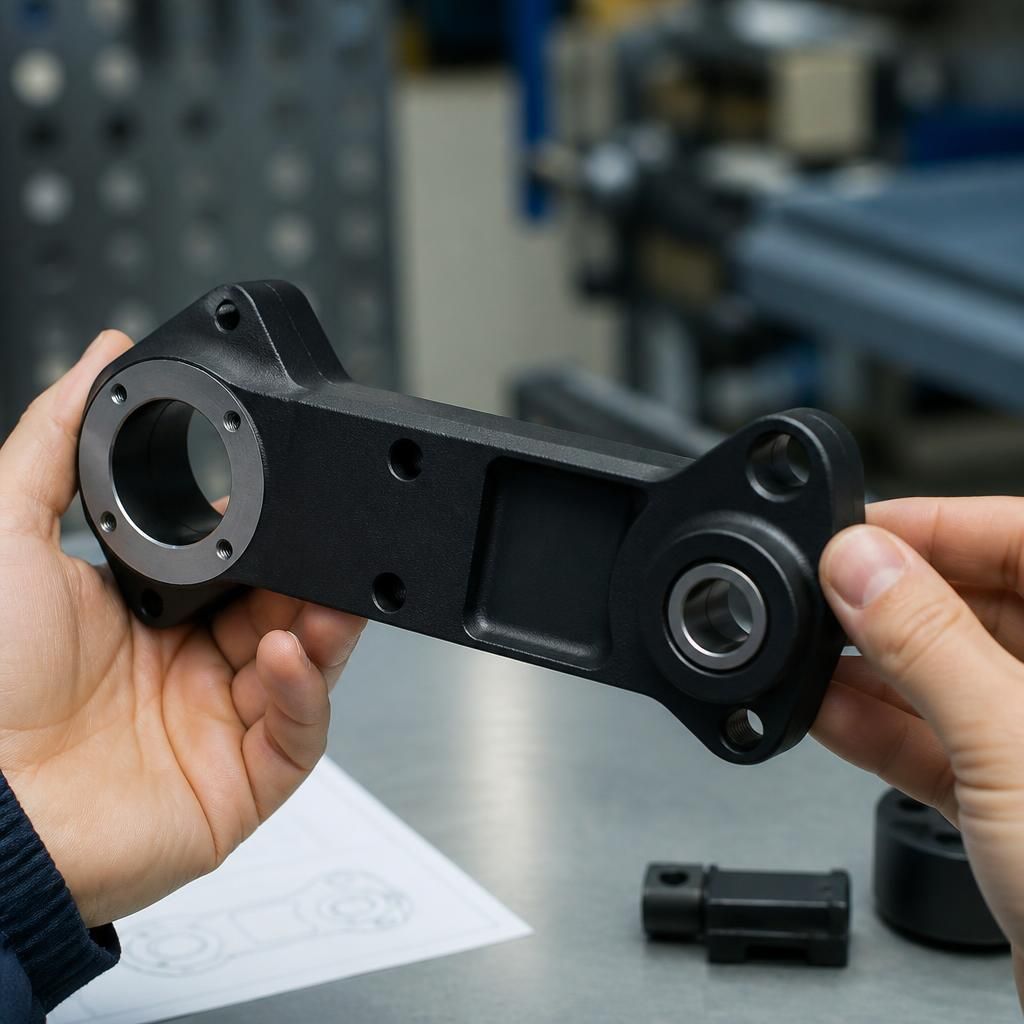
A single metal component does not always need the same nylon coating finish across every surface. Functional zones can be specified separately: a controlled texture may suit a hand-contact or handling area, while a smoother finish is more appropriate for a seating face, mating surface or interface requiring consistent contact. This approach can balance grip and appearance with assembly requirements without allowing texture to interfere with fit.
Where different finishes are required on one part, the specification should identify each zone clearly and show where transitions must occur. Masking, edge definition and coating build need particular attention at these boundaries, as overspray or excessive film thickness can affect tolerances. A representative sample or drawing marked with the required finish for each area helps maintain consistency during batch production.