

What safety measures should be implemented during the nylon coating curing process in batch production?
During nylon coating curing in batch production, implement suitable PPE, controlled ventilation, guarding and fire precautions, while restricting access to the curing area and following the coating and equipment manufacturers’ safety instructions. Use trained operators to verify oven settings, monitor the process, handle hot components with appropriate equipment, and complete risk assessments and COSHH controls for powders, fumes and cleaning materials.
Safety during nylon coating curing in batch production depends on controlling the oven, the workpiece load, combustible materials and operator movements as one system. In addition to general protective measures, the process should use documented pre-start checks, correctly maintained equipment, controlled loading arrangements, temperature safeguards, emergency procedures and traceable batch records.
Complete a documented pre-start check. Before each production run, the responsible operator should confirm that:
- the oven, extraction system and associated controls are free from visible damage;
- temperature sensors, timers, indicators and control panels are functioning correctly;
- doors, seals, hinges and locking mechanisms close properly;
- guards and interlocks prevent unsafe access to moving or heated parts;
- the oven interior is clear of loose powder, residues, packaging and unrelated materials;
- racks, hooks, rails and loading equipment are stable and suitable for the component load; and
- the correct curing instructions and batch identification are available at the point of use.
Any damaged sensor, failed interlock, abnormal noise, damaged cable or unreliable temperature indication should be reported and rectified before production continues. Bypassing an interlock or relying on an unverified control reading creates a risk of overheating, burns, fire or an under-cured coating.
Control the oven load and layout. Components should be positioned so that the load does not obstruct circulation, contact heating elements or place excessive weight on racks. Parts should be spaced consistently, with sufficient clearance for doors and internal surfaces. Oversized or unusually shaped components may need a separate loading plan rather than being forced into a standard batch arrangement. Loading and unloading routes should remain clear, and racks should not be moved until their stability has been checked.
The permitted load, component mass and arrangement should remain within the oven’s design limits. Excessive loading can affect heat distribution and extend the time needed to reach the required curing condition, while unstable stacking can cause parts to fall or make unloading hazardous. Where a batch contains different component sizes, the operator should follow an agreed sequence and record any deviation from the normal arrangement.
Prevent overheating and uncontrolled energy release. The curing programme should be selected from the coating and process specification, with the relevant part temperature distinguished from the oven air temperature. Independent checks can help identify a faulty sensor or an unexpected temperature rise. The oven should have suitable over-temperature protection, an accessible emergency isolation control and a defined response if the programmed temperature, dwell period or control alarm is exceeded.
Operators should never open the oven in response to an alarm without following the site procedure. The response may require stopping the cycle, isolating the energy source, keeping personnel clear and escalating the fault to a competent person. Restarting should only take place after the cause has been identified and the equipment has been confirmed safe.
Manage movement and manual handling. Batch curing often involves loaded racks, baskets or frames that may be heavy, hot and difficult to manoeuvre. Use suitable handling aids and plan the route before moving them. Floors should be kept free from powder deposits, spills and obstructions that could cause slips or collision. Where components have awkward dimensions or the load is beyond safe individual handling, use a team lift or mechanical assistance in accordance with the workplace procedure.
Hot parts should be placed only in designated cooling locations, away from walkways, combustible materials and unauthorised access. The cooling area should be arranged so that components cannot be touched accidentally or knocked from a rack. A clear status system, such as a marked area or batch tag, can distinguish parts that are still hot from those released for inspection.
Control combustible materials and housekeeping. Powder deposits, contaminated wipes, packaging and cleaning materials should not accumulate around the oven or its electrical equipment. Waste should be removed using the approved method and stored in suitable containers. Compressed air should not be used to disperse powder unless the process has been specifically assessed and the equipment is designed for that purpose, because it can spread dust and increase ignition risks.
Where powder handling or dust accumulation could create a combustible atmosphere, the workplace should assess the relevant risks under the applicable UK requirements, including controls for ignition sources, dust deposits and equipment suitability. Cleaning schedules should identify the oven exterior, surrounding floor, extraction points and less visible ledges where residue may collect.
Use safe maintenance and isolation procedures. Cleaning, inspection and repair should be carried out only by authorised, competent personnel. Before work begins, the oven and related equipment should be isolated from electrical, gas or other energy sources, allowed to reach a safe condition and protected against unexpected restart. Isolation should be verified rather than assumed. Maintenance records should identify the equipment checked, the defect found, the corrective action and the person who authorised return to service.
Prepare for abnormal events. The production area should have clear procedures for fire, power failure, equipment malfunction, smoke, uncontrolled temperature rise and a person becoming trapped or injured. Staff should know the location of emergency stops, isolation points, alarms, escape routes and first-aid arrangements. Emergency drills and instruction should reflect the actual oven layout and batch-handling equipment, rather than relying solely on generic induction training.
Finally, each batch should have a traceable record covering the load arrangement, curing programme, operator checks, alarms, deviations and release decision. Reviewing these records helps identify recurring faults, unsafe loading patterns or changes in oven performance before they become an incident. Any near miss, damaged component, unexpected odour or unusual temperature behaviour should be recorded and investigated, with the process amended where necessary.
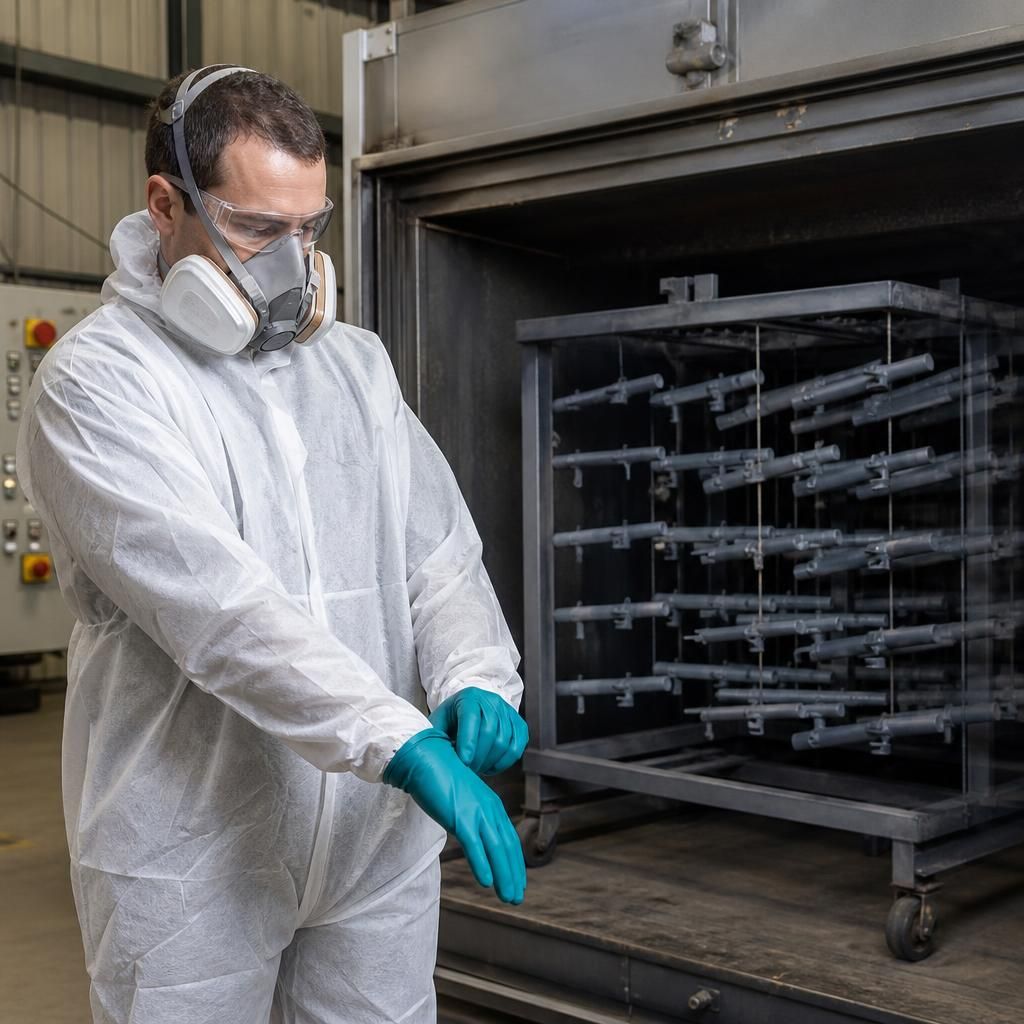
Personal protective equipment should be selected from the risk assessment rather than treated as a substitute for ventilation, guarding or safe operating procedures. During nylon coating batch work, operators may need protection against residual powder, hot surfaces and cleaning substances. The required combination may include suitable gloves, eye protection, protective clothing and respiratory protection where the assessment identifies an inhalation risk.
Different controls apply at different stages. PPE for loading or unloading hot components should provide adequate thermal protection without reducing grip, while powder handling and cleaning controls should reflect the relevant COSHH assessment and product safety information. Operators should be trained to inspect, use, remove and store PPE correctly, and contaminated or damaged items should be replaced through the site procedure.