

How does batch production enhance the consistency of nylon coating applications?
Batch production enhances nylon coating consistency by processing groups of components through the same preparation, application and curing conditions. This reduces variation between parts and helps produce uniform coating coverage, finish and performance across each batch.
Batch production enhances the consistency of nylon coating applications by making each group of components a controlled production lot. Parts can be assessed, arranged, coated and checked against the same defined requirements, making differences easier to identify and correct before they affect a larger quantity.
It improves consistency in several important areas:
- Film coverage: Components can be positioned to expose all required surfaces to the coating process. This helps reduce areas of thin coverage, missed edges and excessive build-up caused by inconsistent loading.
- Coating thickness: Applying parts in an organised batch makes it easier to keep the application equipment, part presentation and coating quantity under control. Consistent thickness is important for nylon coatings because excessive build can affect fit, while insufficient coverage can reduce protection.
- Appearance: Components processed as one lot are less likely to show avoidable differences in colour, texture, gloss or surface uniformity. Parts with similar coating requirements can be grouped together rather than mixed with items requiring different treatment.
- Curing results: A carefully loaded batch allows heat exposure to be considered across the whole group. Component mass, geometry and spacing can influence how heat reaches the coated surfaces, so controlling the batch arrangement helps limit differences in the final finish.
- Repeatability: A documented batch provides a reference for future production. The preparation method, coating specification, equipment settings, loading arrangement and inspection findings can be reviewed when the same or a similar component is processed again.
Batch production also supports better control of component variation. Parts are not always identical in size, wall thickness or geometry, even when they belong to the same order. Separating components into sensible groups allows the process to account for these differences. Large or heat-retentive items may need to be arranged differently from smaller parts, while recessed sections, sharp edges and enclosed areas require particular attention during loading and inspection.
Identification is another important benefit. Labelling each batch and retaining its relevant job information creates traceability between the incoming components, the coating process and the finished parts. If an inspection finds uneven coverage or a surface defect, the issue can be investigated against a defined group rather than treating the entire production run as an undifferentiated quantity. This supports targeted corrective action and reduces unnecessary reprocessing.
Batch production can also make inspection more systematic. Checks may include surface cleanliness, masking, visible coverage, coating appearance, edge definition, adhesion and dimensional fit where these are relevant to the component. Inspecting representative parts during production, as well as finished items, helps identify process drift earlier. Defects such as contamination, pinholes, bubbles or uneven build can then be assessed in relation to a particular batch and its processing conditions.
For nylon coatings, consistency depends on more than repeating a coating application. The condition of the metal before coating, the handling of the nylon material, the way components are suspended or supported and the control of the curing stage all influence the result. Batch production brings these factors into a common operating sequence, while records and inspection provide evidence that the required finish has been achieved.
However, batching is not a substitute for process control. Poorly mixed component types, overcrowded loading, inconsistent preparation or unsuitable grouping can increase variation rather than reduce it. Effective batch production therefore starts with clear specifications and uses compatible component groups, controlled handling, suitable spacing and defined acceptance checks. Used in this way, it provides a repeatable framework for producing nylon-coated components with consistent coverage, appearance and functional performance.
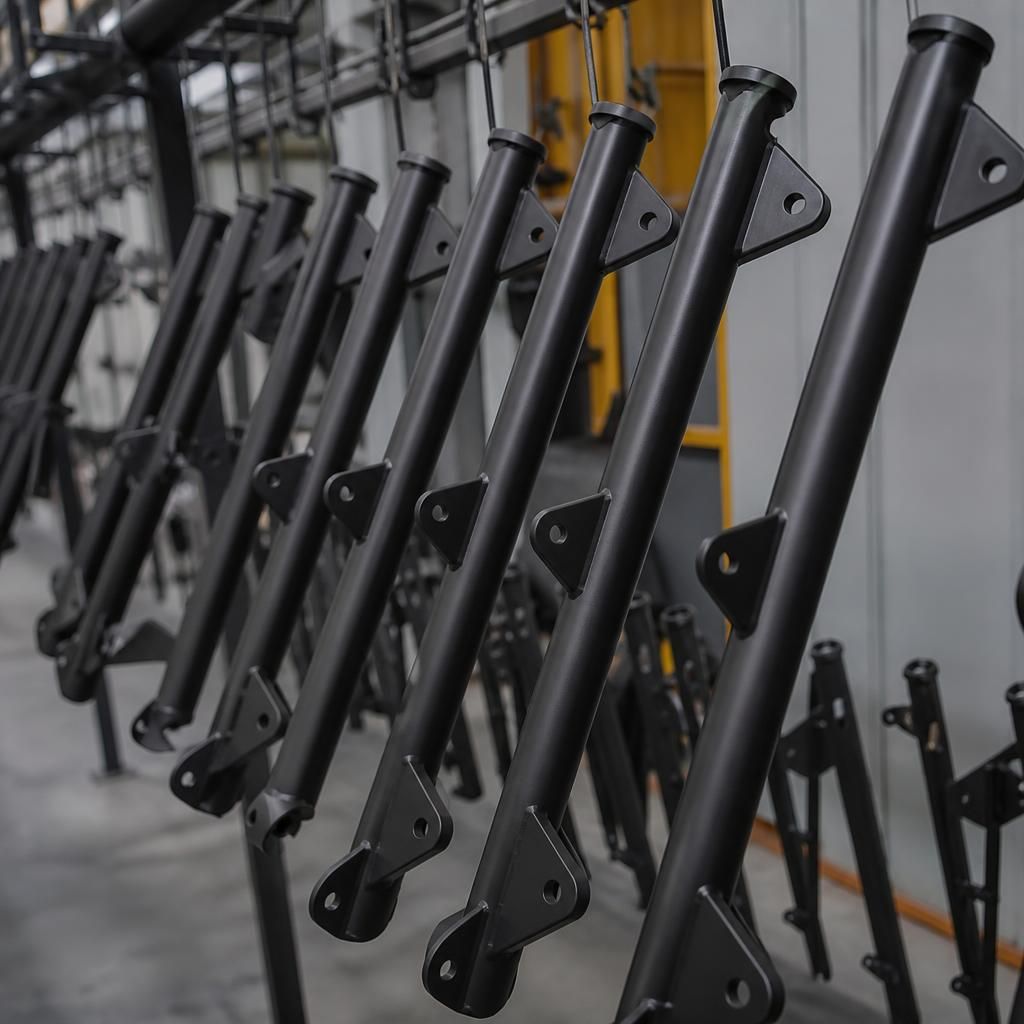
Batch production improves nylon coating consistency by reducing unnecessary changeovers between different coating specifications. Components with the same nylon type, finish requirements and preparation needs can be processed together, allowing the application equipment and working method to remain stable throughout the lot.
This controlled sequencing also helps limit variation caused by switching between materials, colours or finish requirements. Any required adjustment can be made before the next batch begins, rather than introducing different settings part-way through a group of components. The result is a clearer separation between production lots and a more consistent basis for comparing the finished coating against its specification.
Discuss Your Nylon Coating Batch Requirements
Discuss your component sizes, coating requirements and production volumes to establish whether batch processing is suitable for your nylon coating application. Share your specification with the team to identify the appropriate preparation, loading and inspection requirements.