

What specific cleaning and preparation methods do you employ to ensure optimal adhesion of nylon coatings?
We prepare metal for nylon coating by removing oil, grease, dirt, rust and oxides through appropriate degreasing, cleaning and mechanical or chemical surface treatment. The parts are then rinsed where required, dried thoroughly and inspected to confirm a clean, dry, suitably profiled surface before coating.
Optimal adhesion of a nylon coating depends on controlling the entire surface-preparation sequence, not simply cleaning the visible faces of a component. We select the treatment according to the substrate, the condition of the metal, the type of contamination and the geometry of the part, then verify that the prepared surface is suitable before coating begins.
Parts are first assessed for manufacturing residues and areas that could interfere with adhesion. These may include cutting fluids, forming lubricants, protective oils, handling marks, weld spatter, embedded swarf, oxidation and existing finishes. Crevices, folded sections, drilled holes and weld zones receive particular attention because contamination can remain trapped in these areas and cause localised coating defects.
- Degreasing: Oils, grease and processing residues are removed using a suitable degreasing method for the metal and the level of contamination. Heavier deposits may require an initial treatment before the final cleaning stage.
- Solvent or targeted cleaning: Localised residues and handling contamination can be treated separately where a complete immersion or automated cleaning cycle is not appropriate.
- Abrasive preparation: Rust, scale, loose material and unsuitable existing finishes may be removed mechanically or by abrasive blasting. This also creates a controlled surface profile, giving the nylon coating a more suitable key.
- Chemical surface treatment: Where appropriate for the substrate and coating specification, a conversion or pre-treatment stage can improve surface condition and support adhesion and corrosion protection.
- Rinsing and drying: Following wet chemical processes, parts are rinsed as required and dried fully. Residual moisture, cleaning solution or trapped water must not remain on the metal when coating takes place.
Mechanical preparation is adjusted to the component rather than applied uniformly to every job. Excessive abrasion can alter dimensions, damage edges or affect fine features, while insufficient preparation may leave oxide or contamination behind. On irregular parts, attention is given to recesses, internal corners and changes in section so that the preparation reaches areas that are otherwise difficult to coat consistently.
Before coating, we check that the surface is visibly clean, dry and free from loose particles, remaining oil and residues from the preparation process. We also consider whether masking is needed for threads, bores, contact faces or other areas that must remain free of nylon. Masking is applied after the relevant cleaning stages so that it does not shield contamination from treatment, while sensitive areas are protected from unnecessary abrasion.
Cleanliness must be maintained between preparation and coating. Prepared components are handled in a way that limits recontamination from hands, dirty supports, dust or contact with untreated materials. Parts are also arranged so that water or cleaning residue cannot collect in hollow sections, overlapping features or blind holes during drying.
The final preparation route is therefore a controlled combination of degreasing, contaminant removal, substrate-appropriate abrasion or chemical treatment, rinsing, drying and inspection. For production batches, the same sequence is applied consistently while allowing for differences in material, component design and incoming condition. This helps establish a repeatable foundation for nylon coating adhesion without relying on the coating layer to conceal poor surface preparation.
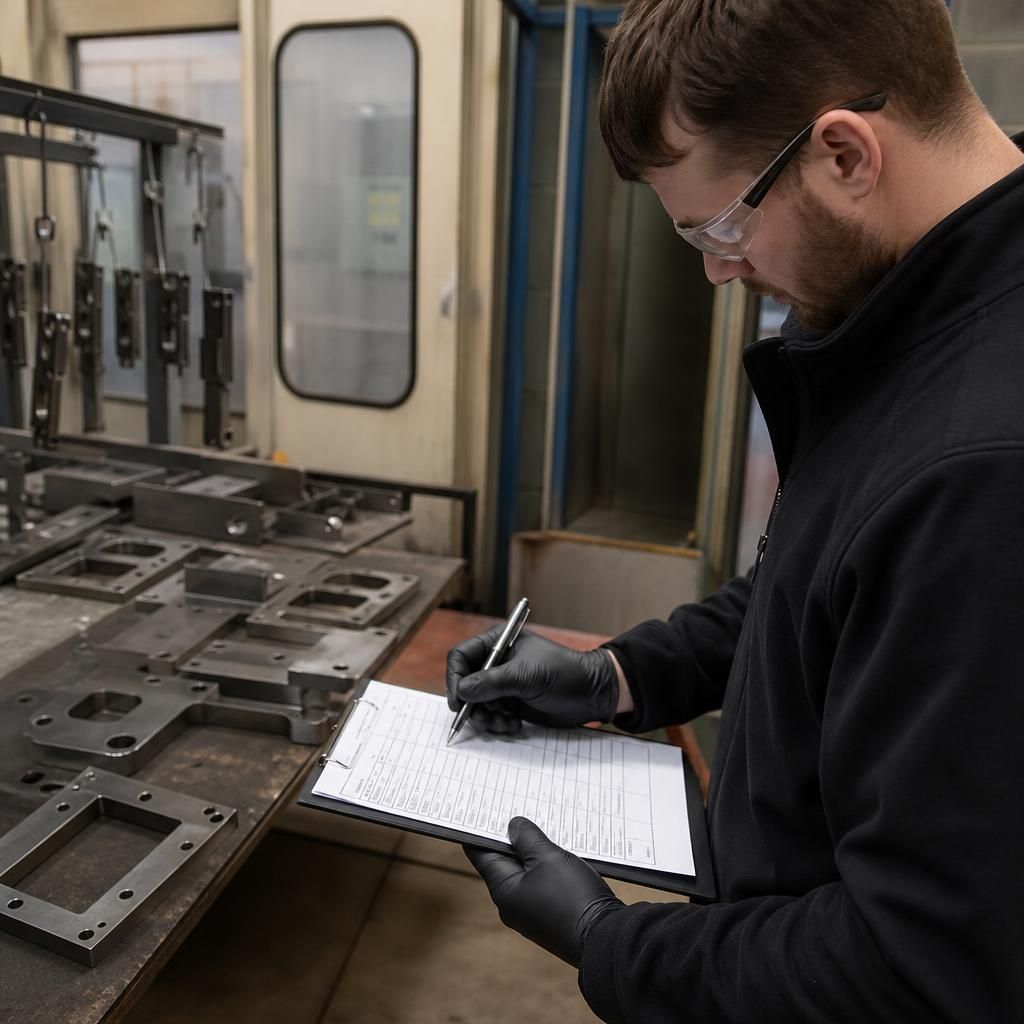
Preparation records help link the finished nylon coating to the condition of the metal before treatment. For each batch, the relevant substrate, incoming contamination, preparation route and any unusual features can be noted so that deviations are identified rather than treated as part of a standard process.
This is particularly useful where components arrive from different fabrication processes or contain mixed metal sections. Comparing preparation observations with coating results helps refine the cleaning and pre-treatment route for future work without applying unnecessarily aggressive treatment to every part.