

What are the key considerations for maintaining nylon-coated metal surfaces in harsh environments?
Maintaining nylon-coated metal surfaces in harsh environments requires suitable cleaning, routine inspection, prompt repair of damage, and control of exposure to chemicals, moisture, abrasion and temperature changes. These measures help identify coating deterioration early and preserve the metal substrate’s protection.
Maintaining nylon-coated metal surfaces in harsh environments depends on matching the coating system to the exposure, preventing concentrated mechanical and chemical stress, and managing defects before they expose the substrate. Effective maintenance is therefore more than washing the surface: it requires an understanding of the component’s design, operating conditions, surrounding materials and the consequences of coating failure.
Assess the complete service environment
Before setting maintenance requirements, identify every condition the component will experience. This may include salt-laden air, industrial pollutants, immersion, condensation, ultraviolet exposure, process chemicals, impact from materials handling and repeated movement at joints or fixings. The most damaging exposure is not always the most obvious one. A part used outdoors, for example, may experience prolonged wetness in a sheltered recess, while a component in a factory may be affected by vapours or deposits that are more aggressive than the general atmosphere.
Consider whether exposure is continuous, intermittent or cyclical. Drying between exposures can produce a different risk from permanent immersion, while repeated heating and cooling may place stress on the coating and its bond with the metal. Maintenance intervals and acceptance criteria should reflect the actual environment rather than relying solely on the coating’s intended use category.
Check that the coating system remains suitable
Nylon is available in systems with different properties, including variations in hardness, flexibility, chemical resistance and resistance to wear. The coating must be suitable for the particular substrate and the expected operating conditions. A formulation that performs well against abrasion may not be the best choice for prolonged chemical contact, and a system intended for general protection may be unsuitable for continuous immersion or severe impact.
Compatibility also applies to any sealants, adhesives, lubricants, cleaning agents or replacement components that come into contact with the coated surface. A substance that does not visibly attack the nylon can still cause swelling, softening, loss of flexibility or staining over time. Product safety data and coating-system information should be checked before introducing a new process chemical or maintenance material.
Pay particular attention to design details
Edges, corners, holes, threads, welds, joints and transitions between different materials are more vulnerable than broad, flat faces. These areas can receive less consistent coverage, retain moisture or experience localised stress. Sharp edges may also provide a starting point for damage when the component is handled or assembled.
Where parts are being designed or modified, radiused edges, adequate drainage and accessible surfaces make the coating easier to maintain. Avoid arrangements that trap water, chemical residue or abrasive material. Bolted joints, hinges and sliding interfaces should be assessed separately because movement can wear the coating even when the surrounding surface remains intact. Care is also needed where nylon-coated metal contacts another material that may create galvanic or crevice-corrosion conditions at an unprotected interface.
Control handling and operational contact
Many coating failures begin with handling rather than long-term environmental exposure. Use suitable lifting points, separators and protective supports so that coated faces are not dragged across hard surfaces. Metal-to-metal contact, dropped components and poorly positioned clamps can create chips, gouges or compressed areas.
During service, determine whether the coating is being used as a bearing, sliding or impact surface. If so, the load, contact pressure, movement and mating material should be reviewed. Nylon can provide useful wear resistance, but it should not be treated as a substitute for a properly designed bearing or isolation system where loads are concentrated. Reducing unnecessary friction, vibration and impact can be more effective than repeatedly repairing the coating.
Define acceptable damage and repair limits
A maintenance plan should distinguish cosmetic change from damage that threatens the metal beneath. Discolouration, gloss variation or superficial marking may not have the same significance as delamination, exposed substrate, blistering, cracking or corrosion at an edge. The decision should take account of the component’s safety function, the surrounding environment and whether moisture or chemicals can reach the defect.
Repairs should use a method compatible with the existing nylon system and the substrate. Local touch-up may be suitable for limited, accessible damage where the surrounding coating is firmly bonded. Extensive loss, repeated failure or corrosion beneath the coating normally calls for removal of the affected system, preparation of the metal and controlled recoating rather than simply covering the visible defect. Abrasive tools and aggressive solvents should not be selected without confirming that they will not enlarge the damage or affect sound coating around it.
Record condition and maintenance decisions
Keep a record of the coating type, substrate, application requirements, operating environment and any chemicals used in contact with the part. Note the location and nature of defects, the cause where known, the repair material and the decision to retain, repair or recoat the component. Photographs and consistent descriptions help distinguish gradual deterioration from a new incident and can identify recurring problems associated with a particular joint, handling method or process area.
For components supplied in batches, records also help link maintenance findings to production details and ensure that recurring issues are investigated rather than treated as isolated damage. Where a part is safety-critical or exposed to severe immersion, chemical attack or high mechanical loading, the maintenance regime should be reviewed with the coating applicator and the responsible design or engineering team.
In practice, the most durable approach combines a suitable nylon coating system with sensible component design, controlled handling, compatible maintenance materials and clearly defined repair criteria. These measures reduce the stresses placed on the coating and make it easier to intervene appropriately when its condition changes.
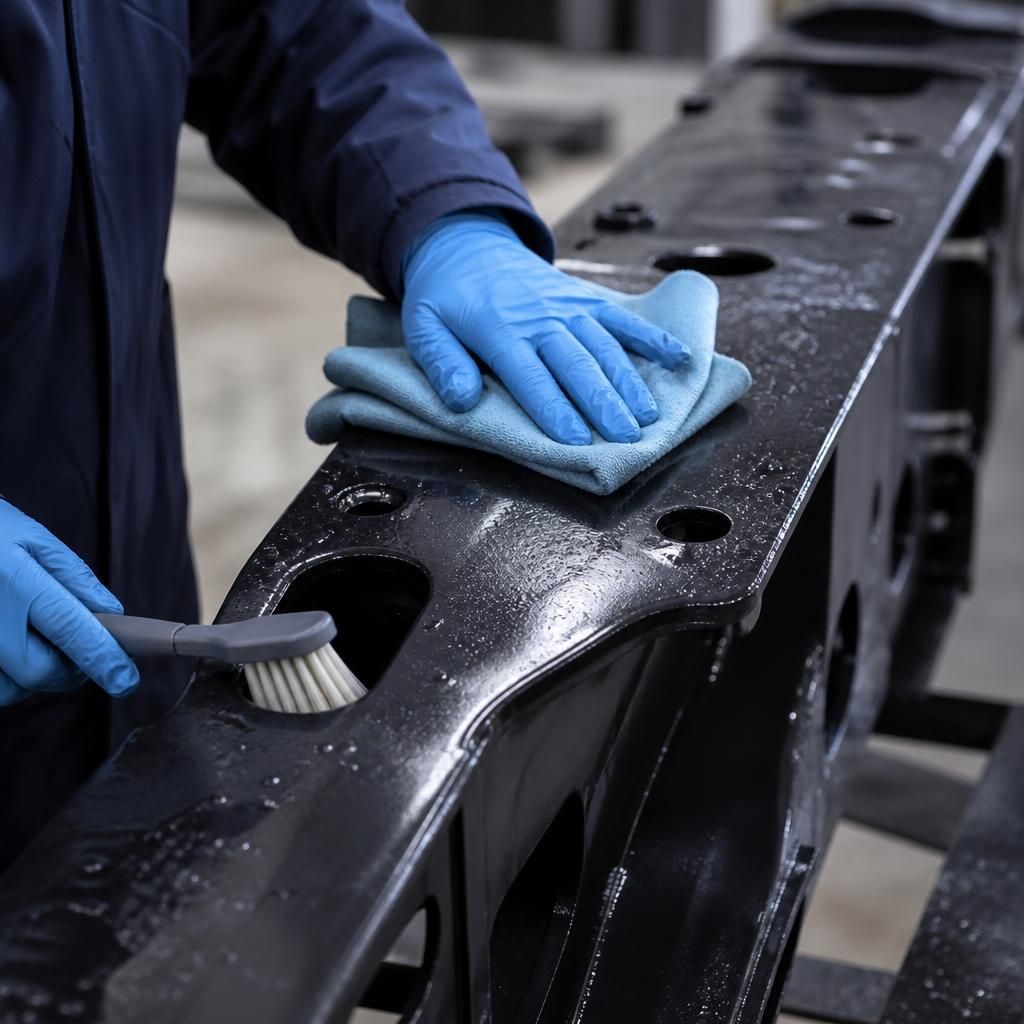
Cleaning nylon-coated metal surfaces should remove corrosive deposits without abrading the coating or forcing contamination into joints and edges. Use a cleaning agent confirmed as compatible with the nylon system, together with a soft cloth or non-abrasive brush. Avoid improvised solvents, harsh scouring pads and metal tools, as these may mark, soften or cut the coating.
Rinse away loosened residue rather than allowing detergent or contaminated water to dry on the surface. Give particular attention to seams, recesses, fixings and underside areas where moisture and deposits can remain concealed. After cleaning, dry the component thoroughly and check for changes in texture, lifting, cracking or exposed metal. This routine helps separate removable contamination from deterioration that requires technical assessment.
Discuss maintenance requirements for nylon-coated metal surfaces
For advice on maintaining or refurbishing nylon-coated components, discuss the substrate, operating environment and observed coating condition with a powder-coating specialist. This helps establish whether targeted repair, further assessment or complete recoating is the most suitable next step.