

What is the difference between two-stage and three-stage powder coating processes?
A two-stage powder coating process normally applies two coating layers, such as a primer followed by a topcoat, whereas a three-stage process adds an intermediate layer between them. The extra layer can support corrosion protection, film build, adhesion or appearance, but the appropriate process depends on the substrate, service environment and performance specification.
The practical choice between a two-stage and three-stage powder coating process is determined by the coating specification, not simply by the number of coats. A two-stage system is often sufficient where the substrate is suitably prepared and one protective or decorative finish meets the required performance. A three-stage system introduces an additional controlled coating operation when the component needs greater film build, enhanced barrier protection, improved intercoat performance or a more specialised finish.
In both systems, the metal must first be inspected and prepared. Cleaning, degreasing, abrasive preparation or chemical pretreatment may be required to remove oil, mill scale, rust and other contaminants. These preparation stages are separate from the coating-stage terminology. If pretreatment is incomplete, adding another powder layer will not correct poor adhesion or contamination-related defects.
How a two-stage process works
A typical two-stage sequence consists of applying and curing one coating layer before applying and curing the final layer. The first layer may provide a defined functional property, while the second establishes the visible finish and completes the specified protection. Depending on the powder system and the substrate, the first layer may be fully cured or treated as part of a compatible overcoating procedure.
- It generally involves fewer handling and application operations.
- There are fewer interfaces between coating layers to control.
- It can be suitable for components with moderate environmental exposure and a straightforward finish requirement.
- It may simplify colour, gloss and texture control where a single topcoat specification is appropriate.
The main limitation is that a two-stage arrangement provides less opportunity to separate different performance functions between layers. If the component requires a specialised barrier, a substantial build or an intermediate layer with a particular chemical or mechanical role, a simple two-layer specification may not provide enough design flexibility.
How a three-stage process differs
A three-stage process adds a separately controlled coating operation to the sequence. This may involve a primer, an intermediate coat and a final topcoat, although the exact materials and cure schedule depend on the powder system and the required end use. Each layer must be compatible with the next, and the application conditions must be controlled so that the layers bond correctly without creating excessive build, solvent-like defects, surface contamination or uneven appearance.
- The additional layer can divide corrosion resistance, adhesion, build and appearance requirements between different products.
- It can provide greater scope for building a specified dry-film thickness across a demanding component.
- It may be useful where the final colour or texture must be separated from the main protective function.
- It permits a more tailored specification for aggressive environments or complex service conditions.
Three-stage coating is not automatically better. More layers create additional opportunities for incorrect application, contamination, poor intercoat bonding, runs, inclusions and excessive thickness. The cure schedule must also be appropriate for every layer. Over-curing one coat before the next is applied, under-curing a layer, or exceeding the powder manufacturer’s recommended recoat conditions can affect adhesion and final performance.
Key differences in quality and application
The most important differences concern control and specification. A two-stage process usually has a simpler production route, which can reduce handling and make the coating sequence easier to manage. A three-stage process requires tighter control of powder selection, film thickness, flash-off or cooling requirements where applicable, oven conditions, recoat intervals and inspection between stages.
Quality should therefore be assessed against the finished specification rather than the process label. Relevant checks can include surface cleanliness, visual uniformity, dry-film thickness, adhesion, cure and the absence of pinholes, craters, runs, inclusions and exposed edges. For components subject to corrosion or mechanical wear, the inspection plan may also include testing appropriate to the stated service environment.
When a two-stage process may be appropriate
A two-stage system may be considered for indoor or moderately demanding applications, components with a relatively simple geometry, and projects where the required finish can be achieved with a compatible base layer and topcoat. It can also be appropriate where production handling, colour consistency and a straightforward repeatable sequence are important considerations.
The decision still depends on the substrate and the part’s use. Steel, aluminium and other metals can respond differently to preparation, curing and coating build. Welds, sharp edges, recesses, threaded areas and areas affected by fabrication can also require specific attention, regardless of whether two or three coating stages are selected.
When a three-stage process may be appropriate
A three-stage system may be specified where the component faces a more demanding corrosive environment, where a functional intermediate layer is required, or where the finished coating must combine properties that are difficult to obtain from a simpler sequence. Examples include applications requiring a protective foundation, a controlled build layer and a separate decorative or weather-resistant surface.
It can also be useful when the part’s geometry or intended service exposes weaknesses that would not be addressed by a single functional layer. However, the extra stage should have a defined purpose. It should not be added solely on the assumption that more coating always produces greater durability.
What should be agreed before coating?
- Identify the substrate, fabrication method and condition of the component, including welds, edges, recesses and existing coatings.
- Define the service environment, including moisture, chemicals, abrasion, impact, temperature and exposure to outdoor conditions.
- Set the required finish, colour, gloss, texture, film thickness and acceptable visual tolerances.
- Confirm whether the specification requires a particular primer, intermediate layer, topcoat chemistry or testing regime.
- Check compatibility between all powder products and establish the correct curing requirements for the complete system.
- Agree how the finished parts will be inspected, packed, transported and handled so that the coating is not damaged after curing.
For industrial work, the coating schedule should be selected from the performance requirement backwards. A well-controlled two-stage process can be the correct solution where the specification is achievable with that sequence. A three-stage process is justified when its additional layer provides a measurable functional or appearance benefit that the simpler process cannot reliably deliver.
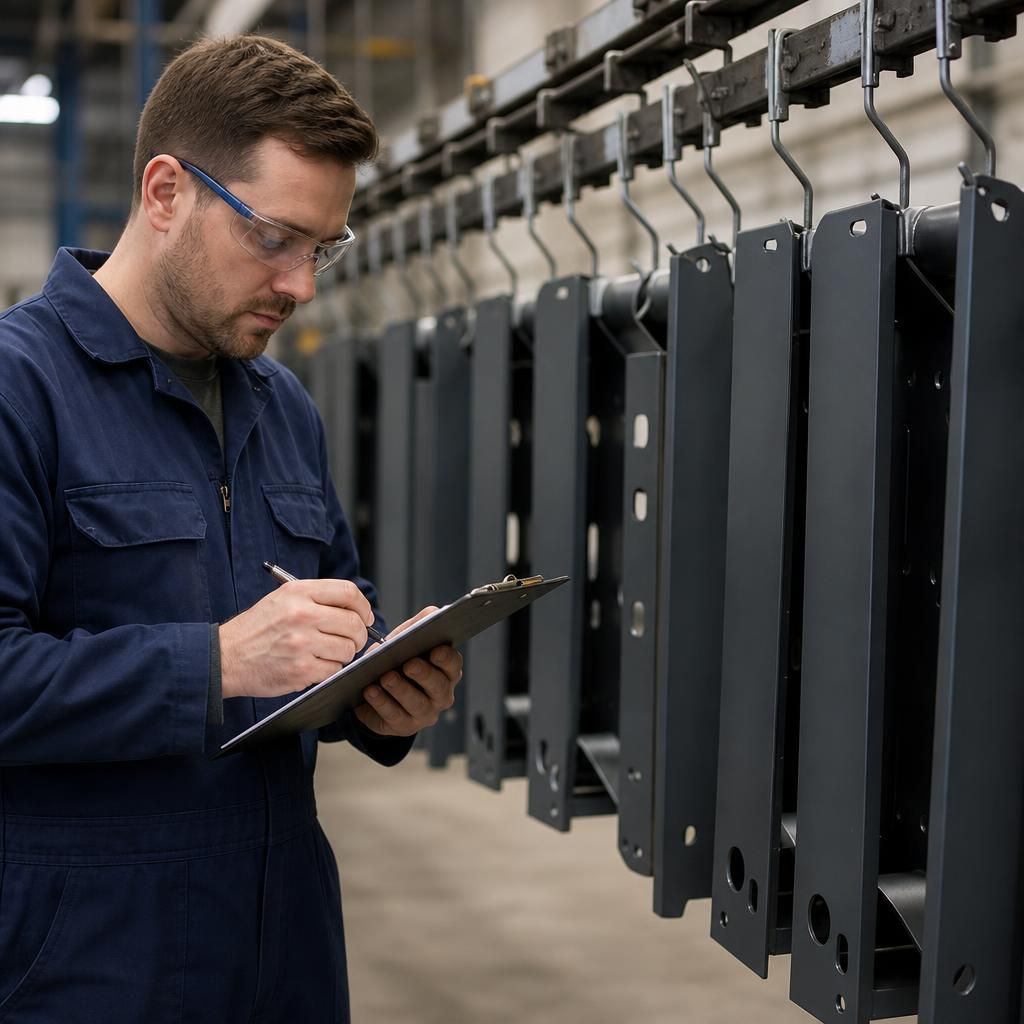
The additional layer in a three-stage system makes coating records more important. Each product should be identified by its position in the build, with the application sequence, curing conditions and measured film thickness recorded separately. This creates a clear link between the finished component and the performance requirement assigned to each layer.
That distinction is also useful when investigating a defect. A problem affecting the whole surface may point to preparation or curing, while local loss of adhesion between two products can indicate an intercoat compatibility or application issue. A two-stage system generally has fewer interfaces to assess, whereas a three-stage system provides more scope for assigning specific functions to individual layers.
Discuss Your Two-Stage or Three-Stage Coating Requirements
Discuss your component, service environment and required coating performance with our Midlands powder coating specialists to establish whether a two-stage or three-stage process is appropriate. Share your drawings or part details for a coating recommendation based on the finished specification.