

What are the differences between single-stage, two-stage, and three-stage powder coating processes, and how do they impact the final product's quality and application suitability?
A single-stage powder coating uses one applied and cured coat, while two-stage systems typically combine a primer with a topcoat and three-stage systems add an intermediate layer between them. Each additional stage can improve corrosion protection, adhesion, colour control and functional performance, but increases process complexity, so the most suitable option depends on the metal substrate, exposure conditions, finish requirements and intended use.
The practical distinction is the number and purpose of powder layers applied to the component. A single-stage system relies on one formulated coat, a two-stage system normally separates the protective or adhesion function from the visible finish, and a three-stage system adds a further functional or barrier layer. More stages can provide greater control over performance, but they also introduce additional application, curing and inspection requirements; they are not automatically the best choice for every component.
Single-stage powder coating
In a single-stage process, one powder product is applied to the prepared metal and cured to form the finished film. The powder must provide the required combination of adhesion, corrosion resistance, appearance, hardness and chemical or mechanical resistance without relying on another coating layer.
This approach is often suitable where the substrate is compatible with the selected powder, the service environment is not unusually aggressive, and the required finish can be achieved with one product. It can also be appropriate for components where process simplicity, straightforward colour control and efficient handling are important. Typical examples may include general fabricated parts, internal equipment, furniture components and other metalwork with moderate exposure requirements.
Its limitation is that one formulation must perform several jobs at once. A powder optimised for appearance may not provide the same barrier performance as a dedicated primer system, while a highly protective formulation may impose different requirements for colour, texture or film build. The quality of a single-stage finish therefore depends heavily on substrate preparation, correct application, adequate coverage and the powder manufacturer’s curing requirements.
Two-stage powder coating
A two-stage process commonly uses a primer followed by a topcoat. The primer is selected to improve adhesion, provide additional corrosion protection or help isolate the metal from moisture and contaminants. The topcoat supplies the visible colour, texture, gloss level and part of the final resistance to wear, weathering or chemicals.
The main benefit is functional separation. The primer can address the needs of the substrate, while the topcoat can be selected for appearance and surface performance. This is particularly useful for steel or other components exposed to outdoor conditions, humidity, industrial contamination or repeated handling. It can also help where the substrate is difficult to protect adequately with a single decorative powder.
Two-stage coating requires closer control than a single coat. The first layer must achieve suitable coverage and cure without creating defects that affect the second layer. The coater must also consider the total film thickness, the recoat window, intercoat adhesion and the combined curing schedule. Excessive build can affect dimensions, edges, moving interfaces and the appearance of sharp corners, while insufficient coverage can leave weak points in the protective system.
A primer does not remove the need for proper pretreatment. Oil, rust, mill scale, weld residues and other contaminants can compromise the complete coating system, regardless of how many layers are applied. Surface preparation, powder compatibility and curing remain as important as the choice between one and two stages.
Three-stage powder coating
A three-stage system normally consists of a primer, an intermediate layer and a topcoat. The intermediate coat may add barrier protection, increase total resistance to a demanding environment, provide a specialised functional property or create a controlled base for the final appearance. Its precise role depends on the substrate, powder chemistry and specification.
This arrangement is considered where the component faces particularly severe exposure or where one primer and one topcoat cannot provide the required combination of properties. The layers may be designed to address different risks, such as corrosion at the substrate, moisture penetration through the coating system, abrasion at the surface or the need for a particular decorative finish. Three stages can therefore offer more opportunities to tailor the coating system, but only when each layer has a defined purpose and is compatible with the others.
The additional layer increases process sensitivity. There are more opportunities for contamination, uneven application, over-thickness, trapped defects and curing errors. Each coat must bond reliably to the next, and the complete system must be assessed rather than judging the topcoat in isolation. Handling between stages, masking, edge coverage and the effect of repeated heating may also become more significant for complex or dimensionally critical parts.
How the stages affect final quality
- Corrosion protection: Multi-layer systems can provide greater separation between the metal and the environment, particularly when the primer and intermediate coat are designed as barrier layers. The result depends on coverage, edge protection, pretreatment and the absence of pinholes or other discontinuities.
- Adhesion: A suitable primer can improve the bond to a prepared substrate, but every interface becomes important in a multi-stage system. Poor preparation or incompatible products can cause intercoat failure even when the outer surface appears sound.
- Appearance: A dedicated topcoat can give more control over colour, gloss and texture than a product required to provide all protective functions. However, uneven film build beneath the topcoat may show through as texture variation, shading or surface defects.
- Durability: More layers may improve resistance to weathering, moisture, chemicals or abrasion when they are correctly specified and cured. Layer count alone does not establish durability; the resin type, substrate, environment and complete coating specification are decisive.
- Dimensional control: Each additional coat adds film thickness. This matters for close-fitting parts, threaded areas, hinges, shafts, masking points and components that must meet a defined assembly tolerance.
- Consistency: A single-stage system has fewer coating interfaces and process variables. Two- and three-stage systems can deliver more tailored performance, but require tighter control of application, curing, handling and inspection.
Choosing the appropriate process
The selection should begin with the component’s operating environment and specification rather than with the number of coats. Relevant factors include the metal type and condition, indoor or outdoor exposure, humidity, salt or chemical contact, expected abrasion, required appearance, service temperature, assembly tolerances and the consequences of coating failure.
- Choose a single-stage system when one product can meet the required protective and decorative properties and the exposure does not justify a more complex build.
- Consider two stages when the substrate needs dedicated corrosion or adhesion support, while the final surface requires a separate colour, texture or weather-resistant finish.
- Consider three stages when the exposure or performance specification calls for a further barrier or functional layer and the added thickness and process controls can be accommodated.
For industrial work, the final decision should be confirmed through the coating specification, technical data for compatible powders and the required inspection criteria. A well-prepared, correctly cured single-stage finish can outperform a poorly controlled multi-layer system. Conversely, where exposure is demanding, a properly engineered two- or three-stage build can provide a more suitable balance of protection, appearance and service performance than a single decorative coat.
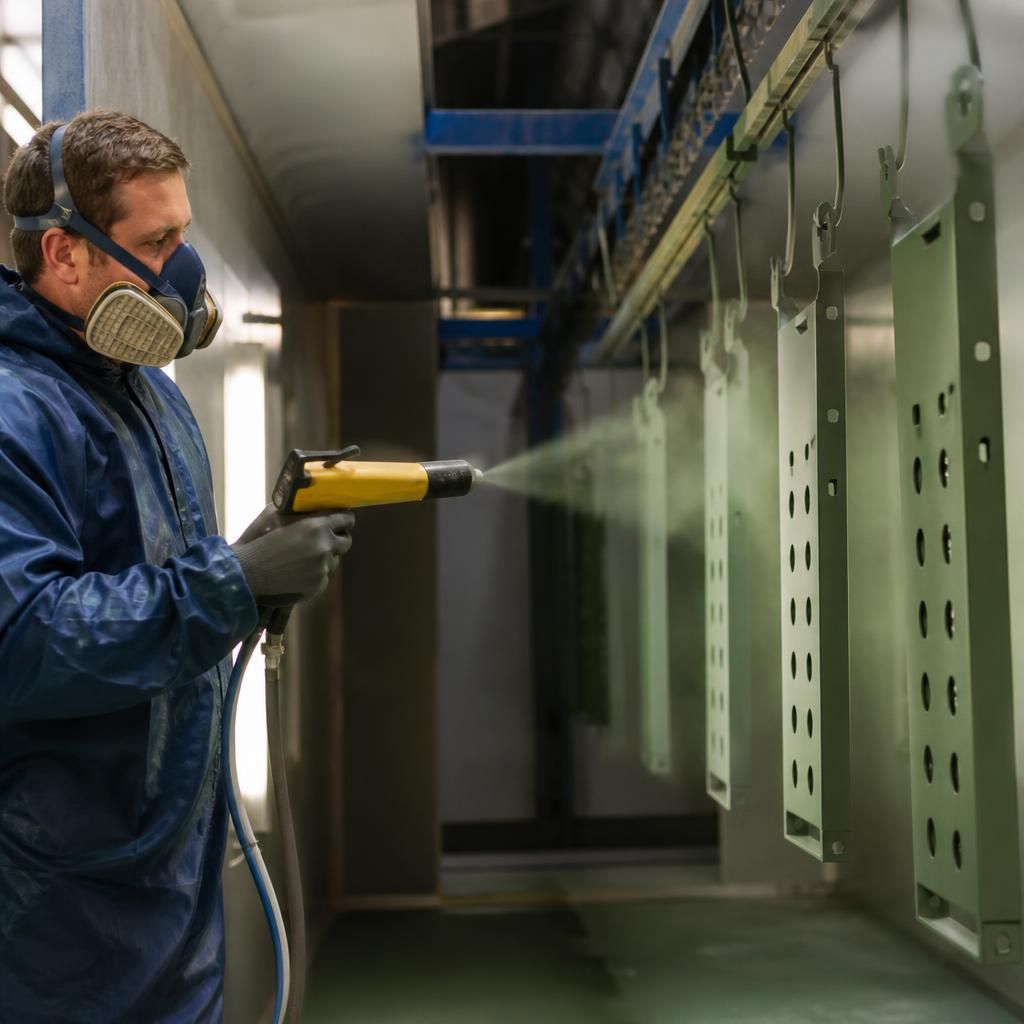
In powder coating specifications, “single-stage”, “two-stage” and “three-stage” normally describe the number of powder layers in the coating build, not the number of spray passes or pretreatment steps. This distinction matters because a component may receive several application passes to achieve even coverage while still using a single-stage coating system.
Pretreatment should also be recorded separately. Cleaning, rinsing, conversion treatment and drying prepare the metal before powder application, but they do not usually count as coating stages. A clear specification should therefore identify the substrate preparation, each powder layer, the target film build and the curing requirements. This prevents different suppliers or production teams from interpreting “two-stage” in different ways.
An effective technical drawing or process image can show the distinction clearly: metal substrate at the centre, pretreatment before coating, and each powder layer labelled in sequence. For quality control, the coating schedule should then be matched to the component’s drawings, masking requirements and acceptance criteria rather than judged by the stage count alone.
Discuss Your Powder Coating Process Requirements
If you are unsure which coating build suits your component, discuss the substrate, operating environment, finish and dimensional requirements with our industrial powder coating team. This allows the proposed single-, two- or three-stage process to be matched to the specification before work is scheduled.