

How do different textures and finishes enhance the protective qualities of powder coatings?
Different textures and finishes can improve a powder coating’s resistance to abrasion, scratching, weathering and surface contamination, depending on the coating formulation and application. However, texture alone does not determine protection: effective pretreatment, suitable powder chemistry, correct film thickness and thorough curing are equally important.
Textures and finishes enhance powder-coated protection mainly by influencing how a coated surface interacts with abrasion, moisture, dirt, cleaning equipment and surrounding components. The most suitable option depends on the component’s environment and use: a smooth, hard finish may support easy cleaning and inspection, while a textured finish can provide a more forgiving surface and improve grip. The underlying powder formulation and application quality still determine the fundamental barrier performance.
Texture and finish are not the same feature. Texture describes the physical profile of the surface, such as a fine structure, coarse structure, wrinkle or hammertone effect. Finish commonly refers to visual and surface characteristics such as gloss, satin or matt appearance. Both can be selected independently to some extent, although the available combination depends on the coating system and the component’s specification.
- Smooth finishes: These produce fewer surface features in which dust, process residue or moisture can collect. They are often appropriate for components that require regular washing, visual inspection or a cleanable surface. A smooth finish can also make it easier to identify chips, pinholes or local damage during maintenance.
- Fine textures: A lightly textured surface can reduce the visibility of minor handling marks and small visual variations while retaining comparatively straightforward cleaning characteristics. This makes it useful where components need a practical industrial appearance without a pronounced surface profile.
- Coarse, wrinkle and hammertone textures: More pronounced textures can disguise minor substrate irregularities and reduce the visual impact of light scuffing. They may also offer a less slippery tactile surface on suitable parts. However, their deeper features can make cleaning more demanding and may retain contaminants if the component is exposed to heavy soiling.
- Matt and satin finishes: Lower-gloss surfaces reduce reflected light and can make minor marks less conspicuous. They are often selected for functional equipment where glare or a highly reflective appearance is undesirable. Their protective value comes from the complete coating system rather than from reduced gloss itself.
- Gloss finishes: Higher-gloss surfaces are generally easier to wipe clean and can help reveal surface damage or contamination during inspection. They may be preferred where presentation and straightforward maintenance are important, provided the coating chemistry is suitable for the service environment.
Surface profile also affects how a component behaves during handling and use. A textured coating can reduce the apparent severity of light contact marks because damage is less visually prominent across an irregular surface. It should not, however, be used to conceal poor preparation, sharp edges, weld defects or inadequate coating coverage. The texture needs to be applied consistently, particularly on large batches where variations in appearance can indicate differences in application or curing.
Cleanability is an important protective consideration. Smooth and lightly textured surfaces usually allow water, detergents and wiping equipment to reach more of the coated area. Pronounced textures can be suitable for sheltered or moderately contaminated equipment, but components exposed to oily deposits, road dirt, industrial dust or frequent washdown may benefit from a finish that does not create unnecessary dirt traps. The choice should consider the cleaning method as well as the contaminant.
Colour and appearance can affect service conditions indirectly. Dark colours may absorb more solar heat than lighter colours, while metallic or special-effect finishes can have particular application requirements to maintain an even appearance. Where a component will be exposed outdoors or to heat, the resin, pigments and specified performance characteristics should therefore be assessed alongside the preferred texture and gloss level.
For manufactured and fabricated metal parts, the practical selection process should consider:
- Whether the surface will be exposed to impact, sliding contact, handling or frequent cleaning.
- How readily dirt, moisture and process residues need to be removed.
- Whether inspection of the coating is a routine maintenance requirement.
- Whether the component has a highly visible appearance requirement or minor substrate irregularities that need to be visually minimised.
- Whether the selected finish is compatible with the required powder chemistry, application method, curing schedule and operating environment.
The best result is therefore a coordinated specification rather than a choice based on appearance alone. A coating specialist can assess the component’s geometry, use and exposure, then recommend a texture and finish that support maintenance and practical durability without treating surface effect as a substitute for a correctly specified protective coating.
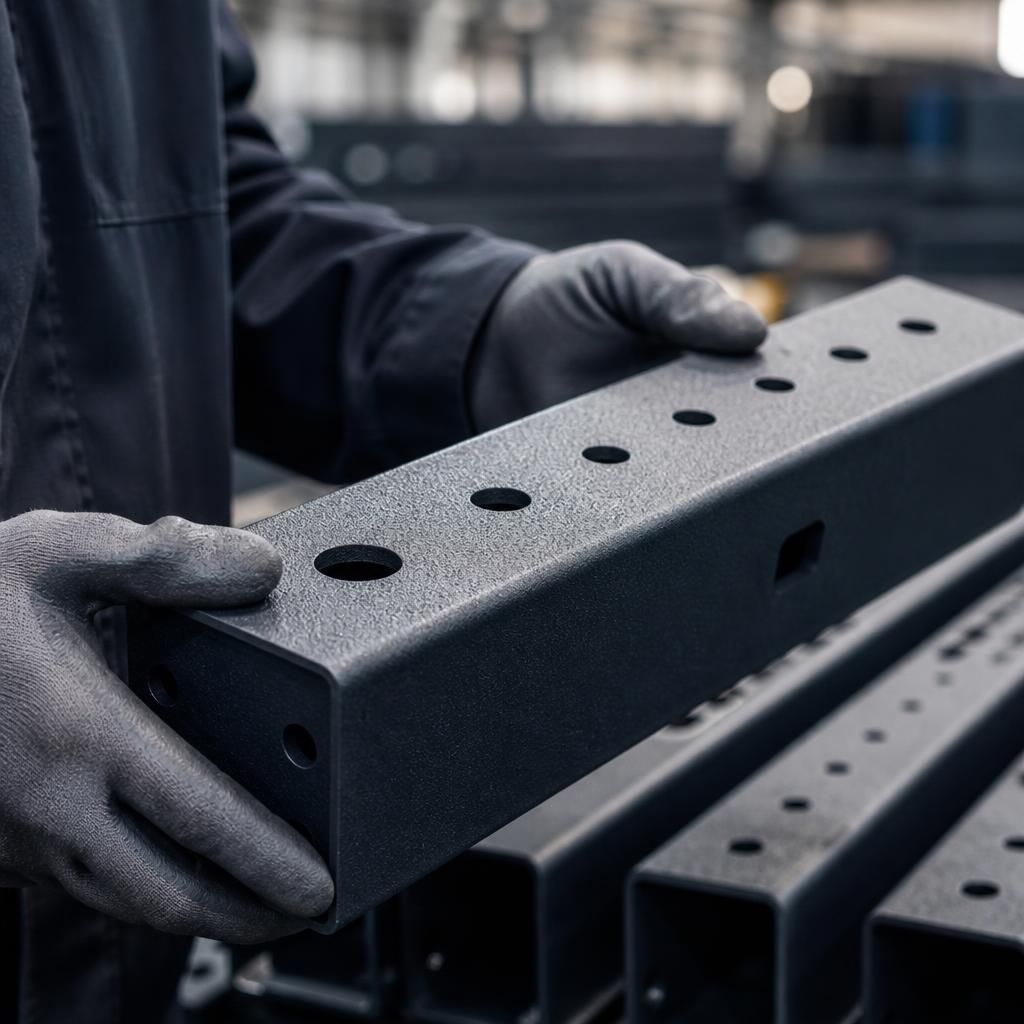
Texture can influence protection where coated parts are handled, clamped or exposed to repeated contact. A textured profile may make light scuffing less noticeable, but raised areas can also be worn down at contact points. If the coating is used on sliding, mating or frequently handled components, the finish should therefore be assessed alongside the required abrasion resistance and powder chemistry rather than selected for appearance alone.
Where contact pressure or repeated movement is significant, a consistent, lower-profile finish may help maintain a more uniform coating surface. Any exposed metal, flattened areas or coating damage should be treated as a maintenance issue, because texture cannot compensate for a break in the protective barrier.