

What factors should I consider to get an accurate powder coating price quote?
An accurate powder coating price quote depends on the component’s size, shape, material, condition and required preparation, together with the coating type, colour, finish, masking and inspection requirements. The number of parts, batch consistency, packing needs and collection or delivery arrangements can also affect the overall price.
An accurate powder coating price quote is based on the full amount of work required to prepare, coat, inspect and return the parts, rather than on surface area or part count alone. The most reliable quotation requests define the components, required performance, production method, quality expectations and commercial scope clearly enough for the coater to price the same job you intend to place.
Define the parts and the quotation basis. State whether the enquiry covers a single production lot, several different component references or a repeat programme. If parts vary in size, weight or design, list each reference separately rather than providing one combined quantity. Mixed batches can require additional sorting, racking, handling or colour changes, so the quote should show whether these activities are included.
Provide dimensional drawings, CAD files or clear photographs where possible. Include the maximum overall envelope, approximate weight, wall thickness and any areas that cannot be contacted or hung. Details such as deep recesses, narrow channels, overlapping sections and enclosed cavities can affect powder coverage and the way a component is positioned during coating. Welded assemblies should be identified, particularly where welds may retain oil, moisture or residue.
Explain the substrate and starting condition. Identify the metal alloy or substrate and state whether the parts are new, previously coated, lightly oxidised, contaminated or affected by fabrication residue. Include information about cutting fluids, weld spatter, adhesive, sealant, oil or protective film. These details help establish whether routine preparation is suitable or whether additional treatment, stripping, repair or clarification is needed before coating.
Also identify any areas where the existing condition is uncertain. A price based on clean, coating-ready components may not apply if the parts arrive with heavy corrosion, several layers of old coating or contamination that requires specialist removal. Asking the supplier to state the preparation assumption in writing prevents the quotation from being based on a different starting condition from the one actually supplied.
Describe the service environment, not just the appearance. State what the finished component will encounter in use, such as outdoor exposure, moisture, chemicals, abrasion, impact, elevated temperatures or frequent cleaning. Where relevant, explain whether the coating is intended mainly for appearance, corrosion protection, electrical insulation, wear resistance or a combination of functions. A decorative finish and a protective system may involve different materials, preparation methods, testing and acceptance criteria.
If a specification, industry standard, customer requirement or internal engineering document applies, attach it to the enquiry. Include required coating thickness, adhesion expectations, corrosion or chemical resistance, allowable visual variation and any test documentation. A request for certificates, inspection records, traceability or formal reports can add administrative and testing work that should be priced rather than assumed to be included.
Make critical tolerances explicit. Identify threaded holes, bearing seats, mating faces, electrical contact points, sliding surfaces and other locations where coating is not permitted or where thickness must be controlled. State whether masking must be temporary, permanent or removable after coating. Include the dimensions that must remain within tolerance after preparation and coating, since these requirements can affect masking, inspection and the acceptability of the finished parts.
For visible components, provide the required colour reference, gloss level and surface appearance, including whether minor texture, orange peel or variation is acceptable. If parts will be assembled together or displayed side by side, say whether colour matching between separate batches is important. Where an exact visual match or sample approval is required, allow the quote to account for sample panels, approval stages and additional handling.
Give practical production and handling information. State how the parts will be delivered to the coater, whether they are supplied loose or on suitable stillages, and whether special lifting or handling equipment is needed. Explain how the finished parts should be protected, separated and returned. Fragile, sharp-edged or easily marked components may need tailored packing rather than standard bulk handling.
For collection or delivery, provide the relevant site details, access restrictions, loading arrangements and any requirement for timed or split movements. The quotation should distinguish coating work from transport and identify whether packaging, loading, unloading and return movements are included. Powder-coating services for businesses across the Midlands and surrounding areas can be planned more accurately when these practical arrangements are provided at the enquiry stage.
Ask for assumptions and exclusions. A useful quote should make clear what is included in preparation, coating, masking, inspection, packaging and transport, and what would be treated as additional work. It should also identify assumptions about part condition, quantities, colour changes, rejected components, rework and storage. This is particularly important where the final requirement may change after first inspection.
Before accepting a price, check that it is based on the correct component references, quantities and specification. Ask whether the price is per part, per batch, per job or based on a minimum charge, and confirm how additional components or changed requirements would be handled. Comparing itemised quotations on the same technical information gives a more meaningful result than comparing headline totals.
A concise enquiry pack should therefore contain the part list, drawings or photographs, substrate and condition, service environment, coating and appearance specification, critical no-coat areas, inspection or documentation requirements, packing instructions and collection or delivery details. The clearer this information is, the fewer assumptions the coater has to make and the more closely the quoted price should represent the actual powder coating work.
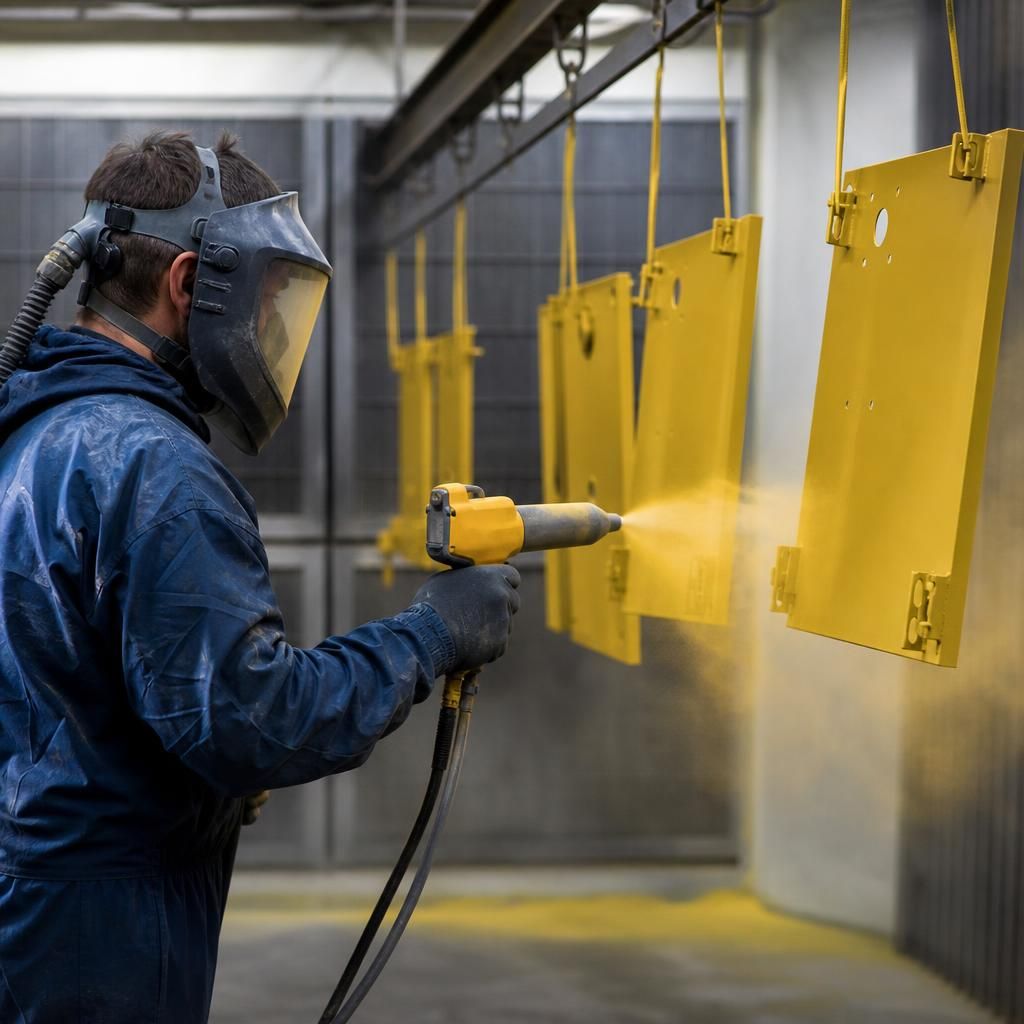
The powder specification can affect the price independently of the component’s size. State the required coating chemistry, colour reference, gloss level, texture and performance properties, and clarify whether a standard formulation is acceptable or whether a specialist powder is required. Nylon, high-temperature and chemically resistant powders may involve different application controls or material-sourcing requirements.
Ask the coater to identify whether the quoted price includes powder procurement, minimum material quantities and any unused material. This is particularly relevant for a small or unusual batch, where the amount purchased may not correspond closely to the amount applied. Separating material costs from processing costs makes the quotation easier to assess and helps prevent changes to the coating specification from creating unexpected additional charges.