

What are the hidden costs of powder coating that I should be aware of before obtaining a final quote?
Hidden powder coating costs can arise from preparation, masking, specialised finishes, additional handling, collection or delivery, and work needed to correct unsuitable or contaminated parts. Before accepting a final quote, confirm exactly which preparation, coating, packing, transport and inspection requirements are included and which may be charged separately.
Hidden powder coating costs are charges or cost drivers that sit outside the headline price per part. They usually arise when a quote is based on incomplete technical information, an assumed batch size, or services that have not been clearly included. A reliable comparison therefore requires more than checking the coating price: it requires checking the assumptions, exclusions and commercial terms behind it.
Minimum charges and batch economics
Powder coating is often priced around the time and resources needed to process a job rather than solely around the amount of powder used. A small batch may still involve setup, loading, colour preparation and process administration. If the order falls below a supplier’s minimum charge, the effective price per component can be higher than an initial unit-rate calculation suggests. Ask whether the quotation is based on the stated quantity, a minimum production charge or a repeat batch size.
Quantity also affects how costs are allocated. If the final number of parts changes, fixed process costs may be spread across fewer items. Conversely, adding parts after a quote has been issued may require a revised production plan, particularly where the parts differ in size, material, colour or specification. The quote should state whether the price applies to the complete batch or is conditional on receiving a particular quantity.
Part design and loading requirements
Unusual dimensions, awkward shapes, heavy components and parts that need individual positioning can increase labour and equipment requirements. Components may also need to be processed in separate groups if their dimensions, metal type or finish requirements are incompatible. Supplying accurate drawings, weights, dimensions and photographs helps identify these cost drivers before the quote is finalised.
Ask how the supplier intends to process the parts and whether the proposed price assumes standard racking or a particular loading arrangement. A change in hanging method can affect both the usable coating area and the number of components that can be processed together. This is especially relevant for large fabricated items and mixed batches.
Specification, testing and documentation
A basic coating quotation may not include formal inspection records, sample panels, colour approval, coating-thickness readings or other evidence required by a customer’s quality system. These requirements are not necessarily hidden defects in the quote; they are additional deliverables that must be priced if they form part of the contract.
- Define the required coating specification and acceptance criteria.
- State whether a sample or first-off approval is needed.
- Confirm which inspection results will be recorded and supplied.
- Check whether certificates, batch records or traceability information carry a separate charge.
- Agree how non-conforming work will be assessed and resolved.
Without this information, two apparently similar quotations may cover different levels of verification. The lower figure may simply exclude the documentation or testing needed for the end application.
Materials, consumables and colour changes
Powder, primers, protective systems and other consumables can be charged differently depending on the agreed specification. A quote should identify the coating system, colour reference, gloss level and any required performance properties rather than referring only to “powder coating”. A change requested after approval may create a new material or setup requirement, even where the part dimensions remain unchanged.
For repeat work, confirm whether the quoted price assumes one consistent colour and coating system throughout the batch. Multiple colours or small groups of different colours can require additional process planning and may alter the cost. If colour matching is important, establish whether approval samples and any subsequent adjustments are included.
Packaging, storage and delivery arrangements
Finished components may need packaging suited to their size, weight, surface sensitivity or onward assembly process. Standard packing assumptions may not cover separators, protective wrapping, pallets, bespoke crates or labelling by part number. These requirements can affect both materials and handling, so they should be specified before the final price is accepted.
Storage can also become chargeable if parts cannot be collected or delivered under the agreed arrangements. Confirm how long completed goods can remain on site without an additional fee and whether the quote includes the packaging format your receiving facility requires.
Commercial terms and quotation validity
Check whether the quoted amount includes VAT, and identify any conditions relating to payment, purchase-order administration or quotation validity. A quotation may be based on current material and operating costs and may need review if the order is delayed or the specification changes. The document should also state whether prices are fixed for the whole project or apply only to the described batch.
Clarify what happens when the supplied parts differ from the information used for pricing. Differences in quantity, dimensions, weight, condition, material or required specification should trigger a documented review rather than an unexpected invoice. Written variation approval is particularly important for large batches and staged production.
Questions to ask before accepting the final quote
- What exact quantity, dimensions, weights and part mix does the price assume?
- Is there a minimum charge or a separate charge for setup and batch administration?
- Which coating specification, colour and performance requirements are included?
- Are testing, inspection records, samples and certificates included?
- What packaging and labelling standard has been allowed for?
- Are storage, commercial administration and VAT clearly identified?
- What circumstances would cause the price to be revised?
- Will any proposed variation require written approval before additional work is carried out?
The safest way to avoid quote surprises is to request an itemised quotation with a clear scope, assumptions, exclusions and variation process. For an industrial project, provide drawings or photographs, the complete part schedule, the required coating specification and the intended use of the finished components. A quote based on that information is more useful than a low headline rate that leaves important project requirements undefined.
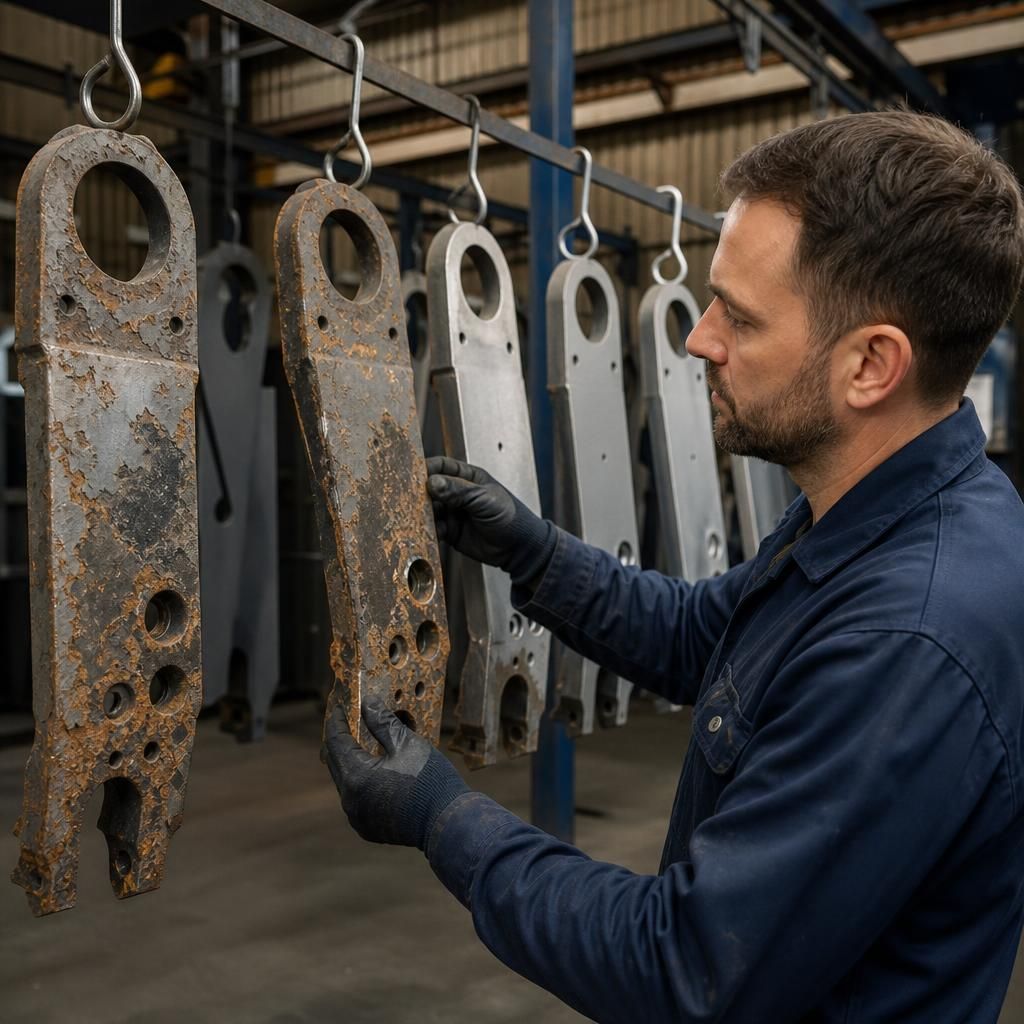
The condition of the metal before coating can create additional work that is not visible in a standard per-part price. Existing paint, oil, grease, rust, weld spatter, corrosion or other residues may require extra cleaning, stripping or preparation before a new coating can be applied correctly.
Clarify whether the quotation assumes clean, coating-ready parts or includes removal of existing finishes and corrective preparation. Also identify whether dents, sharp edges, damaged threads or other fabrication defects are to be rectified before coating. Supplying clear photographs and describing the previous service environment helps the coater assess the likely preparation requirement and separate coating costs from remedial work.