

How can I ensure that the powder coating finish meets both aesthetic and performance standards for my specific industrial application?
Define the required colour, gloss, texture, coverage and service conditions before selecting a powder coating system, then confirm that the metal substrate, preparation method and application process are suitable. Agree acceptance samples and inspection criteria with the coater so the finished components can be assessed for appearance, adhesion, coverage and resistance to the operating environment.
The reliable way to achieve a powder coating finish that satisfies both appearance and industrial performance requirements is to convert the application brief into measurable acceptance criteria, select a coating system suited to those criteria, control the production process, and verify the finished parts against documented checks. A finish that looks correct but is unsuitable for its operating environment is not fit for purpose, while a technically durable coating may still be unacceptable if it falls outside the required visual standard.
Start with a written coating specification. The specification should identify which characteristics are critical, which are acceptable within a tolerance, and which defects would justify rejection. It should also state whether the requirement applies to every visible face, selected functional areas or the complete component. Include details such as:
- the required powder coating type and intended level of protection;
- areas that must remain uncoated, electrically conductive or free from coating build-up;
- permitted marks, pinholes, inclusions, orange peel, edge build and other visual imperfections;
- dimensional limits where coating thickness could affect assembly, threads, bores, hinges or moving parts;
- the test methods or reference standards to be used for acceptance; and
- packaging and handling requirements that prevent damage after coating.
Where components are made to a drawing, the drawing should identify coating-critical features. A powder coating can add measurable build to a surface, and the effect may be important on close-fitting parts, mating faces and threaded holes. Masking, racking and contact-point locations should therefore be agreed before production rather than treated as incidental workshop details.
Assess the whole coating system rather than the powder in isolation. Performance depends on the interaction between the metal, the pre-treatment, the powder formulation, the film build and the curing cycle. For example, a coating selected for general indoor use may not be appropriate where components face moisture, road contaminants, cleaning chemicals, abrasion, impact, ultraviolet exposure or elevated temperatures. In more demanding environments, ask for technical information confirming the system’s suitability for the actual exposure and not merely a general product description.
Application-specific risks should guide the choice of system. A part exposed to repeated flexing may require different properties from a rigid enclosure. Components that need chemical resistance, low friction, electrical insulation, impact resistance or a smooth cleanable surface should have those requirements stated separately. Nylon and other specialist coating systems may be relevant where the component needs a combination of toughness, abrasion resistance or a particular functional surface, but suitability still needs to be assessed against the operating conditions and manufacturing tolerances.
Control the factors that affect finish consistency. Before coating, confirm that fabrication residues, oil, weld scale, rust, burrs and sharp edges have been addressed. The required preparation should be appropriate to the substrate and the coating system. During processing, consistency depends on powder storage and handling, application equipment, racking, grounding, film build and oven conditions. Parts should be positioned so that all required surfaces receive the intended treatment and so that contact marks are restricted to agreed locations.
Curing requires particular attention. The relevant condition is generally the temperature reached by the component and the time it remains at that temperature, rather than the oven’s displayed air temperature alone. Part mass, geometry, loading and metal thickness can affect the result. If the coating is under-cured, it may not develop its intended mechanical or chemical properties; excessive heat can affect appearance, colour stability or the substrate. Process records and checks should demonstrate that the agreed cure schedule has been achieved consistently across the batch.
Use objective inspection alongside visual assessment. A suitable inspection plan may include:
- visual examination under consistent lighting and at an agreed viewing distance;
- film-thickness checks at representative locations, including areas prone to low or excessive build;
- adhesion or other mechanical tests where the specification requires them;
- checks on masking, exposed contact points, coverage of edges and access to recessed features;
- dimensional or fit checks on critical interfaces; and
- batch records linking the inspected parts to the powder system and processing conditions.
Visual approval should not rely on an informal comparison made under changing lighting or from different distances. For repeat work, retain an agreed reference panel or approved component and define how close successive batches must appear to it. If a project involves several component sizes or shapes, check representative examples from each significant configuration, since geometry and racking can affect the final result.
Acceptance criteria should also distinguish between a defect that affects appearance and one that affects function. A small concealed contact mark may be acceptable on an internal face, whereas the same mark on a prominent customer-facing surface may not be. Conversely, a visually minor issue at a threaded hole or mating face could prevent assembly. Recording these distinctions helps avoid disputes and prevents a visually led inspection from overlooking a functional problem.
For a new or technically demanding application, use a trial or first-off approval before committing the full batch. Review the trial against the specification, confirm fit and masking, and record any agreed amendments. If the design, powder system, preparation method or processing conditions change, repeat the relevant approval checks rather than assuming that the original result will remain valid.
When requesting a quotation or discussing production with a Midlands powder coating specialist, provide drawings, component quantities, metal types, critical dimensions, operating conditions and the required inspection evidence. Collection and delivery arrangements can also be considered for batches, but the technical brief should remain the basis for the quotation and acceptance decision. This gives the coater enough information to identify process risks before production and gives the buyer a clear, objective basis for judging whether the completed finish meets the intended industrial standard.
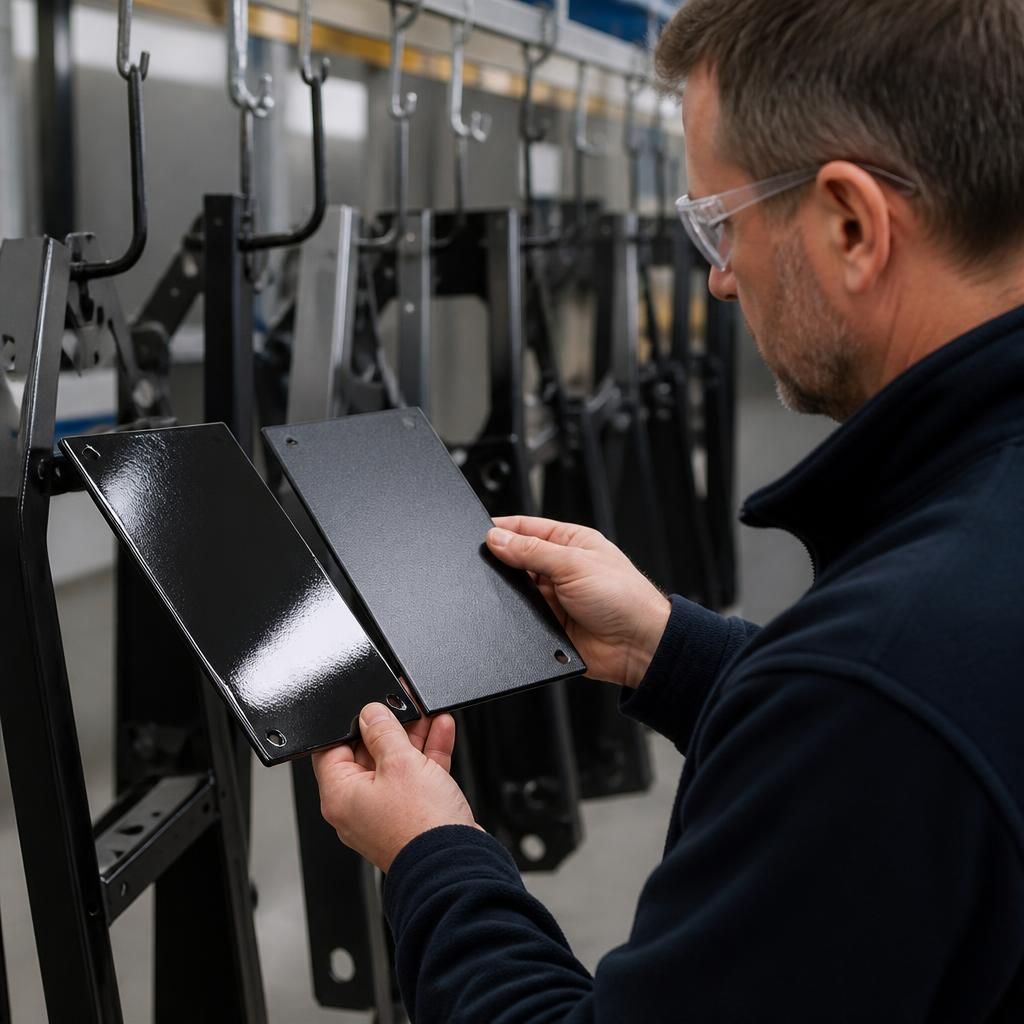
Finish texture and gloss influence both appearance and practical use. High-gloss surfaces reflect light strongly, so fabrication marks, waviness and minor surface irregularities can be more noticeable. Textured or low-gloss finishes may reduce the visual prominence of small variations, but their surface profile can affect how easily dirt, grease or process residue is removed.
Choose the visual finish with the component’s cleaning method, handling conditions and viewing distance in mind. A smooth finish may be preferable for parts that must be wiped clean, while a textured finish can be appropriate where a less reflective appearance is required. Confirm the choice on a representative sample, since the same powder appearance can look different across substrates, shapes and levels of surface preparation.
Discuss Your Industrial Powder Coating Finish Requirements
Discuss your industrial powder coating finish requirements with the team before requesting a quotation, particularly where the application has demanding functional or visual criteria. This can help ensure the proposed coating approach reflects the component’s intended use.